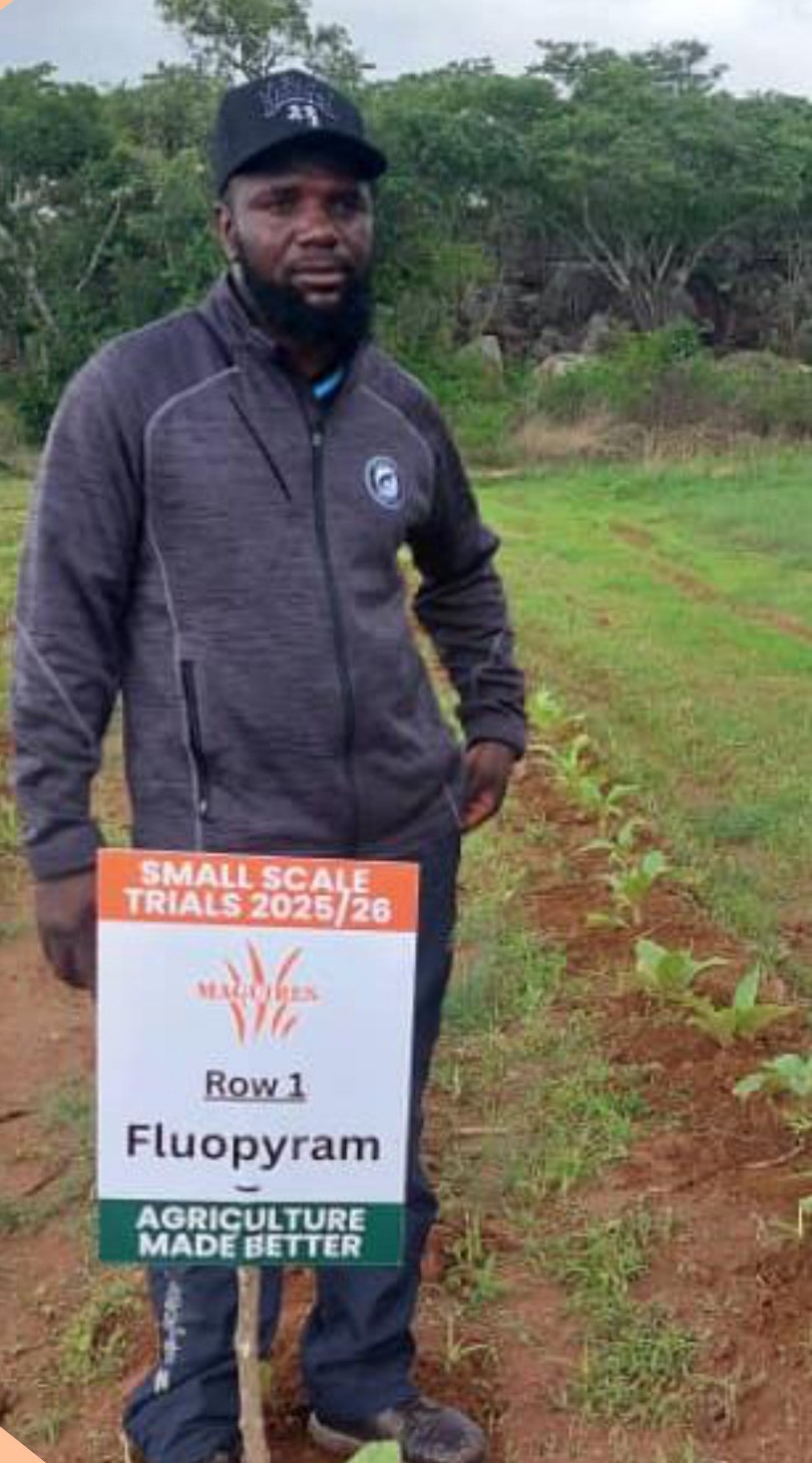
Trial at a Glance
- Farmer
- Patrick Makumbira
- Location
- Marondera
- Planted
- 14 November 2025
- Purpose
- Root development, nematodes & establishment
Trial Overview
The Atlas Agri Packs were used throughout this farmer’s fields. In Row 1 we used Fluopyram, our primary understudy nematicide — 1.5 mL of Fluopyram into 20 L of water, with a 1-litre jug of the solution added to each planting hole. In Row 2 we used the same Fluopyram nematicide together with our root bio-stimulant, Kyno-Humate — 1.5 mL of Fluopyram plus 7.5 mL of Kyno-Humate into 20 L of water, again a 1-litre jug per planting hole.
The Season, Step by Step
The trial was inspected from planting in November 2025 through the early weeks of 2026.
14 November 2025
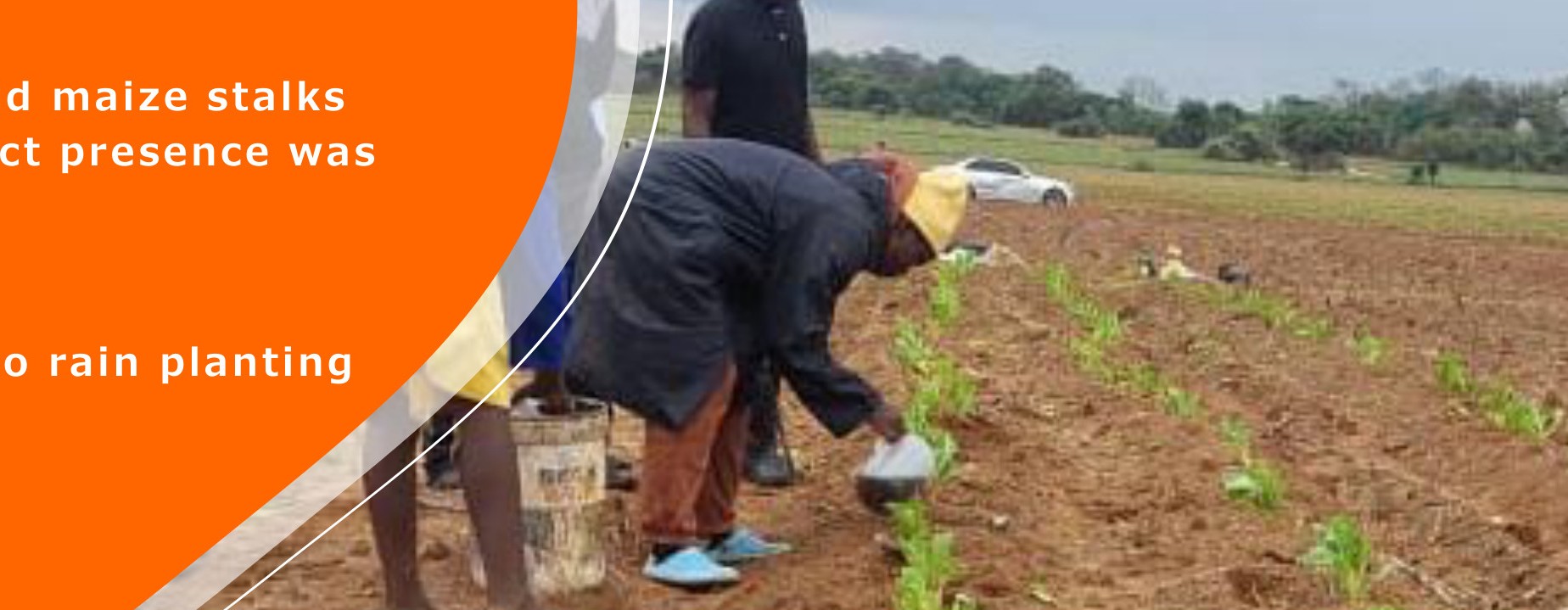
Planting day
The area has been receiving good rains. At planting there were old maize stalks left in the lands, but insect presence was low. Soil moisture was good, so the rain-planting method was used.
3 December 2025
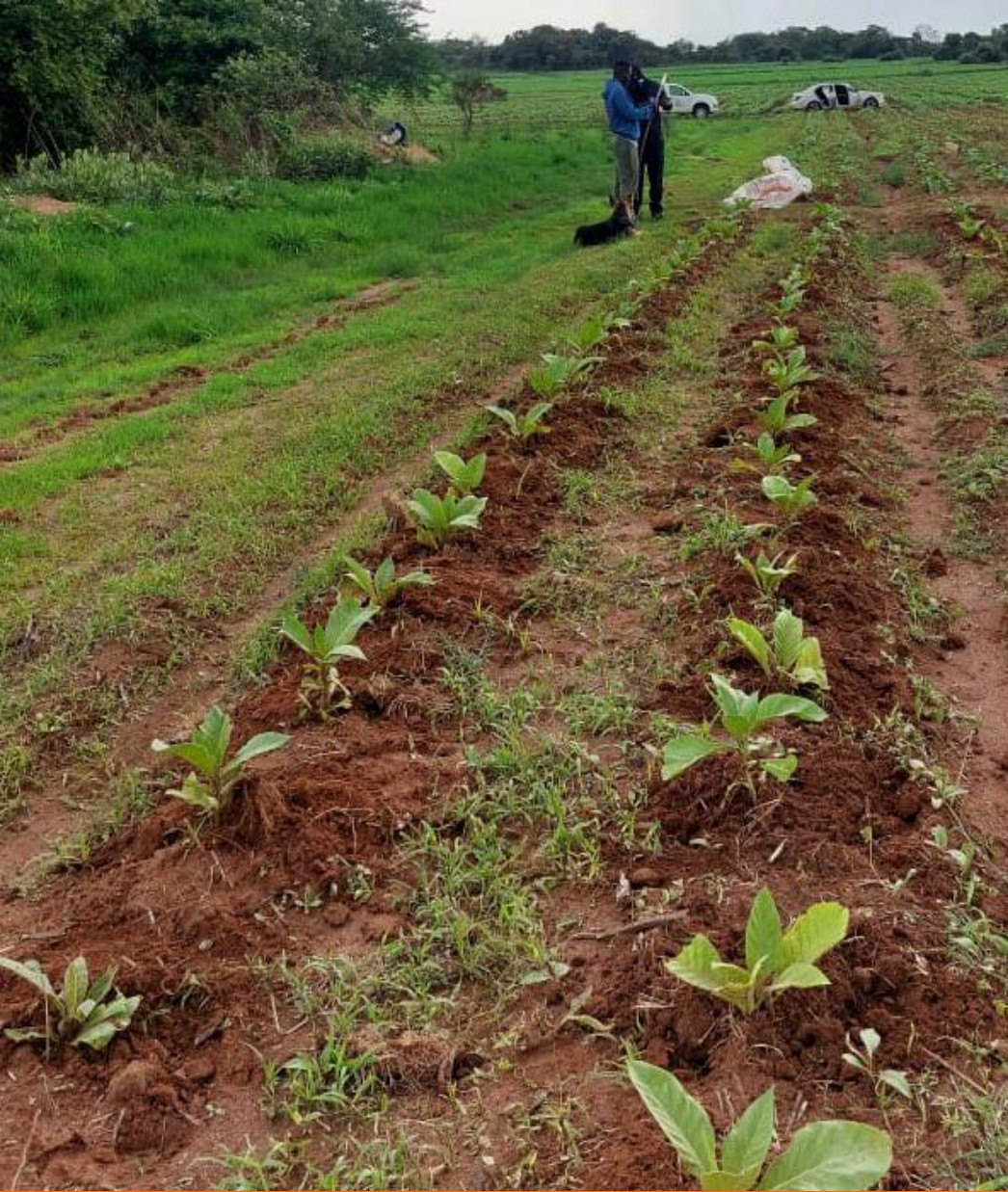
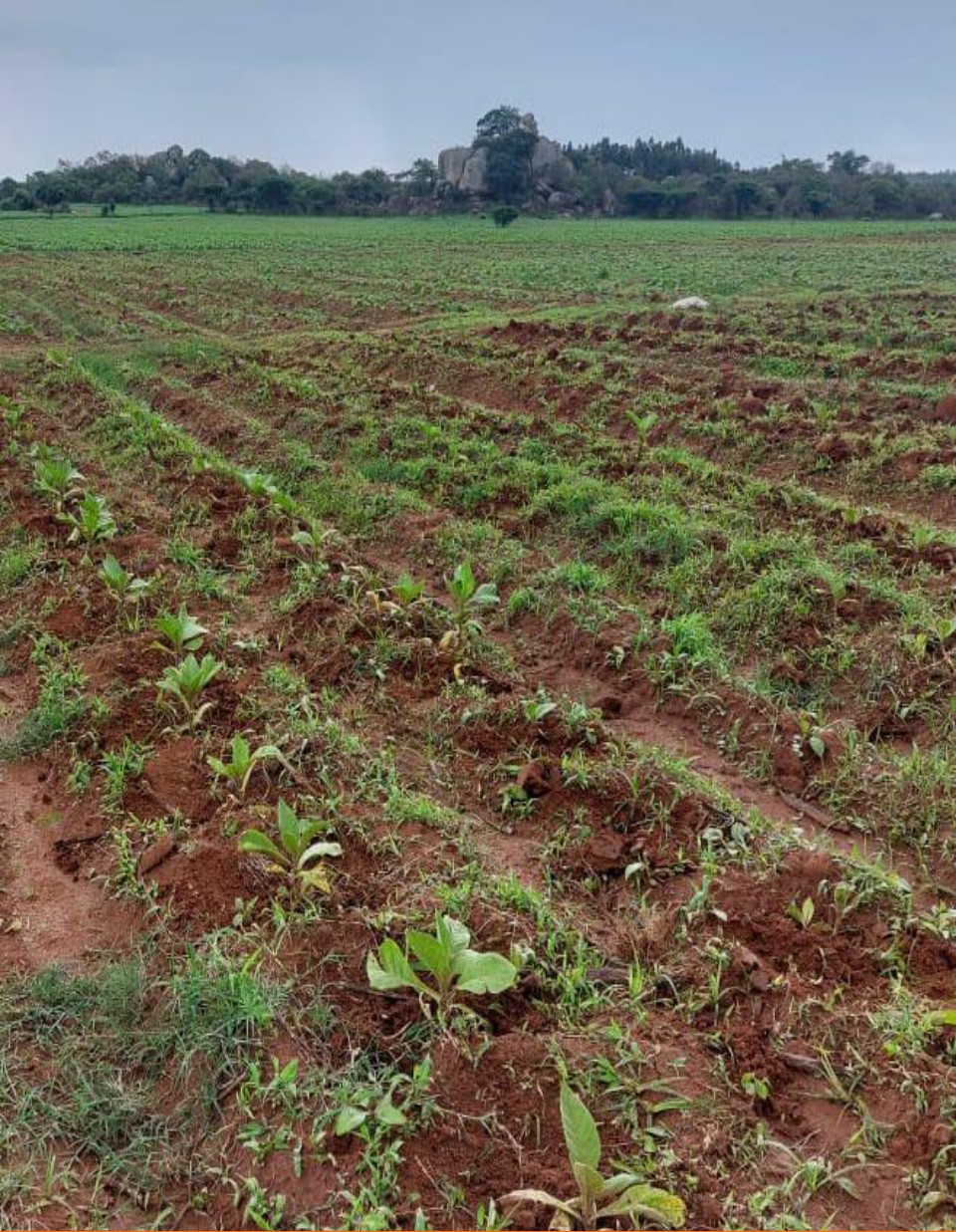
First visit — trial vs control
All the plants in the trial rows have taken and are looking healthy. There have been a few plant deaths in the control area, and those plants appear slightly less established. Both areas have weed pressure — the farmer will be doing hand weeding.
3 December 2025
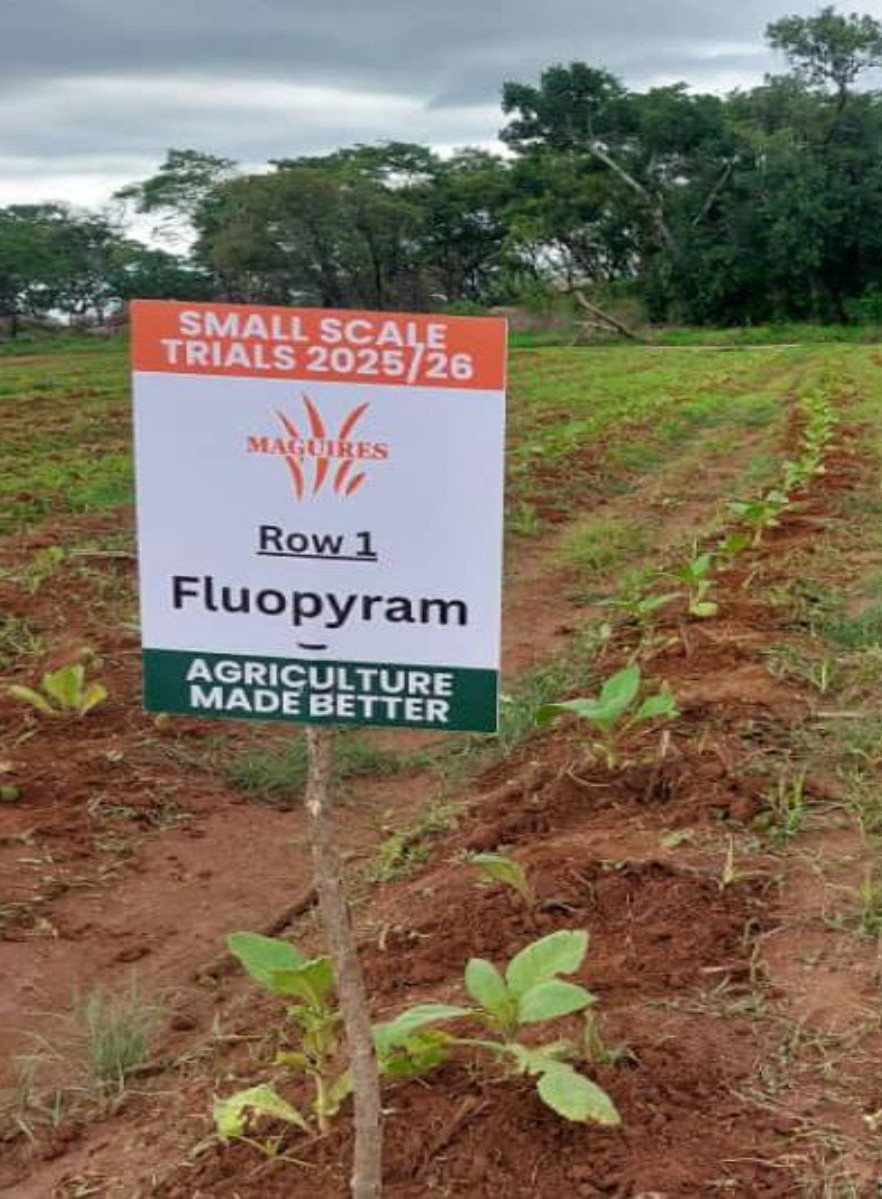
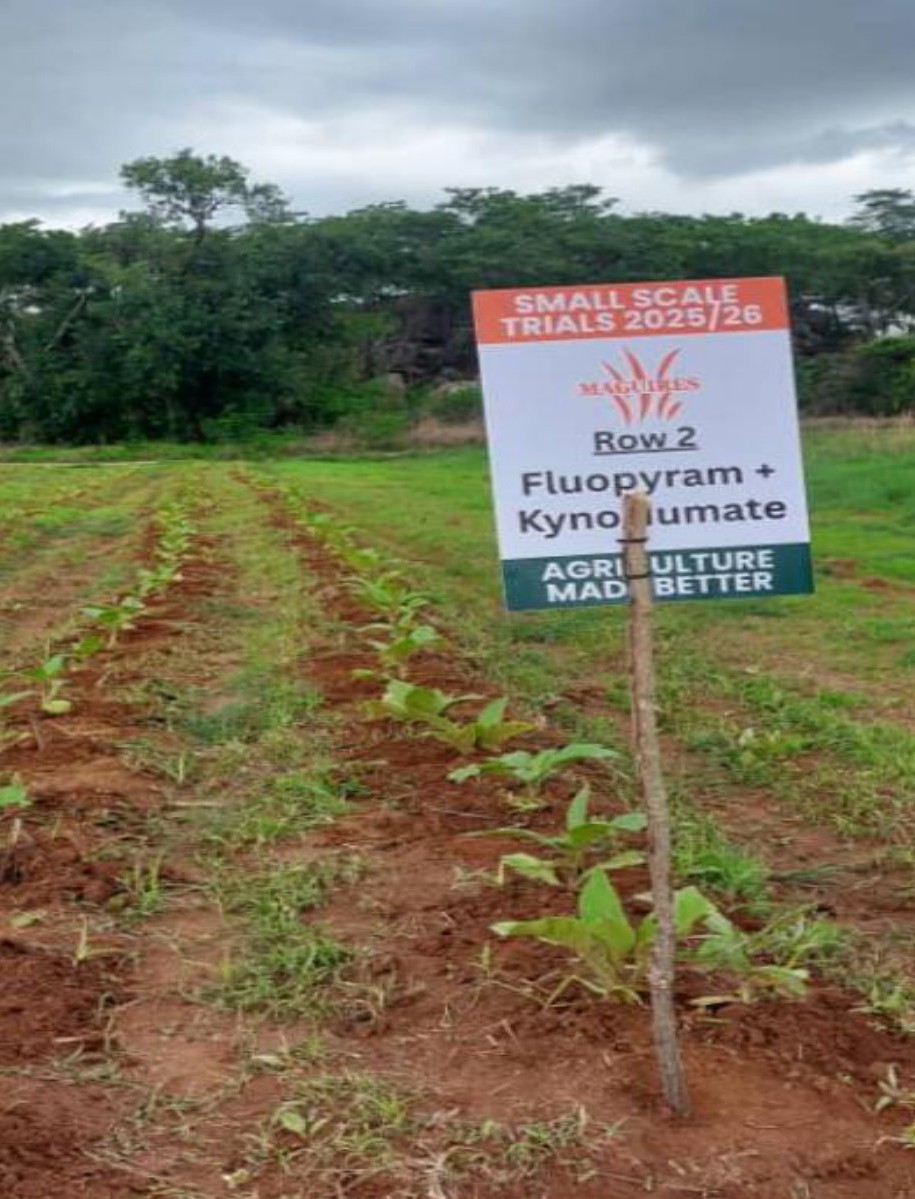
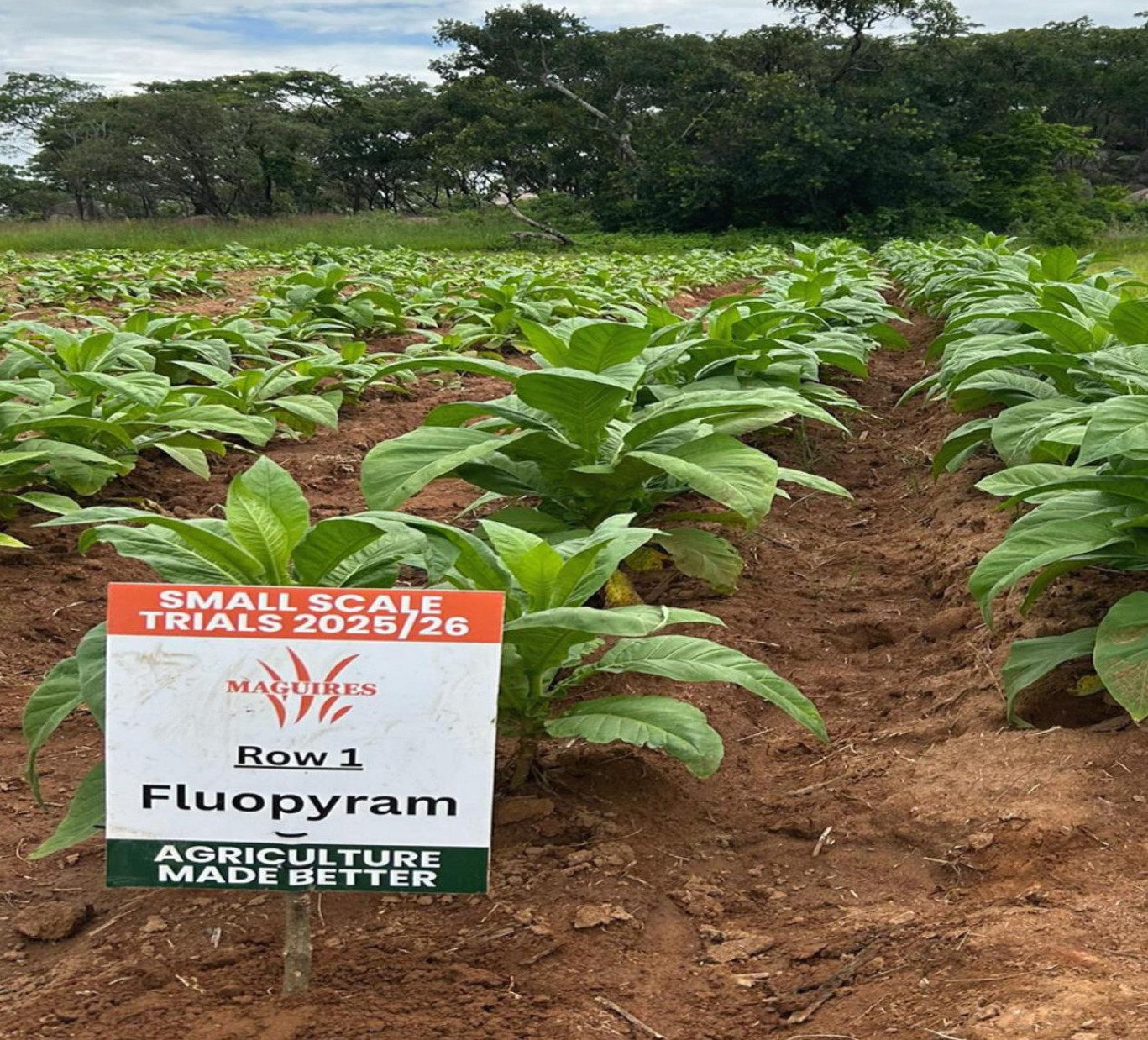
Marked trial rows
Row 1 was treated with Fluopyram; Row 2 with Fluopyram plus Kyno-Humate.
6 January 2026
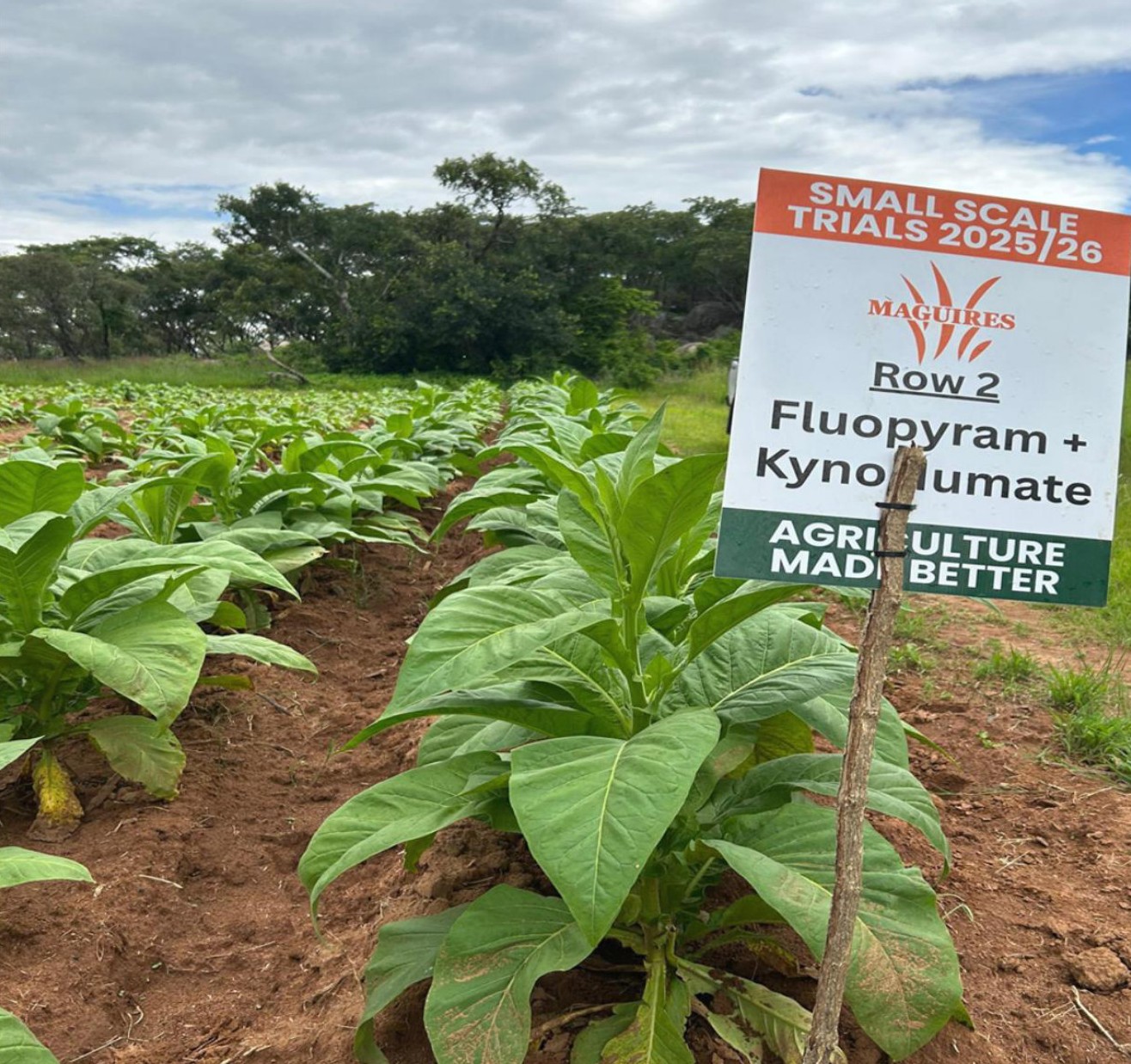
Second visit — trial area
All plants in the trial area are looking healthy and well established. A few weeds are still visible but there are no signs of insects. Plants had an average of 16 leaves, with an average length of 80 cm.
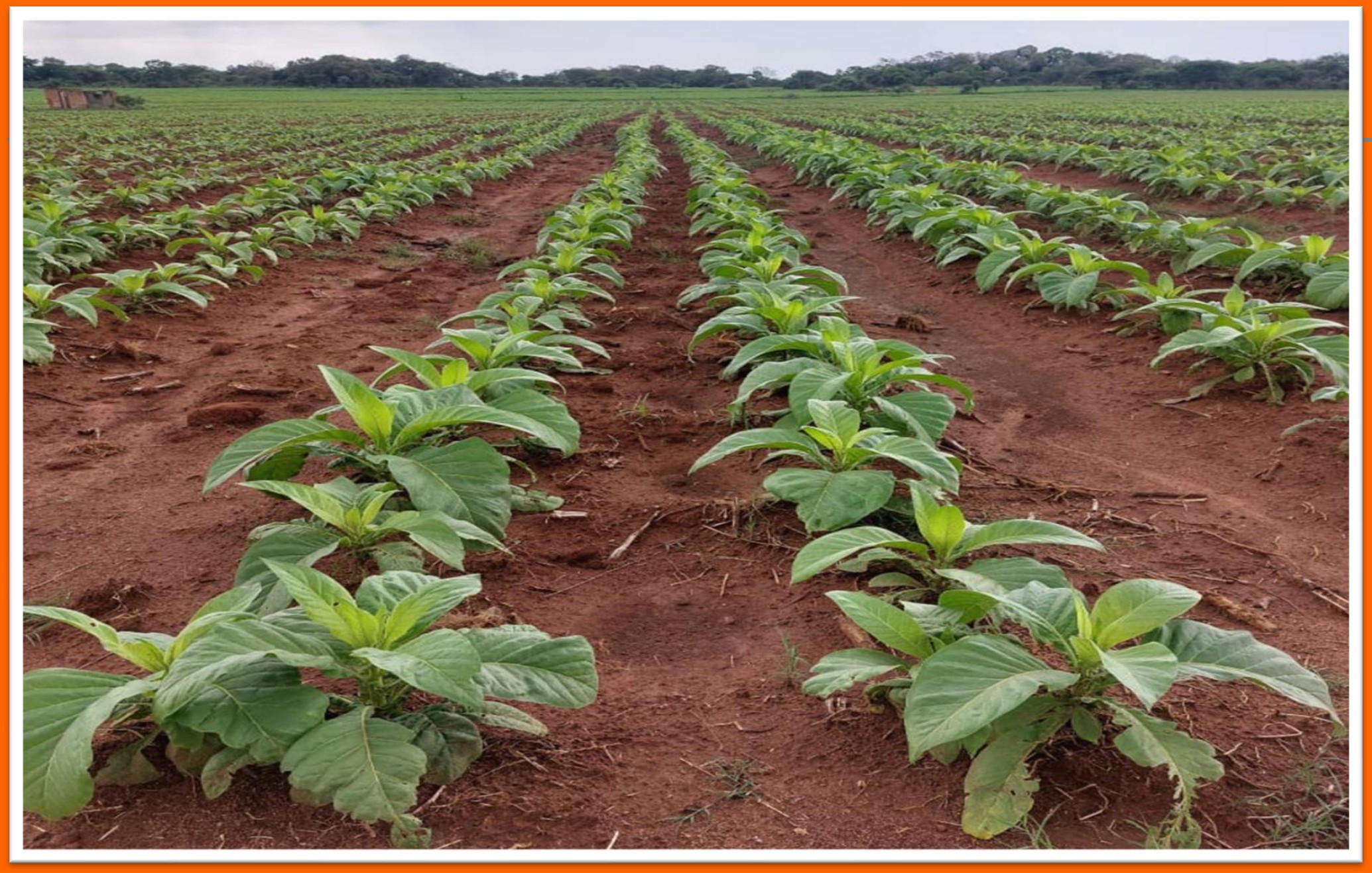
6 January 2026
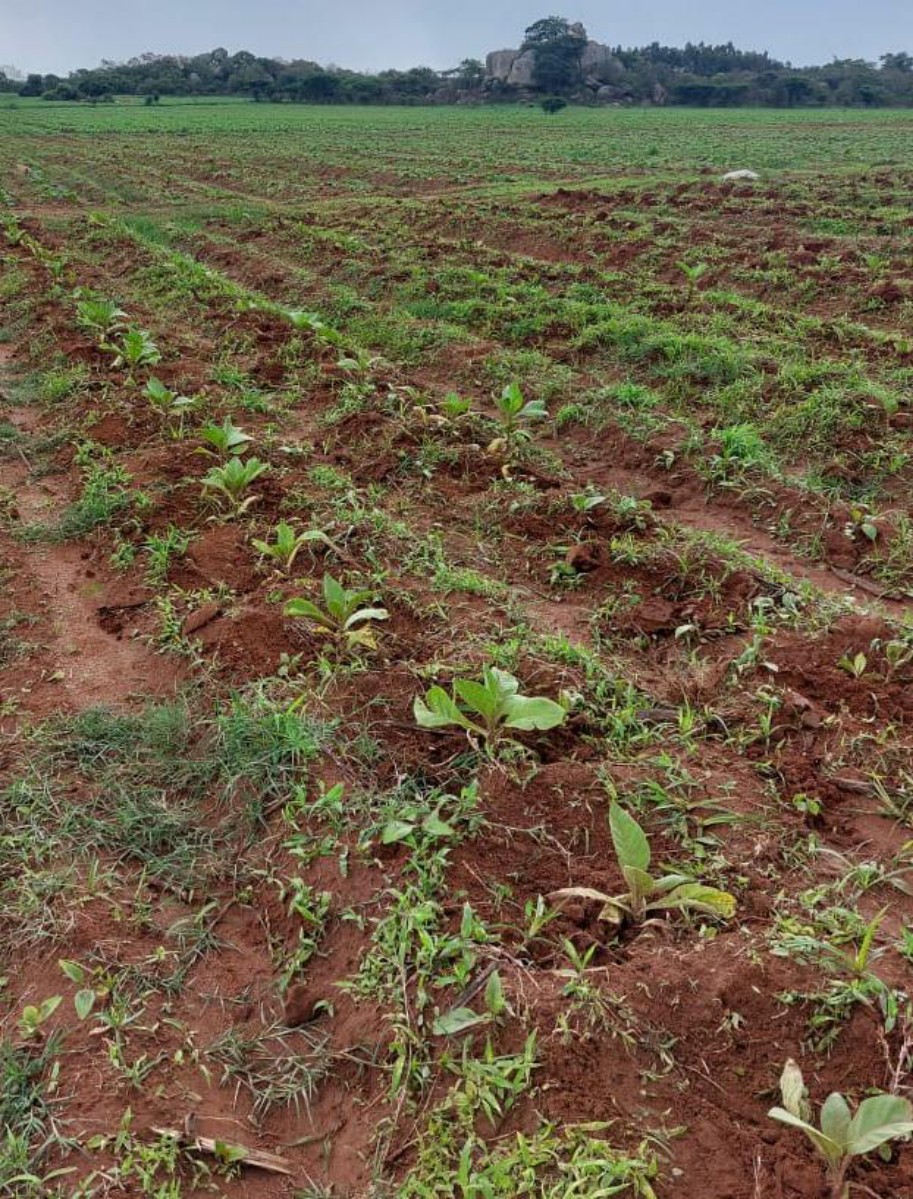
Second visit — control area
Plants in the control area have improved but remain less established than those in the trial rows.
Kutsaga Nematode Analysis
Soil and root samples were submitted to Kutsaga. The analysis revealed significant levels of root-knot nematodes (Meloidogyne spp) in the soils — counts exceeded the damage threshold of 8 per 200 g, indicating a high risk of damage to the future tobacco crop. The highest infestation was in the Centenary (F) soil at 125 per 200 g. On the roots, however, root-knot nematodes were noted in only one sample, and there was no galling on any of the root samples.
| Sample | Root-Knot (Meloidogyne spp) | Saprophytes (Free-living) | Lesion (Pratylenchus spp) | Spiral (Helicotylenchus spp) | Advise |
|---|---|---|---|---|---|
| Soil — Centenary (F) | 125 | 15 | 35 | 0 | Fumigate |
| Soil — Centenary (F+K) | 50 | 10 | 10 | 20 | Nematicide |
| Soil — Marondera (F) | 55 | 20 | 0 | 0 | Nematicide |
| Soil — Marondera (F+K) | 10 | 0 | 0 | 0 | Nematicide |
| Sample | Root-Knot (Meloidogyne spp) | Root-Gall Rating (0–8) |
|---|---|---|
| Root — Centenary (F) | 0 | 0 |
| Soil — Centenary (F+K) | 0 | 0 |
| Soil — Marondera (F) | 0 | 0 |
| Soil — Marondera (F+K) | 10 | 0 |
Recommendations from Kutsaga
- Planting-hole nematicide use in the affected plots, coupled with regular monitoring by collecting a sample during mid-season.
- Application of a biological control agent (BCA) like Trichoderma as a seed dressing for the relay crop in the offseason.
- For fields with lower infestation levels (under 120 nematodes per 200 g of soil), tobacco cultivation can be considered — but only with the use of a fumigant such as 1,3-Dichloropropene (1,3-D) and subsequent use of supplementary nematicides as necessary.
Conclusion
The chemical combination treatments involving Fluopyram and Kyno-Humate showed:
- Improved early crop growth
- Stronger plant establishment
- Healthy foliage
- No pest presence detected
These results indicate positive early trial performance and justify continued monitoring. Samples have been taken and submitted to Kutsaga for root and soil nematode analysis.
Key Finding
Adding Kyno-Humate to the Fluopyram planting-hole treatment cut the Marondera soil’s root-knot nematode count from 55 down to 10 per 200 g, alongside stronger, better-established early growth than the control.