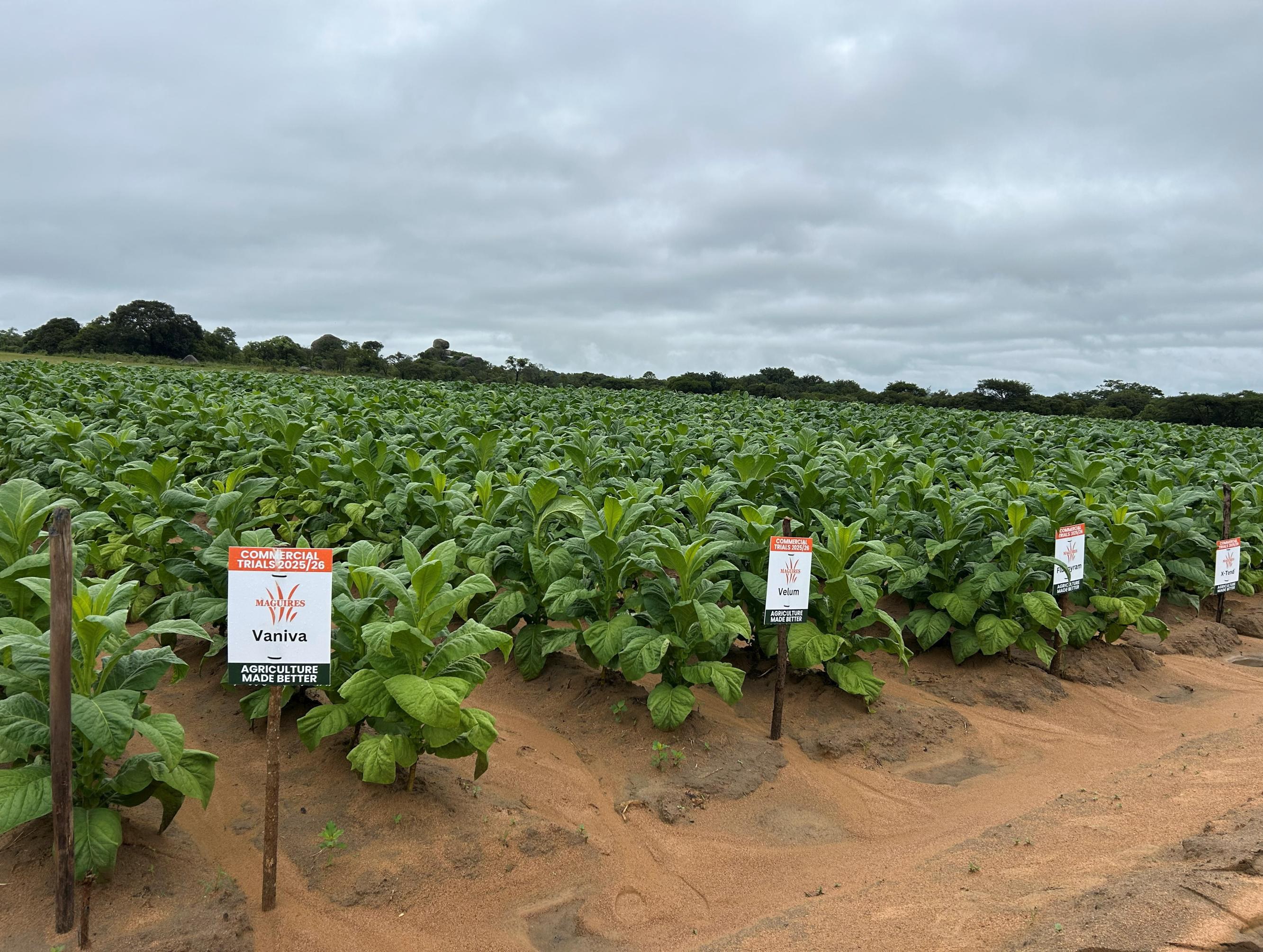
Trial at a Glance
- Farmer
- George Heynes
- Location
- Melfort
- Planted
- 18 November 2025
- On Trial
- 4 treatments + control
Trial Overview
The trial set out to answer three questions — how the crop’s roots develop, whether nematodes and insects take hold, and how the treated rows compare with the control. Three nematicides were compared alongside the X-Tend fertilizer supplement, each mixed to its own rate and applied at 30 mL per plant station.
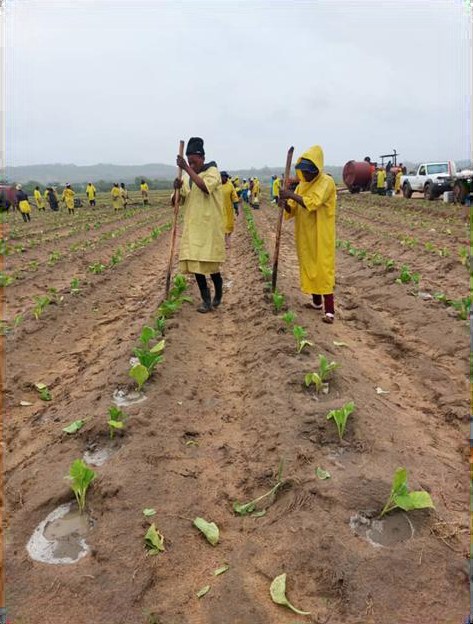
The crop was hit by some hail on 6 December, early in the season, before the trial settled into a strong start.
The Treatments
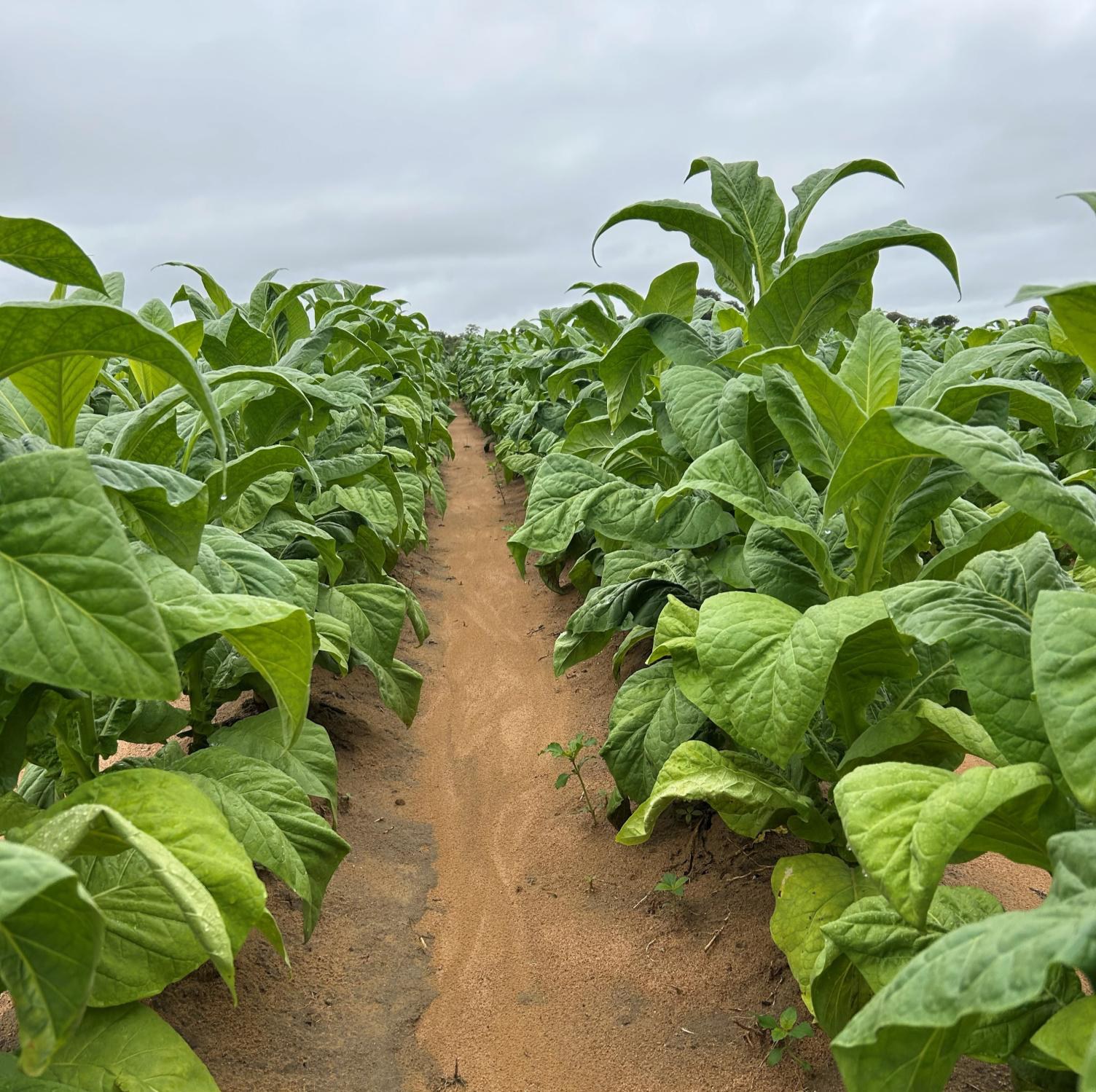
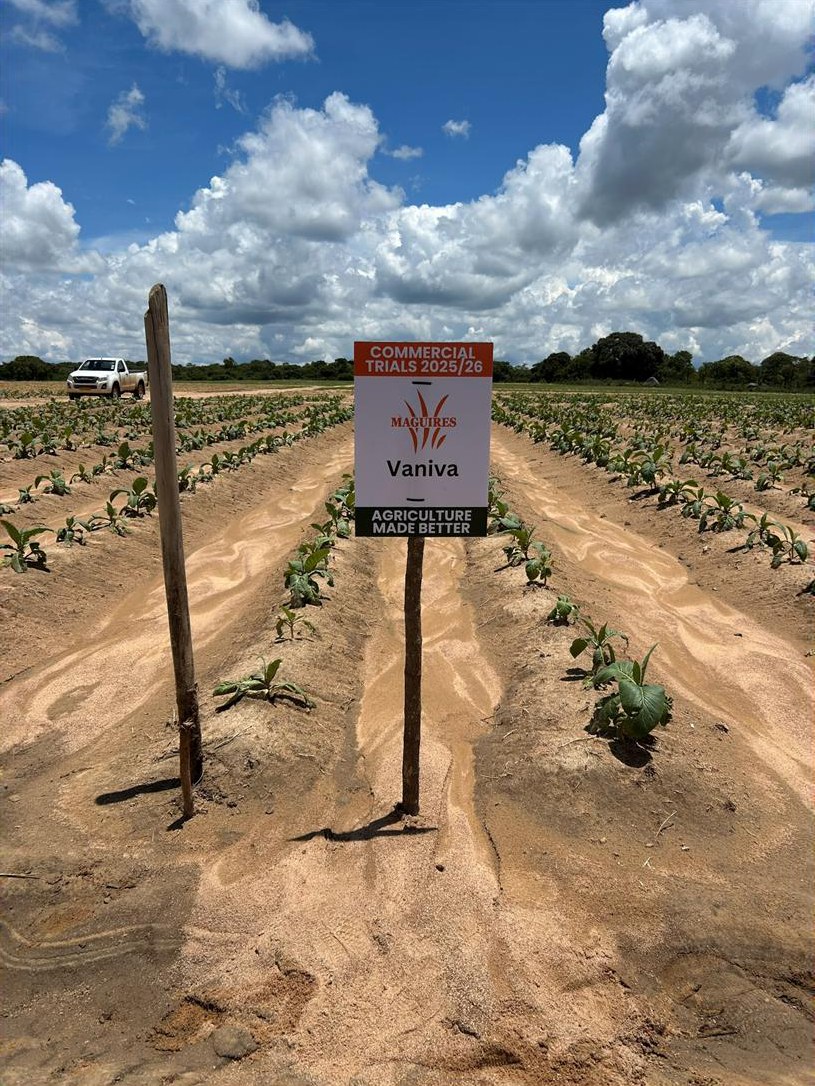
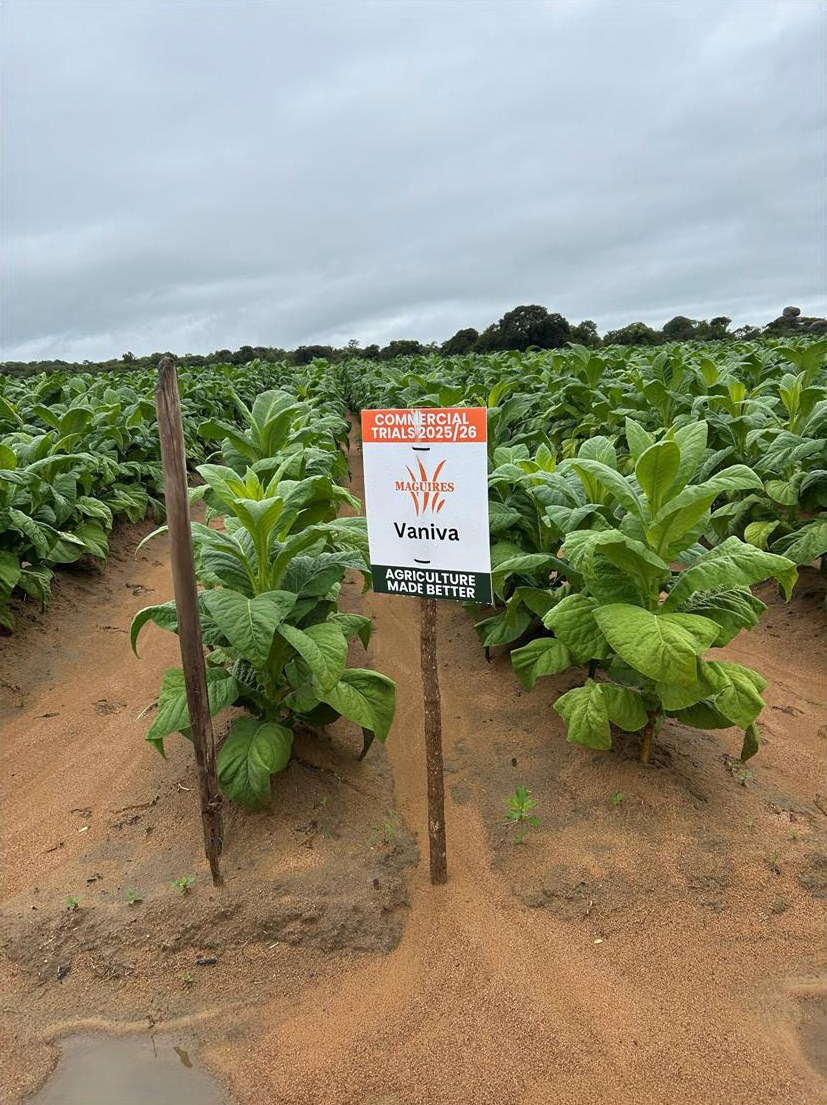
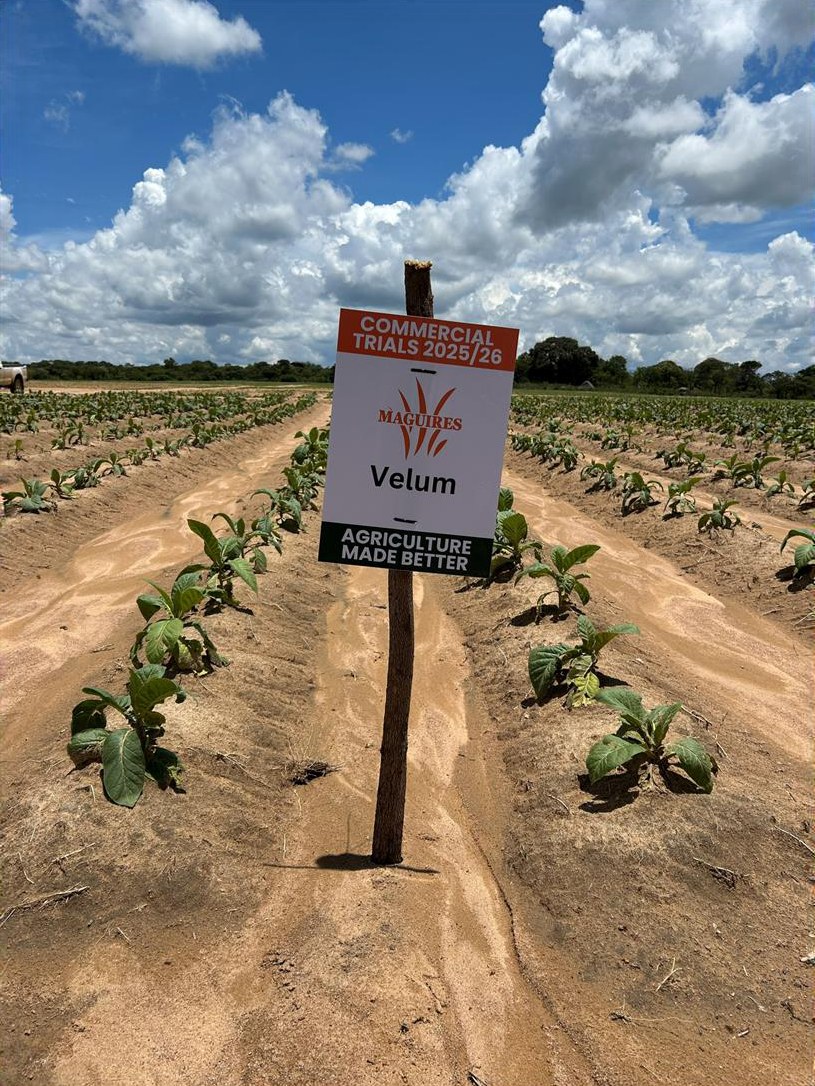
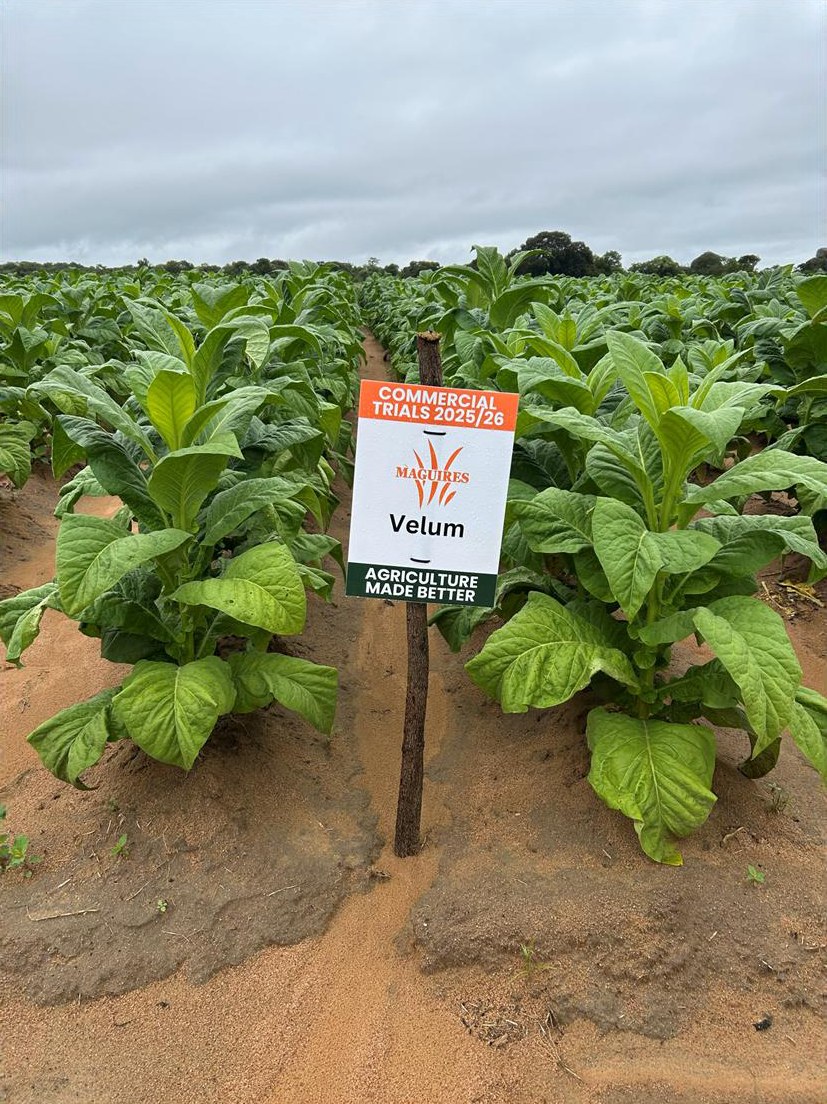
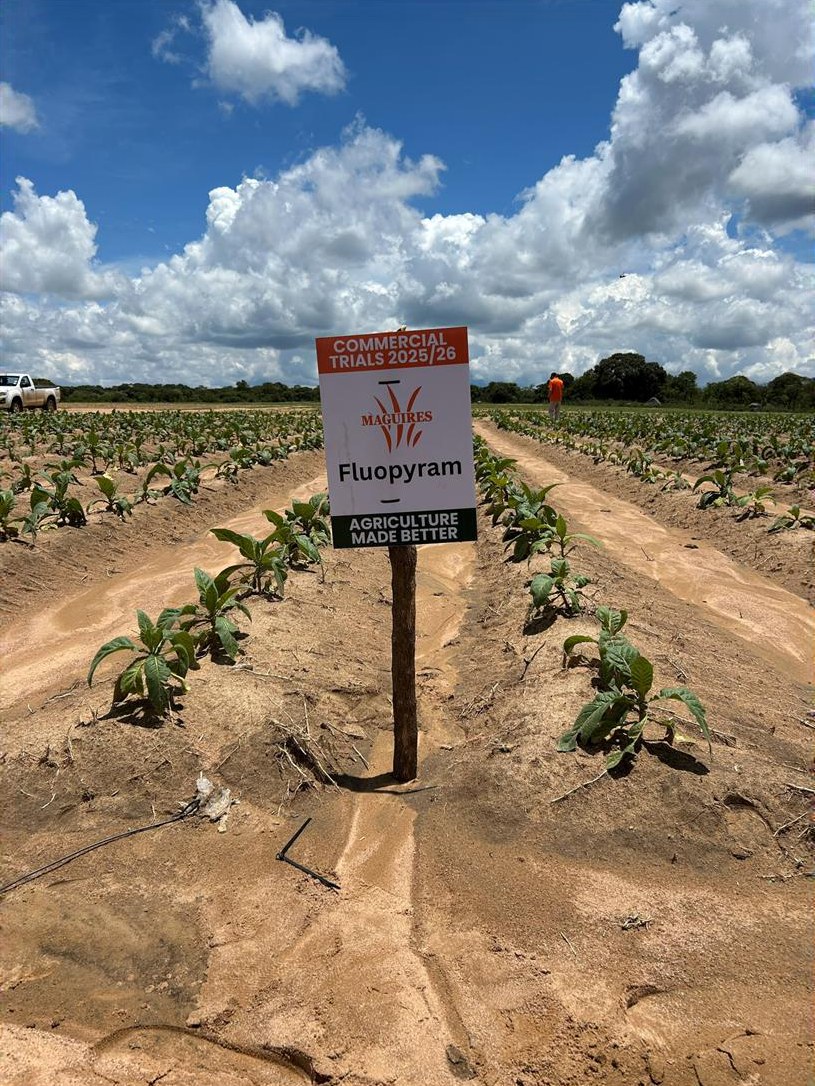
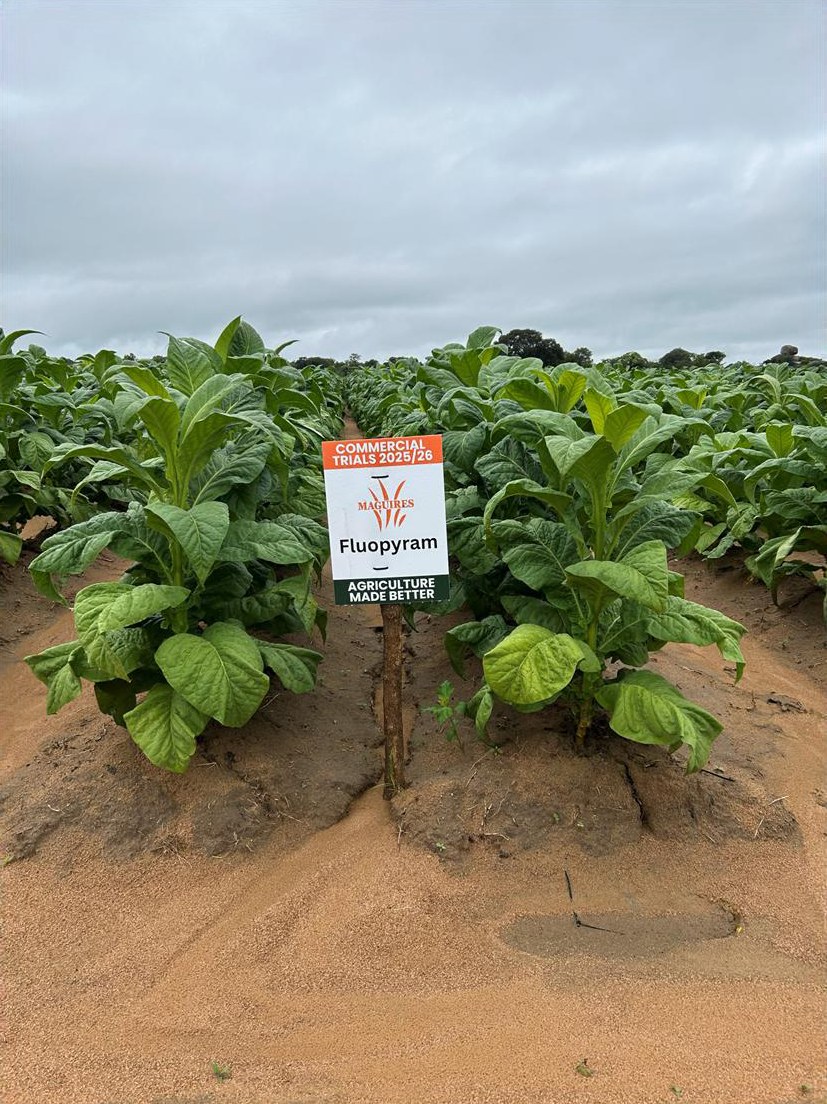
Each treatment was photographed at the first visit on 10 December 2025 and again at the second visit on 13 January 2026.
Nematicide · Syngenta
Vaniva
9.9 mL in 10 L of water · 30 mL per plant station
A soil-applied, soluble concentrate nematicide for the broad-spectrum control of nematodes on field tobacco.
Nematicide & Fungicide · Bayer
Velum
125 mL in 10 L of water · 30 mL per plant station
A suspension concentrate nematicide and fungicide for the control of certain nematodes in potatoes, tobacco and tomatoes, as well as early blight in potatoes.
Nematicide · Rainbow
Fluopyram
125 mL in 10 L of water · 30 mL per plant station
A generic suspension concentrate nematicide for the control of root-knot nematodes.
Fertilizer Supplement · Dux Agri
X-Tend
10 mL in 10 L of water · 30 mL per plant station
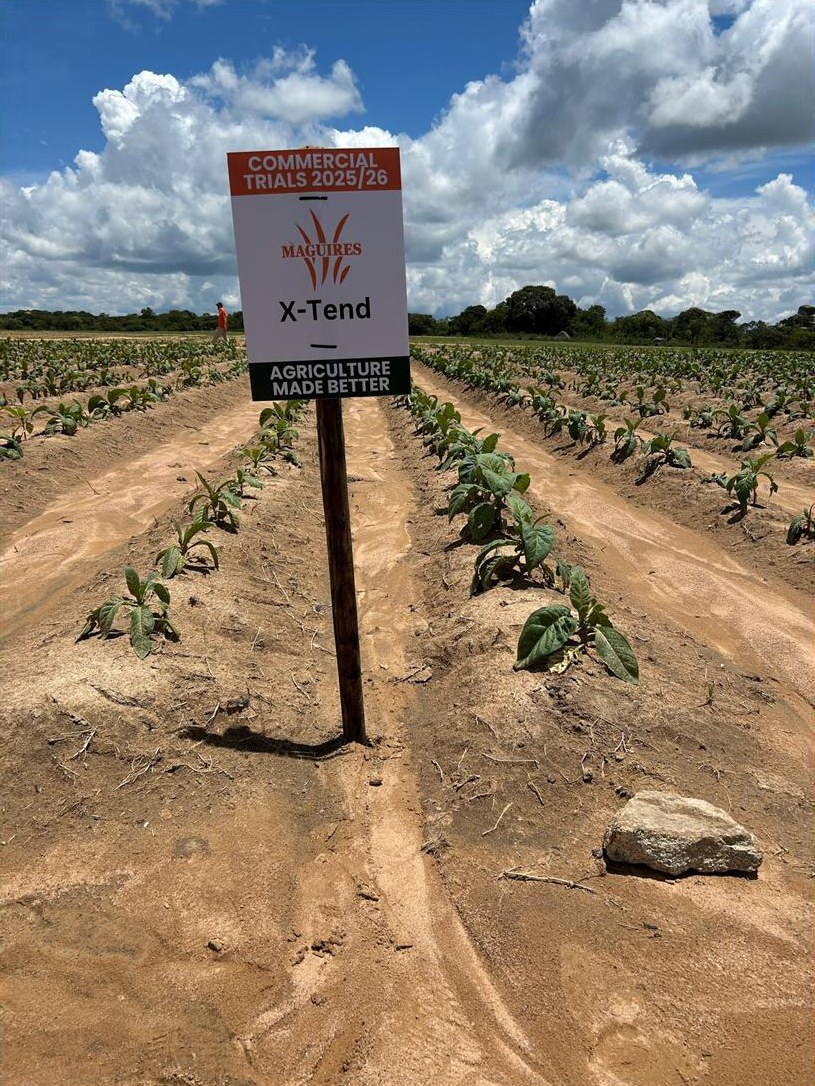
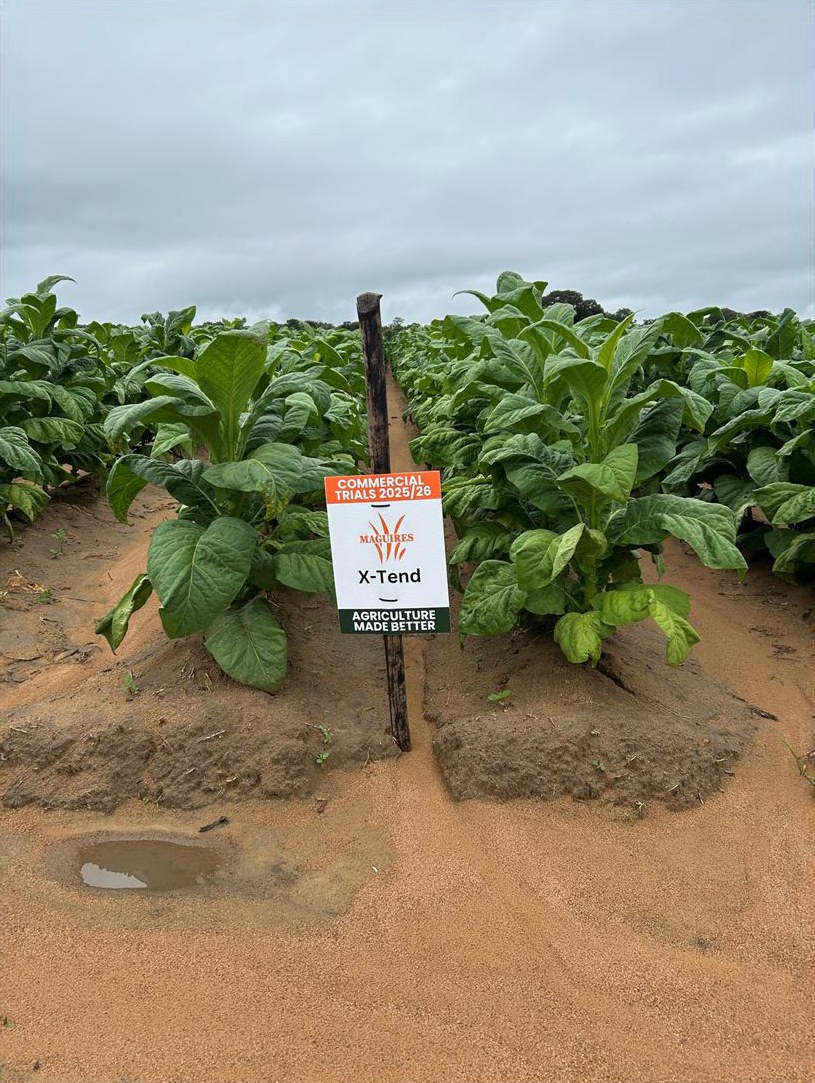
A fertilizer supplement, trialled against reduced fertilizer — 50% less in the left row and 20% less in the right row — using a mix of Compound D, Compound C and ammonium nitrate.
Root Development Comparison
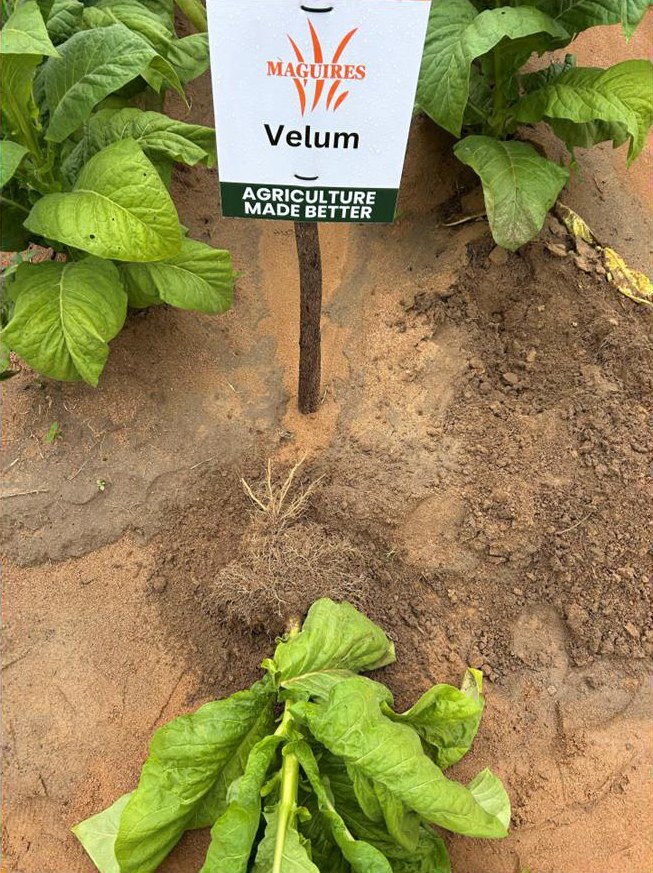
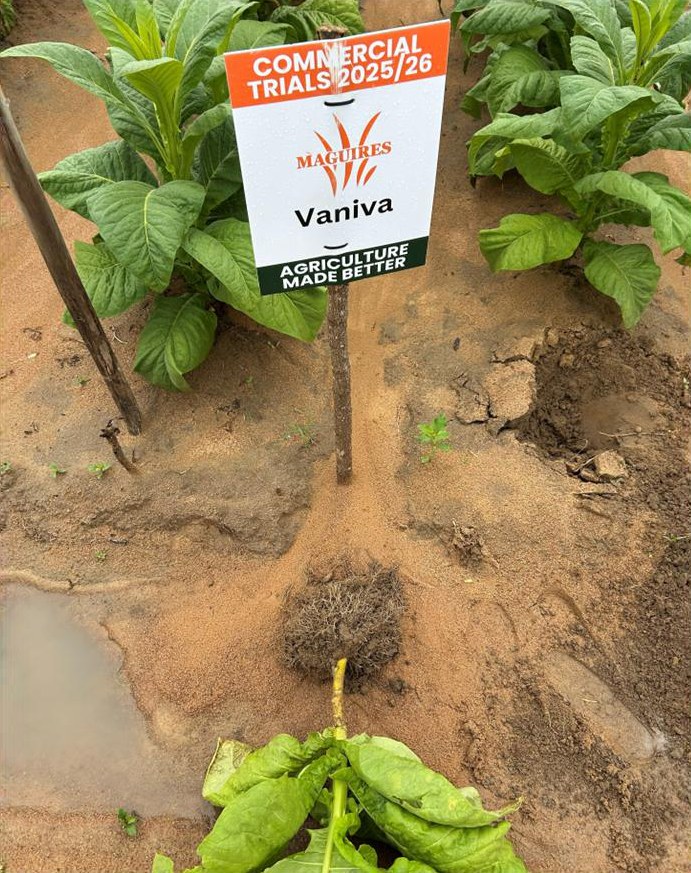
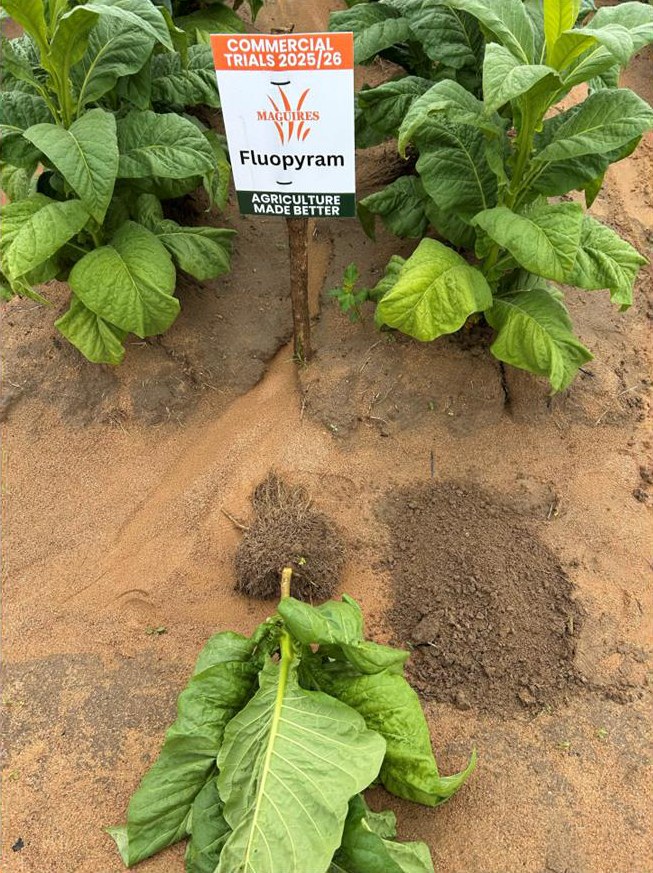
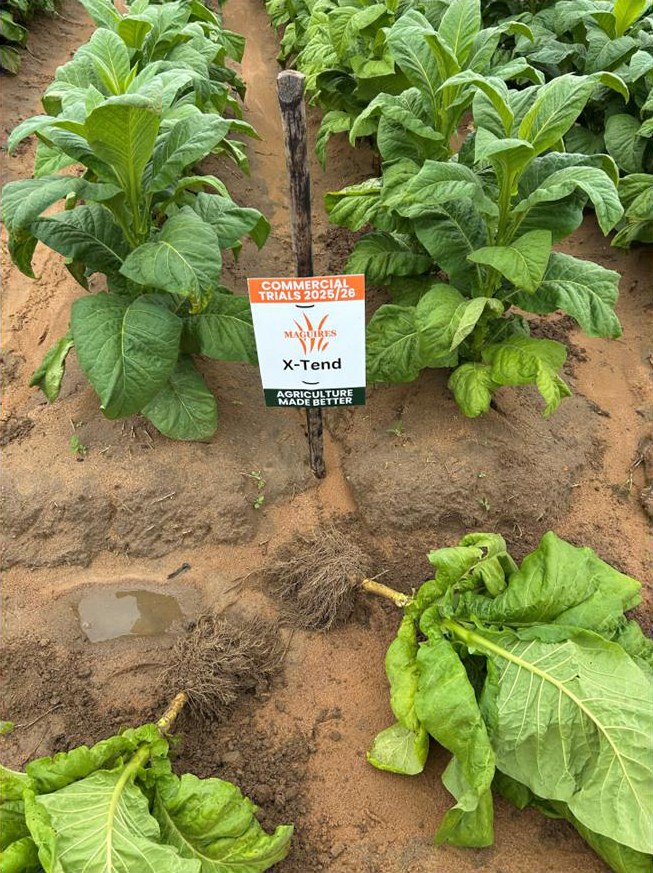
Whole plants were lifted from each treatment to compare their roots. All the plants had developed large, healthy root systems — with Velum appearing to have the best root system at this stage. Left to right: Velum, Vaniva, Fluopyram and X-Tend.
The X-Tend Fertilizer Comparison
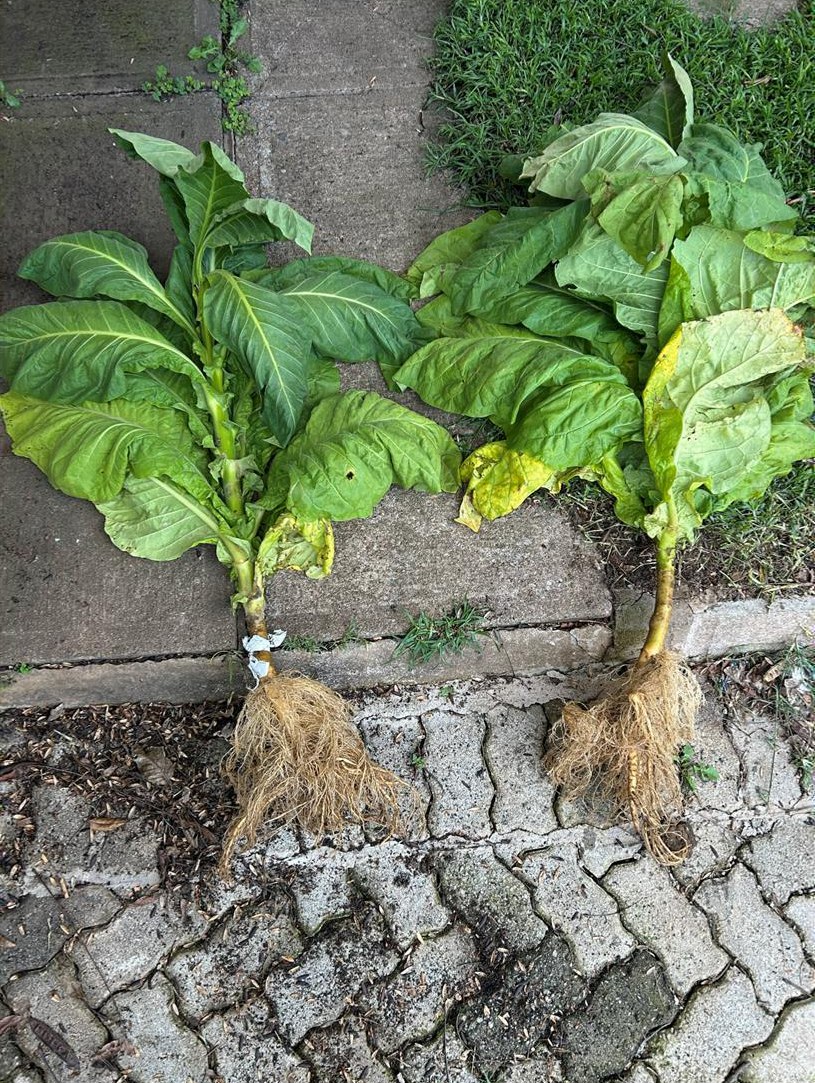
The X-Tend rows were run on reduced fertilizer to see how far the supplement could carry the crop. At 50% fertilizer the plants were only a little behind those on 80% — the same leaf count, and close on leaf length — a promising early result.
| Measurement | 50% fertilizer (left) | 80% fertilizer (right) |
|---|---|---|
| Stalk circumference | 79 mm | 93 mm |
| Average leaf length | 45 cm | 50 cm |
| Number of leaves | 17 | 17 |
Kutsaga Nematode Analysis
Soil and root samples were submitted to Kutsaga. The soil analysis revealed significant levels of root-knot nematodes (Meloidogyne spp), exceeding the damage threshold of 8 per 200 g of soil and indicating a high risk to the crop. The root samples, however, came back clean — no nematodes were observed in any of them.
| Soil sample | Root-knot (Meloidogyne) | Saprophytes (free-living) | Lesion (Helicotylenchus) | Spiral (Pratylenchus) | Advise |
|---|---|---|---|---|---|
| Fluopyram soil | 65 | 0 | 15 | 0 | Nematicide |
| Vaniva soil | 250 | 30 | 15 | 0 | Fumigant |
| Velum soil | 65 | 0 | 0 | 0 | Nematicide |
| Root sample | Root-knot (Meloidogyne) | Saprophytes (free-living) | Lesion (Helicotylenchus) | Spiral (Pratylenchus) | Advise |
|---|---|---|---|---|---|
| Fluopyram root | 0 | 0 | 0 | 0 | Monitor |
| Vaniva root | 0 | 0 | 0 | 0 | Monitor |
| Velum root | 0 | 0 | 0 | 0 | Monitor |
Recommendations from Kutsaga
Based on these findings, Kutsaga strongly recommend:
- Application of a biological control agent (BCA) like Trichoderma as a seed dressing for the rotational crop.
- Where possible, starting a production cycle by fumigating the affected plots with a suitable pre-plant nematicide — for example 1,3-D or Metham-sodium — depending on project requirements.
To further manage nematodes, suitable rotational or cover crops such as sunnhemp or katambora during the off-season are strongly recommended, along with regular mid-season soil testing to track nematode levels and guide management decisions.
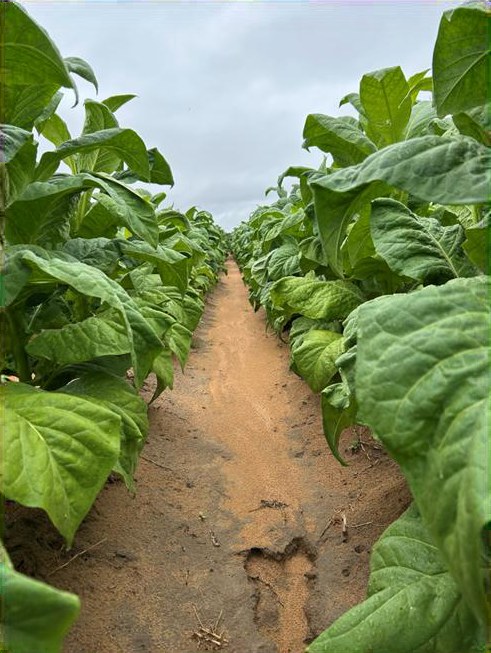
Through the Season
Conclusion
The chemical combinations — especially the treatments involving Velum, Vaniva and Fluopyram — showed clear early benefits:
- Improved early crop growth
- Stronger plant establishment
- Healthy foliage
- X-Tend performing well even at a 50% fertilizer rate
Despite hail early in December, these results indicate positive early trial performance and justify continued monitoring.
Key Finding
Even with heavy root-knot nematode pressure in the soil, every treatment carried clean roots — Velum showing the strongest of all — and X-Tend held the crop on just half the usual fertilizer.