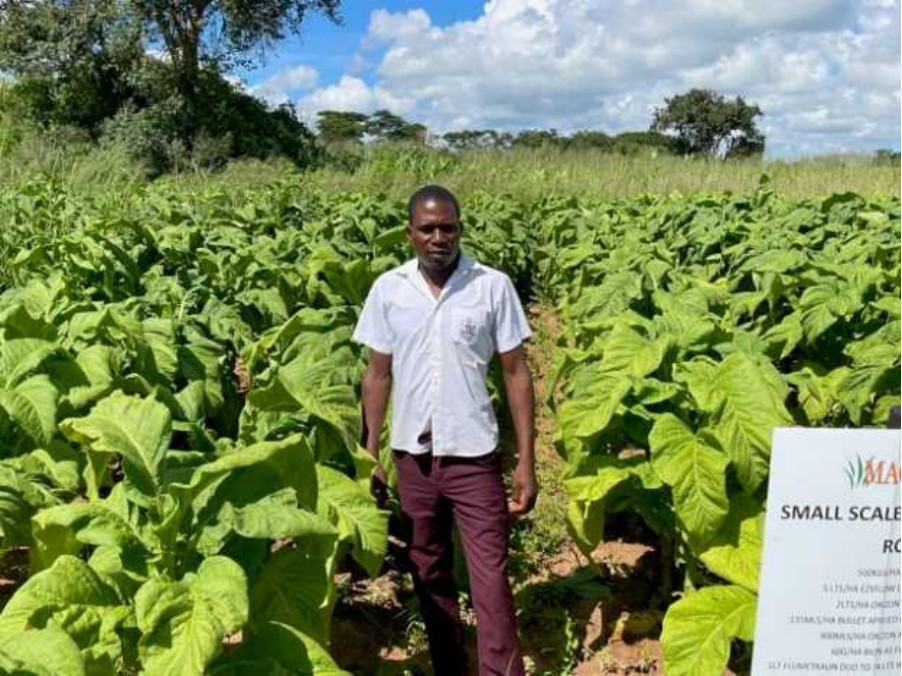
Trial at a Glance
- Farmer
- Togarepi Kopo Kambarami
- Grower Number
- V275559
- Area
- Centenary
- Planted
- 14 October 2021
Why We Run These Trials
Each year Maguires does trials on small-scale farms as well as commercial farms. Our goal is to find the most reliable and cost-effective way to grow a tobacco crop. We use several chemicals and fertilizers and constantly monitor the crop — and at the end of the season we record the weight of the leaves from each row and each reaping and compare the results.
Fertilizers & Chemicals on Trial
Thirteen trial rows, each with its own treatment programme.
| Row | Fertilizer | Nematicide | Fert Conditioner | Top Dressing | Insecticides | Fungicide | Suckericide |
|---|---|---|---|---|---|---|---|
| 1 | High C 400 kg/ha | — | — | A.N 120 kg/ha | Imidacloprid 1 L/ha · Bullet 250 mL/ha · Belt 50 mL/ha | — | N’Decanol 5 L/ha |
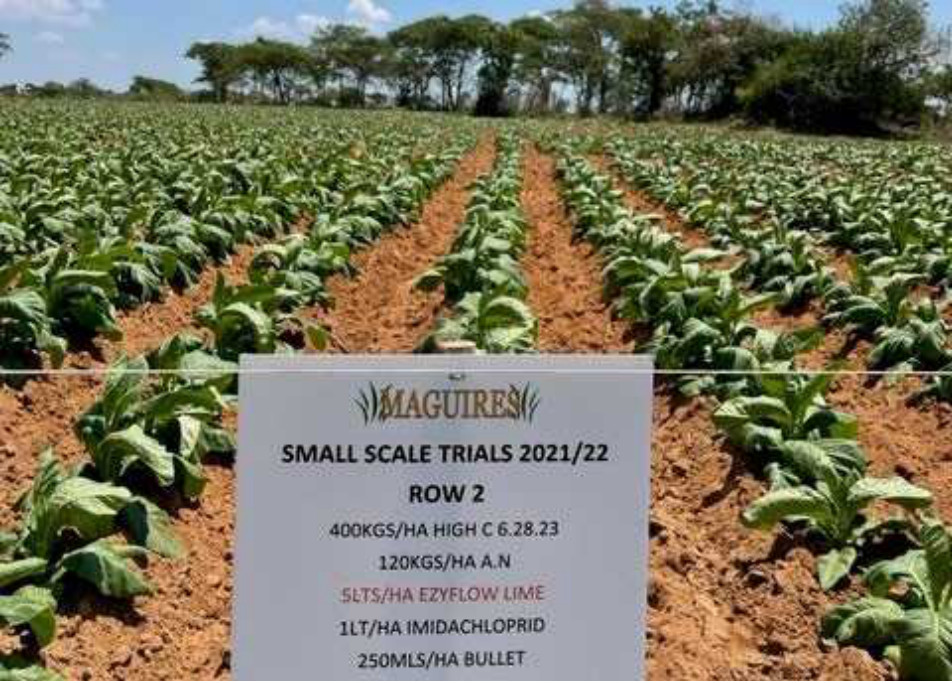
| 2 | High C 400 kg/ha | — | Ezyflow Lime 5 L/ha | A.N 120 kg/ha | Imidacloprid 1 L/ha · Bullet 250 mL/ha · Belt 50 mL/ha | — | N’Decanol 5 L/ha |
| 3 | Lime Blend 400 kg/ha | — | — | A.N 120 kg/ha | Imidacloprid 1 L/ha · Bullet 250 mL/ha · Belt 50 mL/ha | — | N’Decanol 5 L/ha |
| 4 | Lime Blend 400 kg/ha | — | Ezyflow Lime 5 L/ha | A.N 120 kg/ha | Imidacloprid 1 L/ha · Bullet 250 mL/ha · Belt 50 mL/ha | — | N’Decanol 5 L/ha |
| 5 | High C 400 kg/ha | Orizon 3 L/ha | — | A.N 120 kg/ha | Bullet 250 mL/ha · Belt 50 mL/ha | — | N’Decanol 5 L/ha |
| 6 | High C 400 kg/ha | Orizon ×2 3 L/ha | — | A.N 120 kg/ha | Bullet 250 mL/ha · Belt 50 mL/ha | — | N’Decanol 5 L/ha |
| 7 | High C 400 kg/ha | — | — | A.N 120 kg/ha | Imidacloprid 1 L/ha · Bullet 250 mL/ha · Belt 50 mL/ha | Bion 60 g/ha | N’Decanol 5 L/ha |
| 8 | High C 400 kg/ha | — | — | A.N 120 kg/ha | Imidacloprid 1 L/ha · Bullet 250 mL/ha · Belt 50 mL/ha | Bion ×2 60 g/ha | N’Decanol 5 L/ha |
| 9 | High C 400 kg/ha | — | — | A.N 120 kg/ha | Imidacloprid 1 L/ha · Bullet 250 mL/ha · Belt 50 mL/ha | Azoxy Duo ×2 500 mL/ha | N’Decanol 5 L/ha |
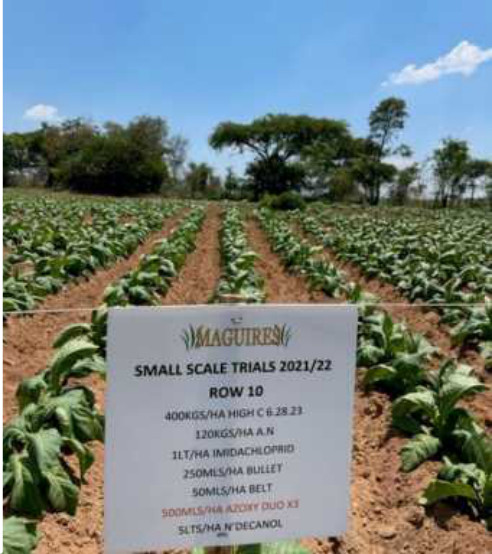
| 10 | High C 400 kg/ha | — | — | A.N 120 kg/ha | Imidacloprid 1 L/ha · Bullet 250 mL/ha · Belt 50 mL/ha | Azoxy Duo ×3 500 mL/ha | N’Decanol 5 L/ha |
| 11 | High C 400 kg/ha | — | — | A.N 120 kg/ha | Imidacloprid 1 L/ha · Bullet 250 mL/ha · Belt 50 mL/ha | — | Flumetralin Duo 2 L/ha |
| 12 | High C 400 kg/ha | — | — | A.N 120 kg/ha | Imidacloprid 1 L/ha · Bullet 250 mL/ha · Belt 50 mL/ha | — | Flumetralin Duo 3 L/ha |
| 13 | High C 400 kg/ha | VS-04 5 L/ha | — | A.N 120 kg/ha | Imidacloprid 1 L/ha · Bullet 250 mL/ha · Belt 50 mL/ha | — | N’Decanol 5 L/ha |
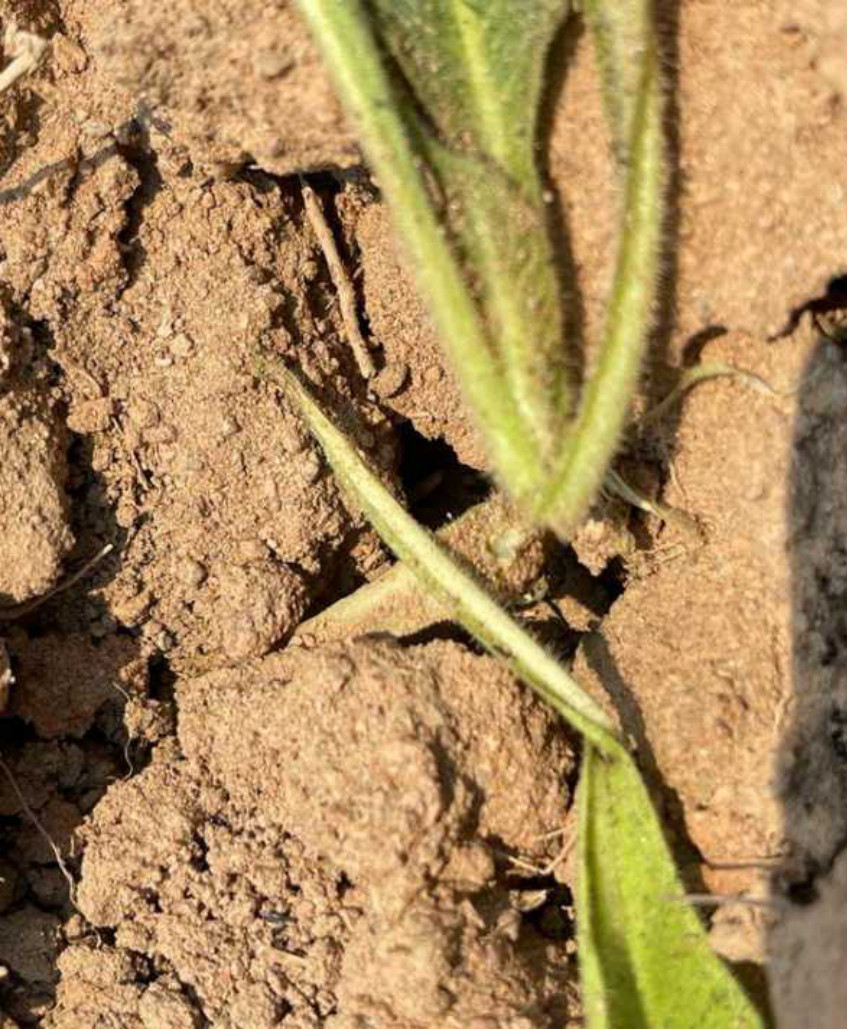
The Dusty Surface Beetle Problem
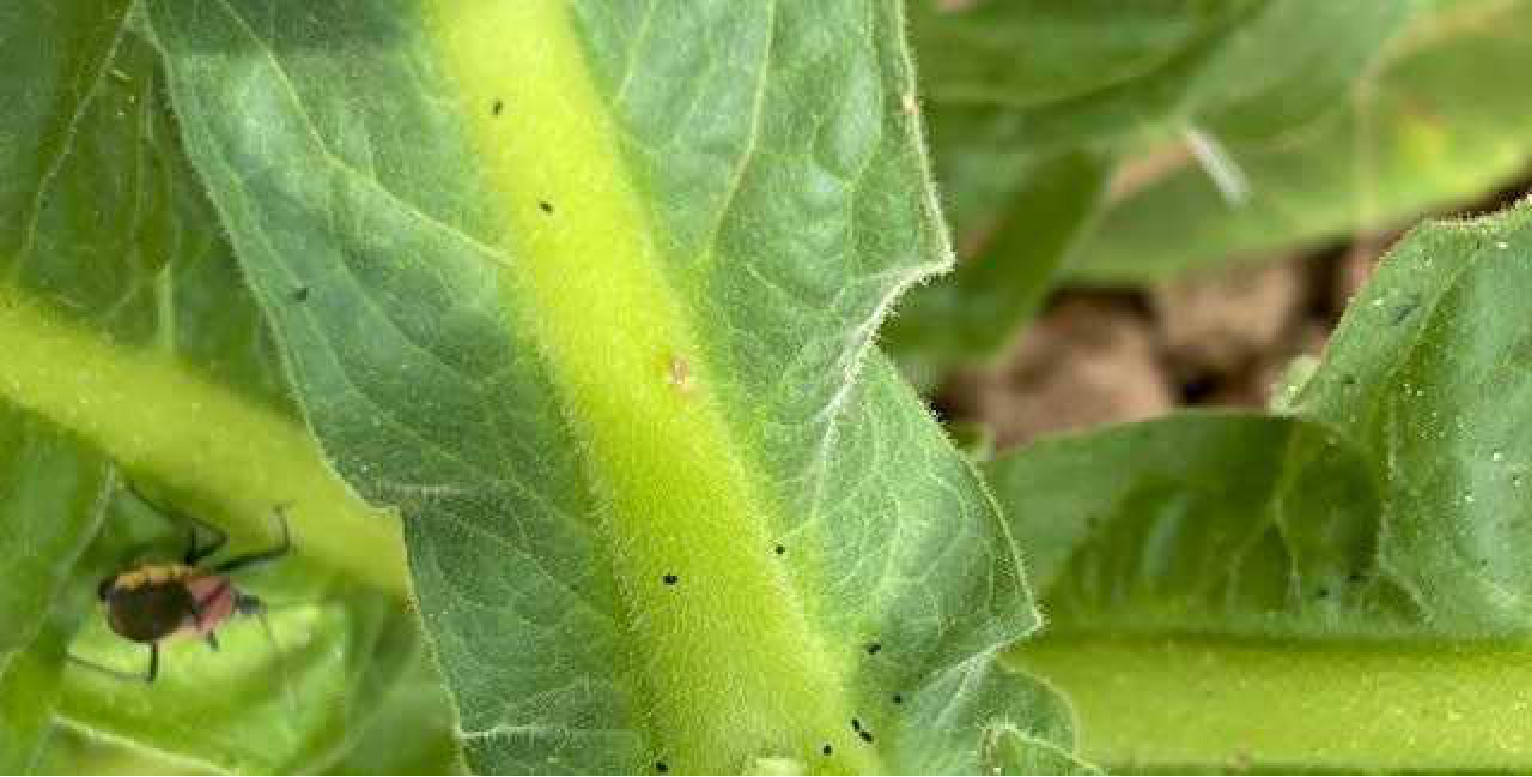
A problem we have found throughout all the small-scale trials is the dusty surface beetle. This is largely because the small-scale farmers do not dispose of their old stalks — and the beetles are often found in the stalks.
We have noticed a few plants have been affected by the dusty surface beetle, however the majority of the plants — around 99% — are all free from any signs of it.
The Season, Step by Step
The trial was inspected and photographed regularly through the first months of the season.
14 October 2021
At planting
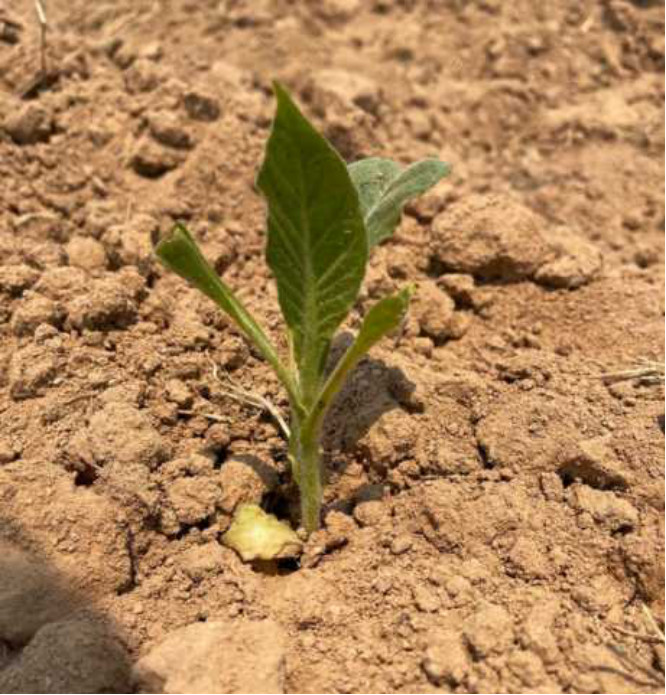
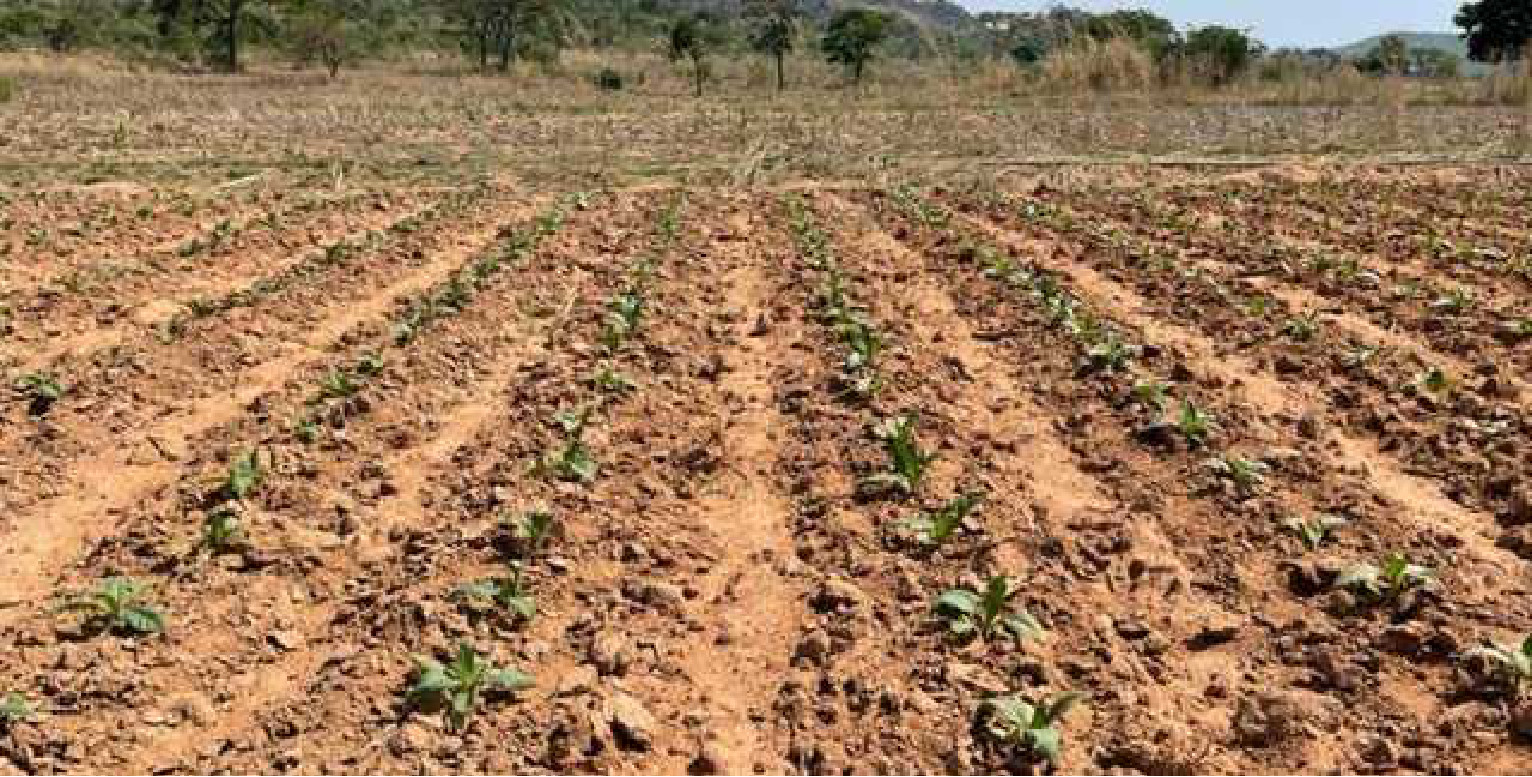
There is a lot of old stalk left in the land.
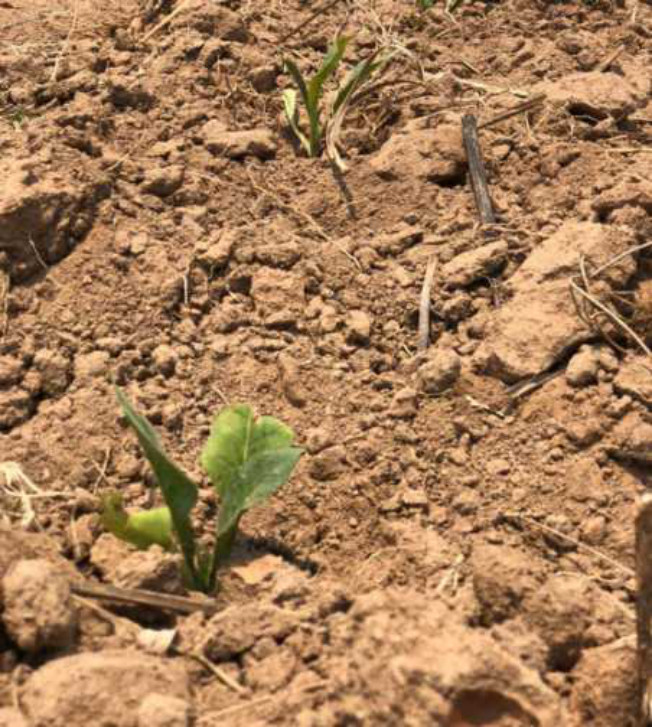
18 October 2021
The crop takes
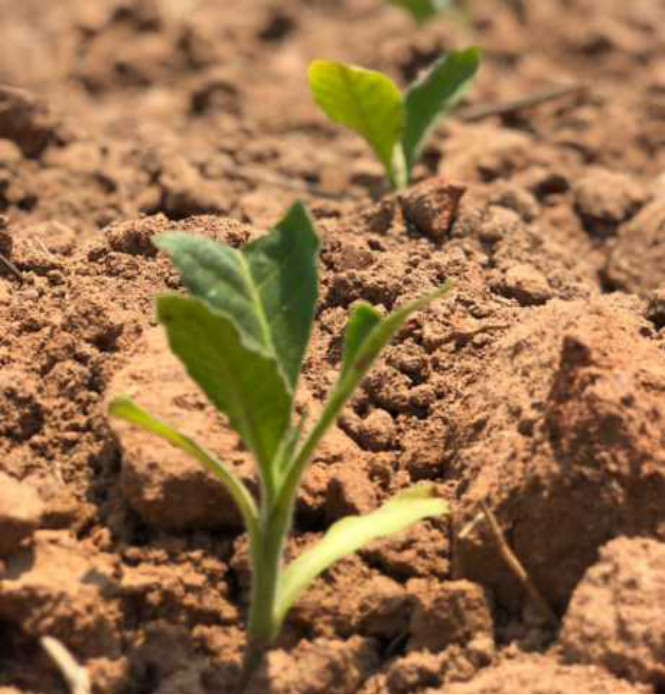
All the tobacco planted in the trial area took and is looking healthy.
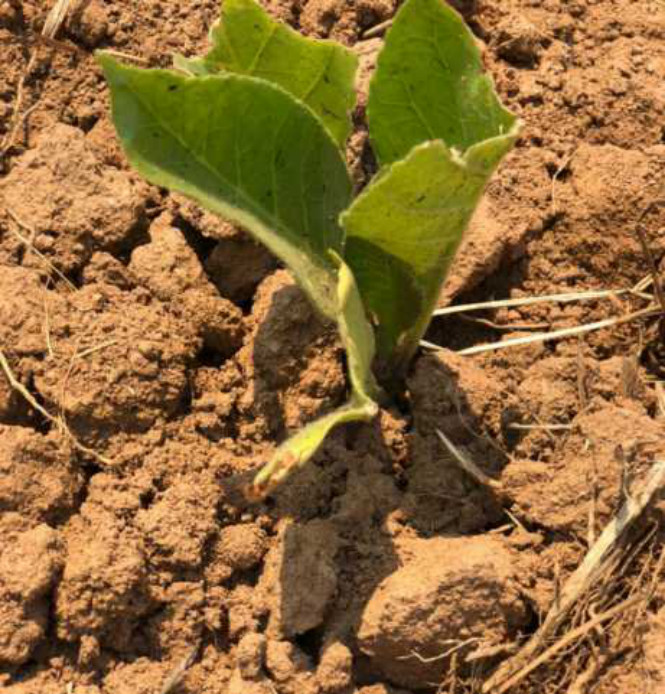
3 November 2021
Top dressing down, beetle damage gone
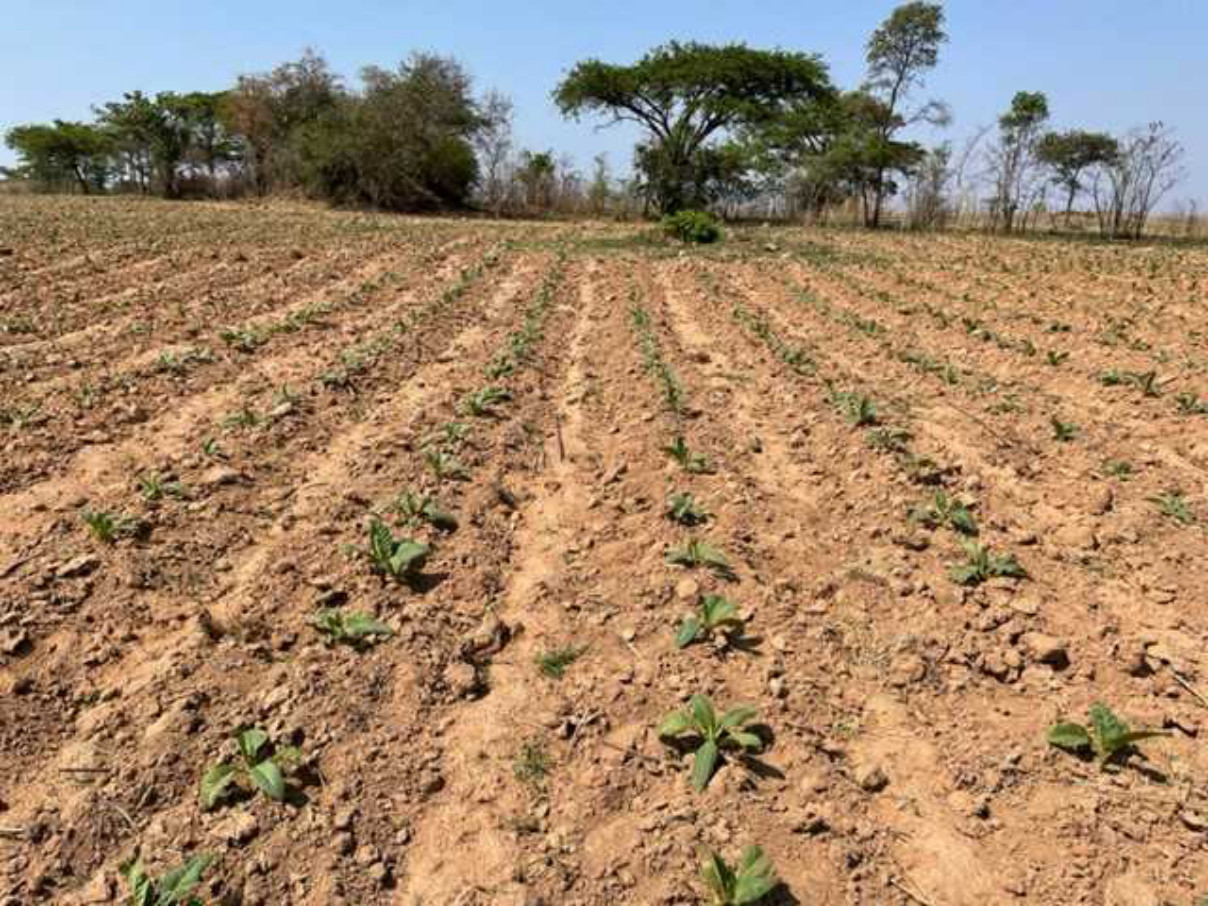
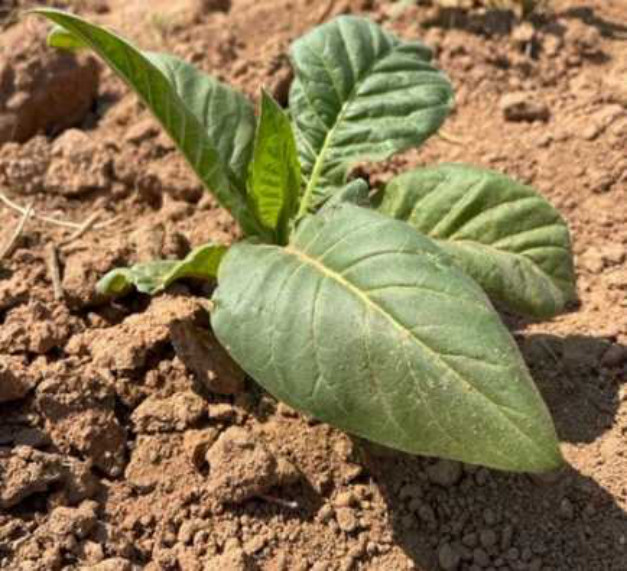
The farmer has recently put A.N down for all the tobacco. There is no more dusty surface beetle damage — all the plants are looking healthy and strong. The trial area has received 4 mm of rain this season, so the soil is still very dry and the tobacco has not shot up yet.
15 November 2021
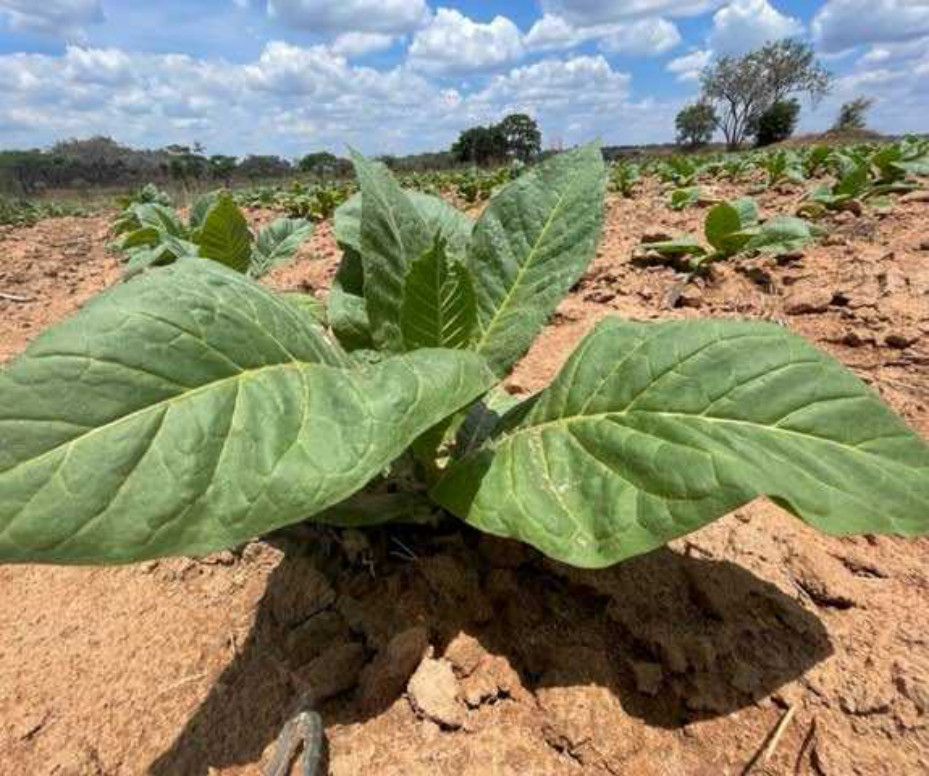
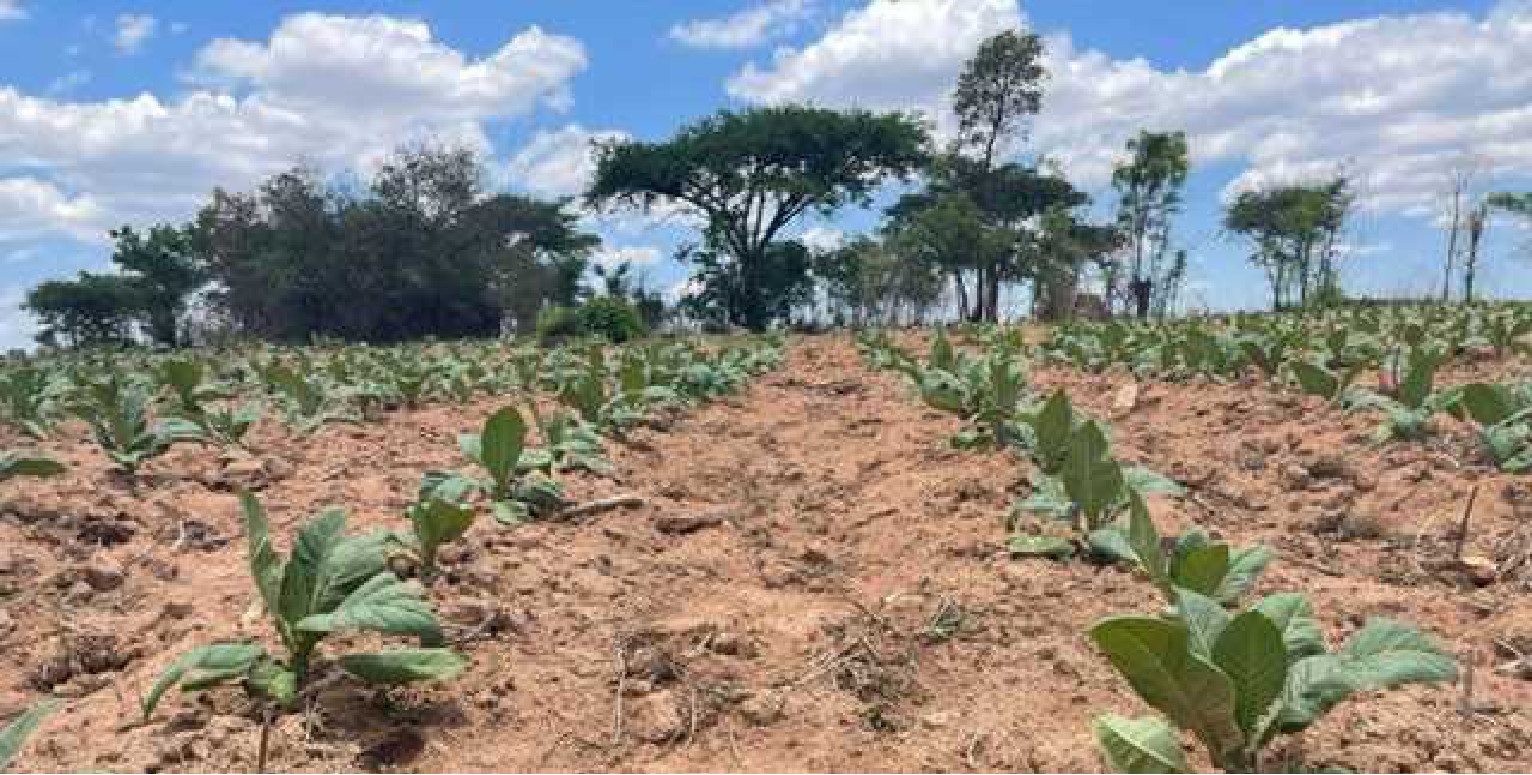
Completely insect-free
The tobacco is completely free from any dusty surface beetle and all insects. The land is still very dry — not much rain has fallen in the area.
1 December 2021
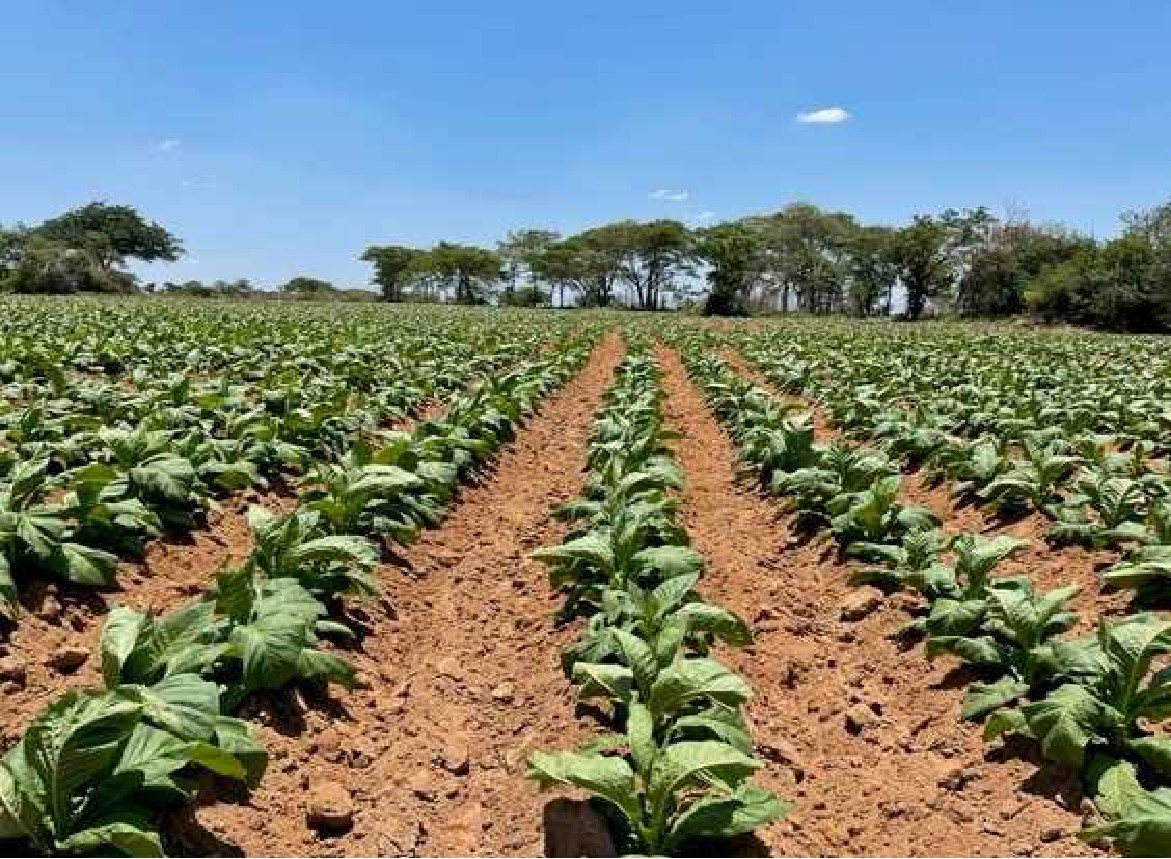
First real rainfall
The trial area received a small amount of rainfall over the past week.
December 2021
Marked trial rows
The trial area is marked out with signs indicating what chemicals are being used in each row — the chemical in red is the chemical being trialled.
December 2021
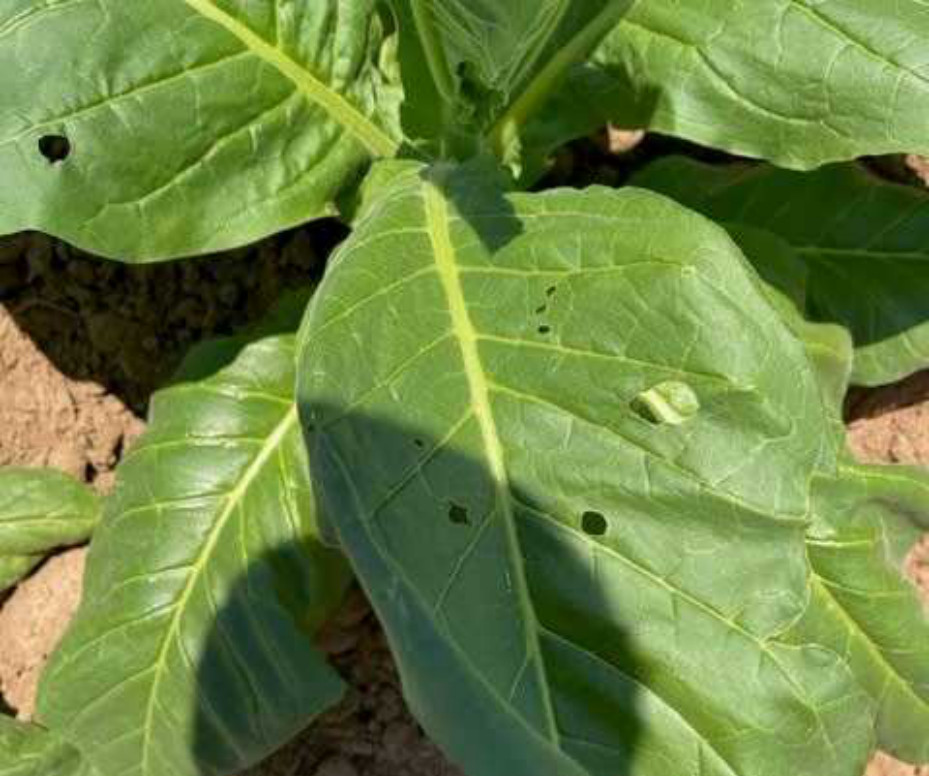
Minor insect damage
A few leaves have been eaten by an insect, but the leaves affected are minimal.
7 December 2021
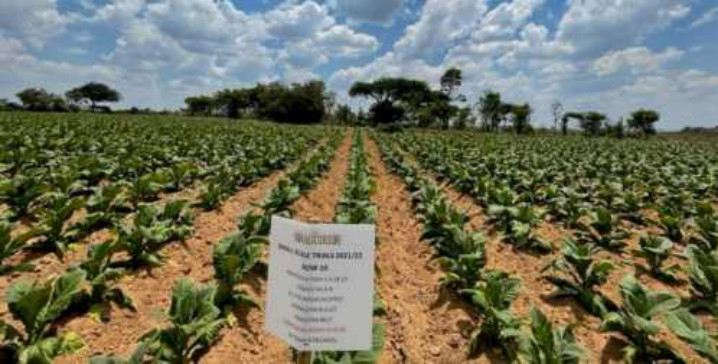
Healthy crop
The tobacco is looking healthy and there are no insects on the crop other than one plant, which has a few aphids.
Key Finding
In an area where old stalks left in the land make dusty surface beetle a common problem, around 99% of the trial plants stayed free of any signs of the beetle — and by early November the damage had stopped completely.