Trial at a Glance
- Farmer
- Petros Kasiyapfumbi
- Location
- Centenary
- Planted
- 17 November 2025
- Purpose
- Root development, nematodes & insects
Trial Overview
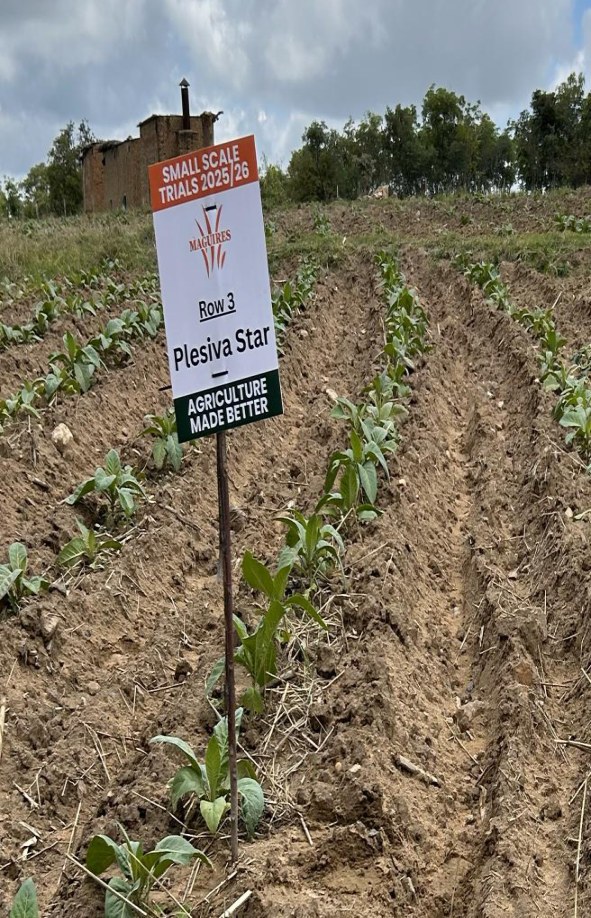
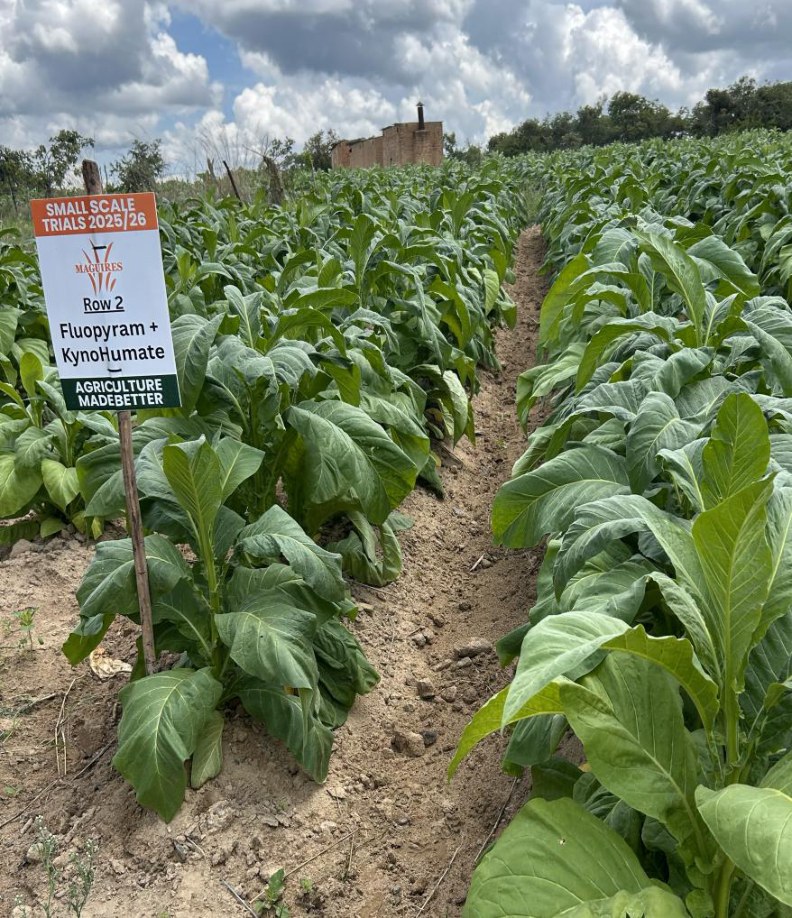
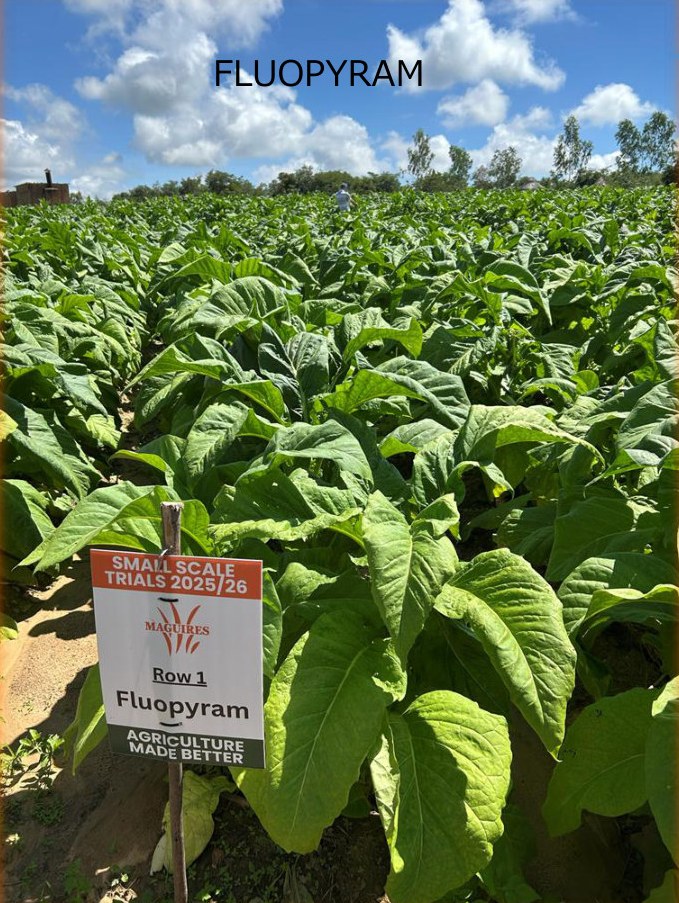
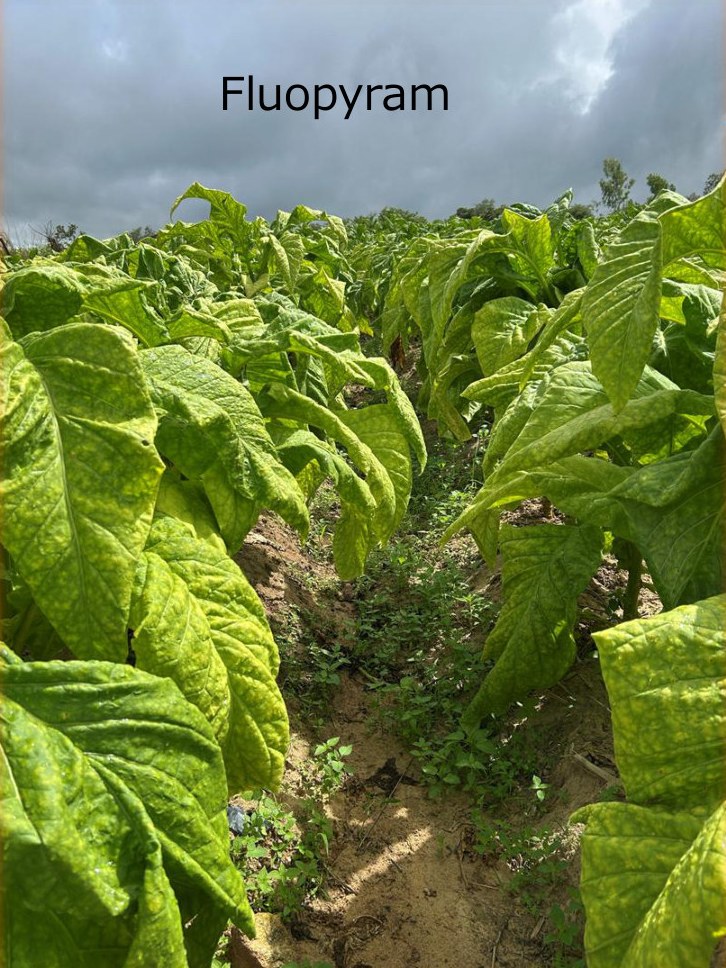
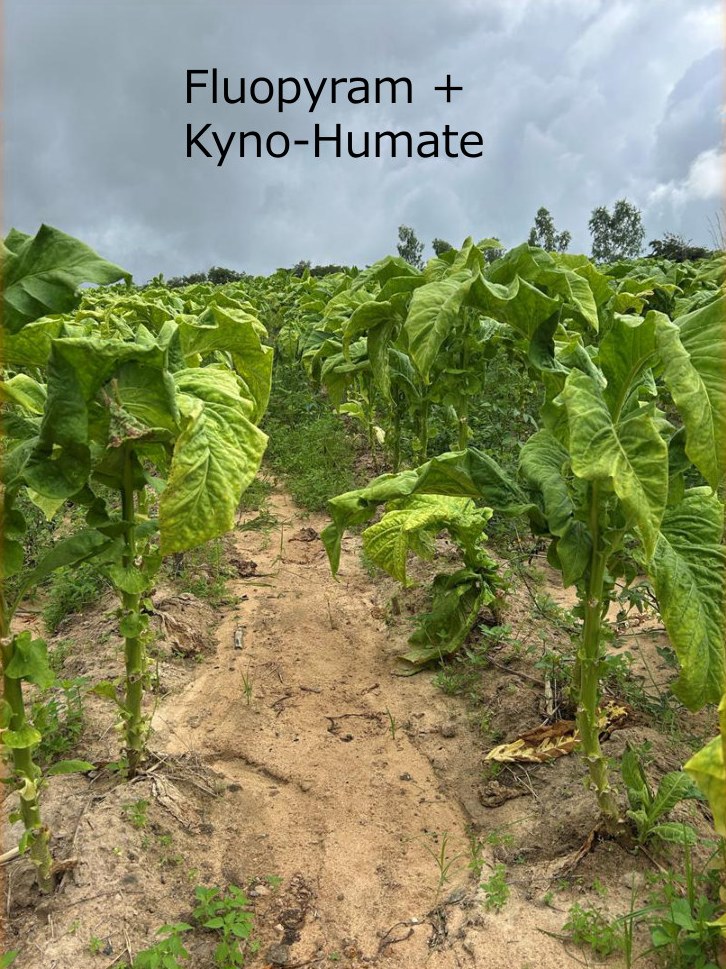
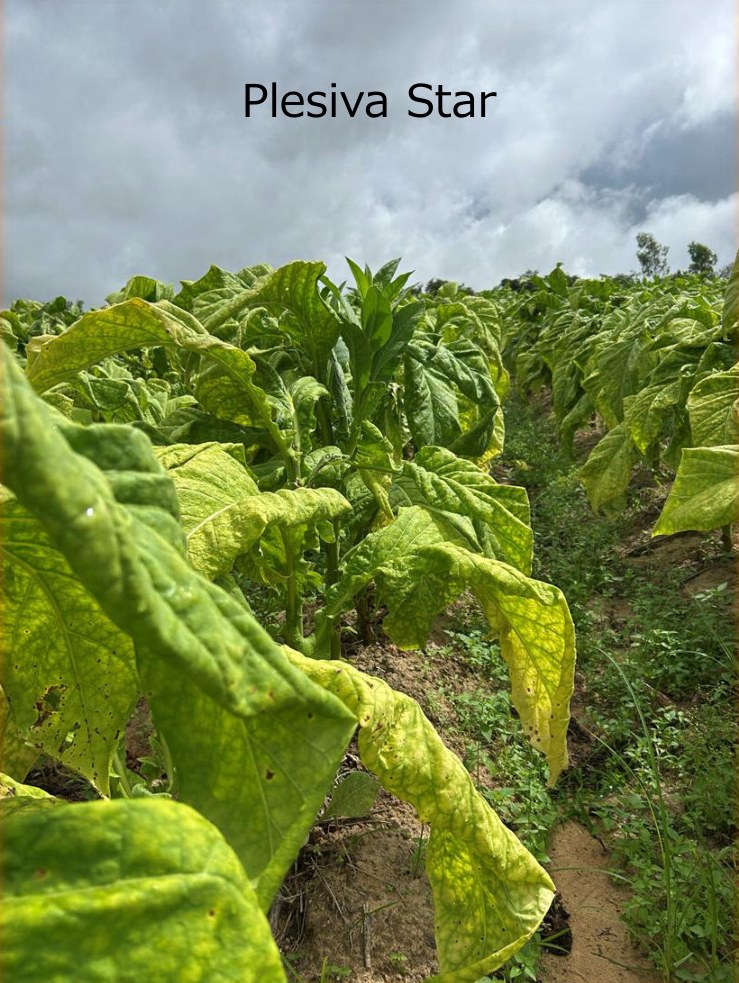
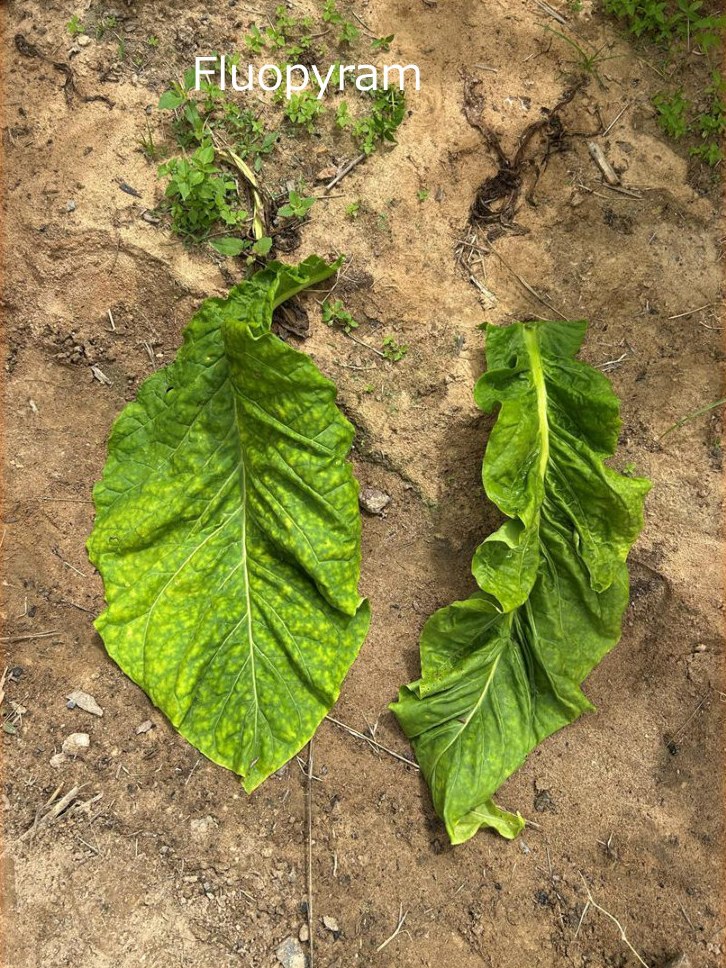
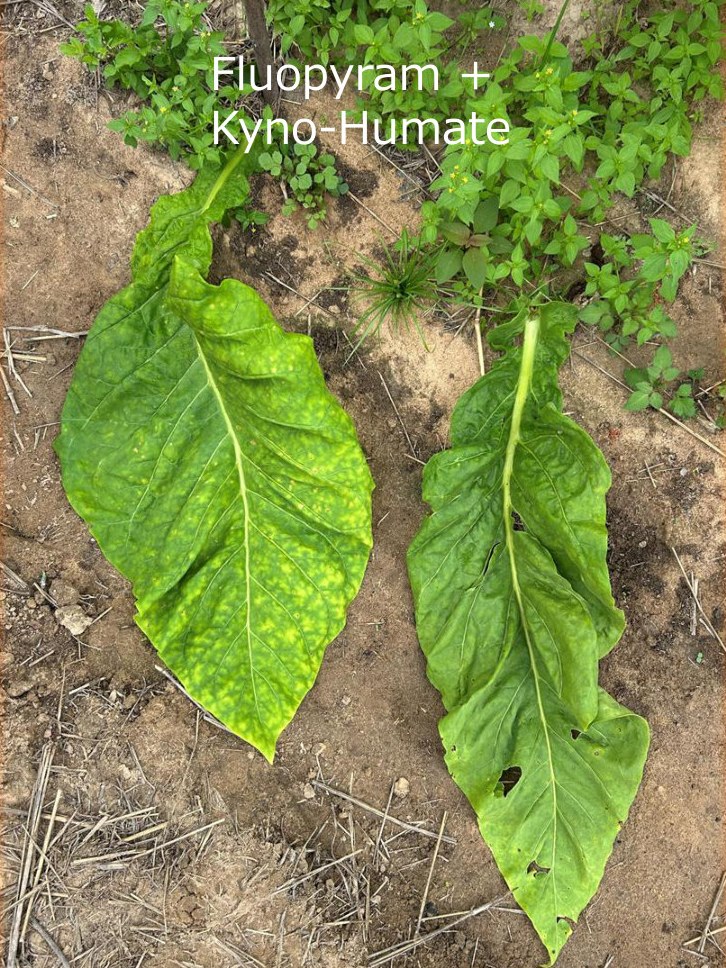
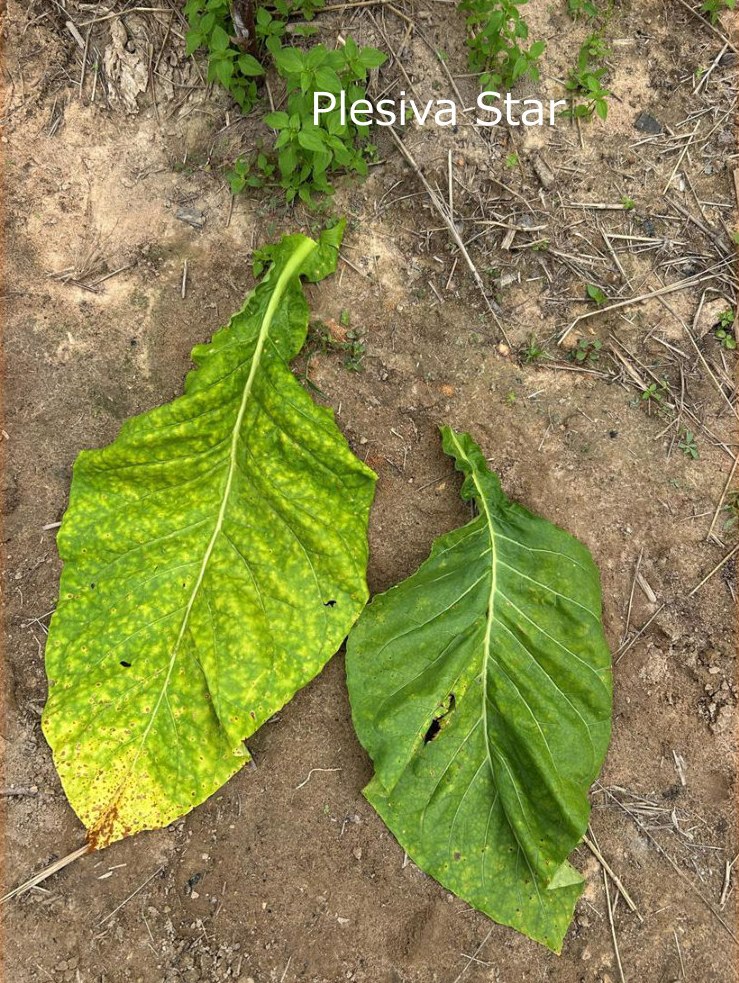
The Mashonaland Tobacco Company Packs were used throughout this farmer’s fields. In Row 1 we used Fluopyram, our primary nematicide understudy — 23 mL of Fluopyram into 10 L of water, a 30-cup measure of the solution added to each planting hole. In Row 2 we used Fluopyram together with our root bio-stimulant, Kyno-Humate — 23 mL of Fluopyram plus 125 mL of Kyno-Humate into 10 L of water. In Row 3 the primary insecticide, Imidacloprid, was substituted with Plesiva Star — 0.6 g into 10 L of water.
The Season, Step by Step
The trial was inspected from planting in November 2025, through a mid-season hailstorm, to harvest and the February field day.
17 November 2025
Planting day
The last rain was four days prior. At planting there were old maize stalks left in the lands, but insect presence was low. Soil moisture was low, so the water-planting method was used.
8 December 2025
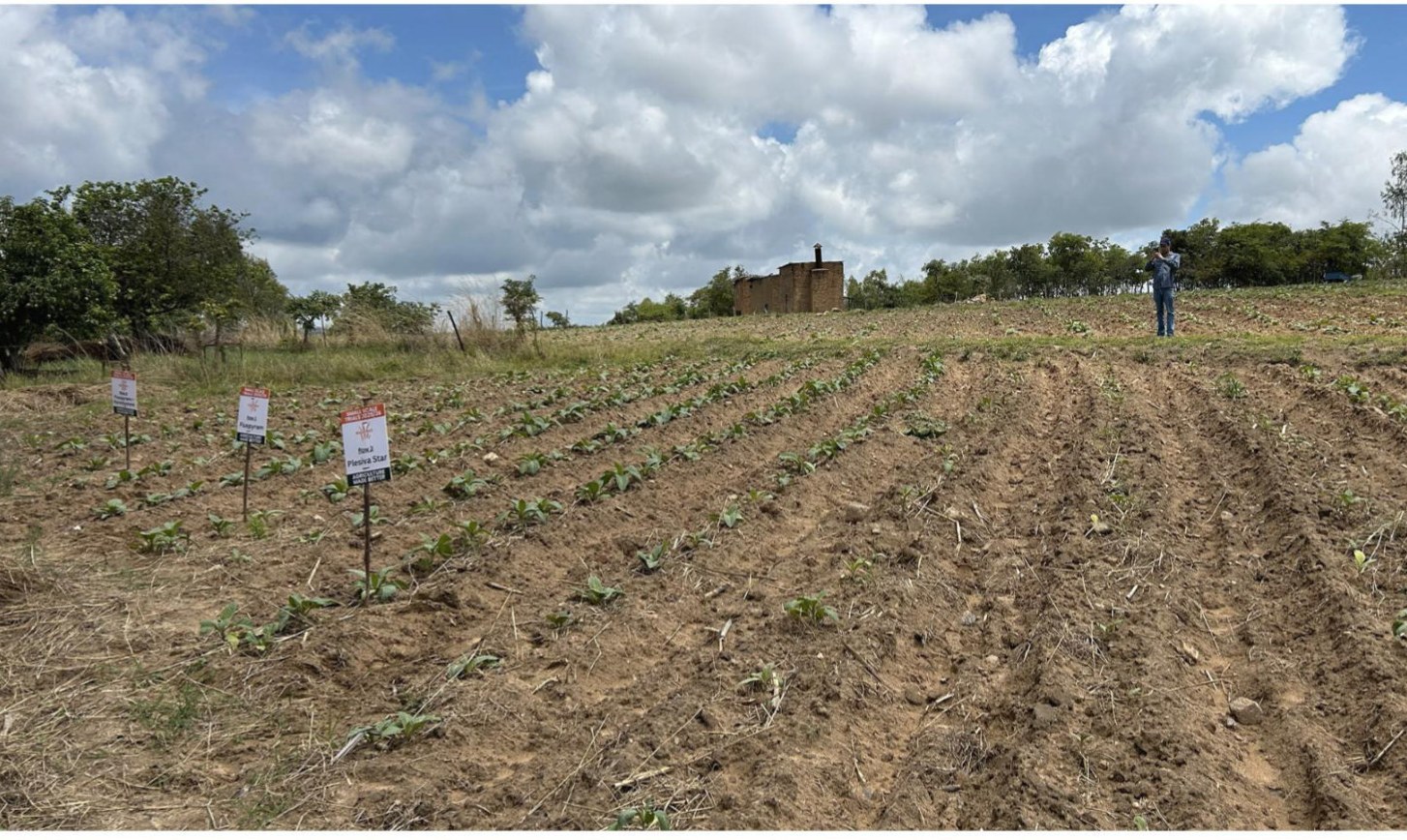
First visit — trial vs control
There is a visible difference between the control row (right of the image) and the trial rows (left). All the plants in the trial rows have taken and are looking healthy, while there have been plant deaths in the control area, where the plants appear stressed and less established.
7 January 2026
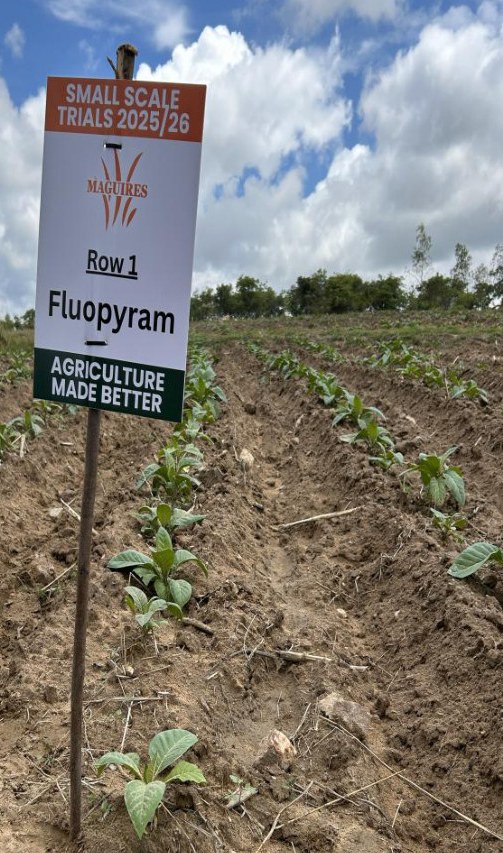
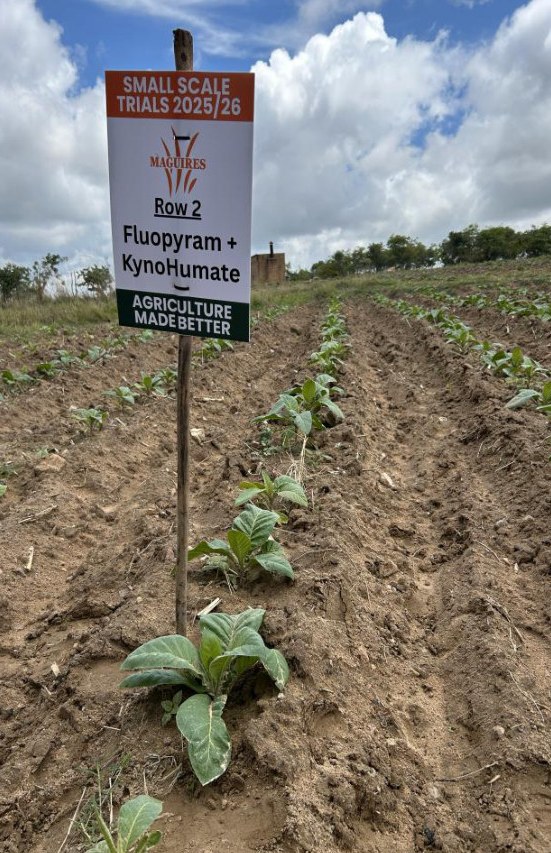
Second visit
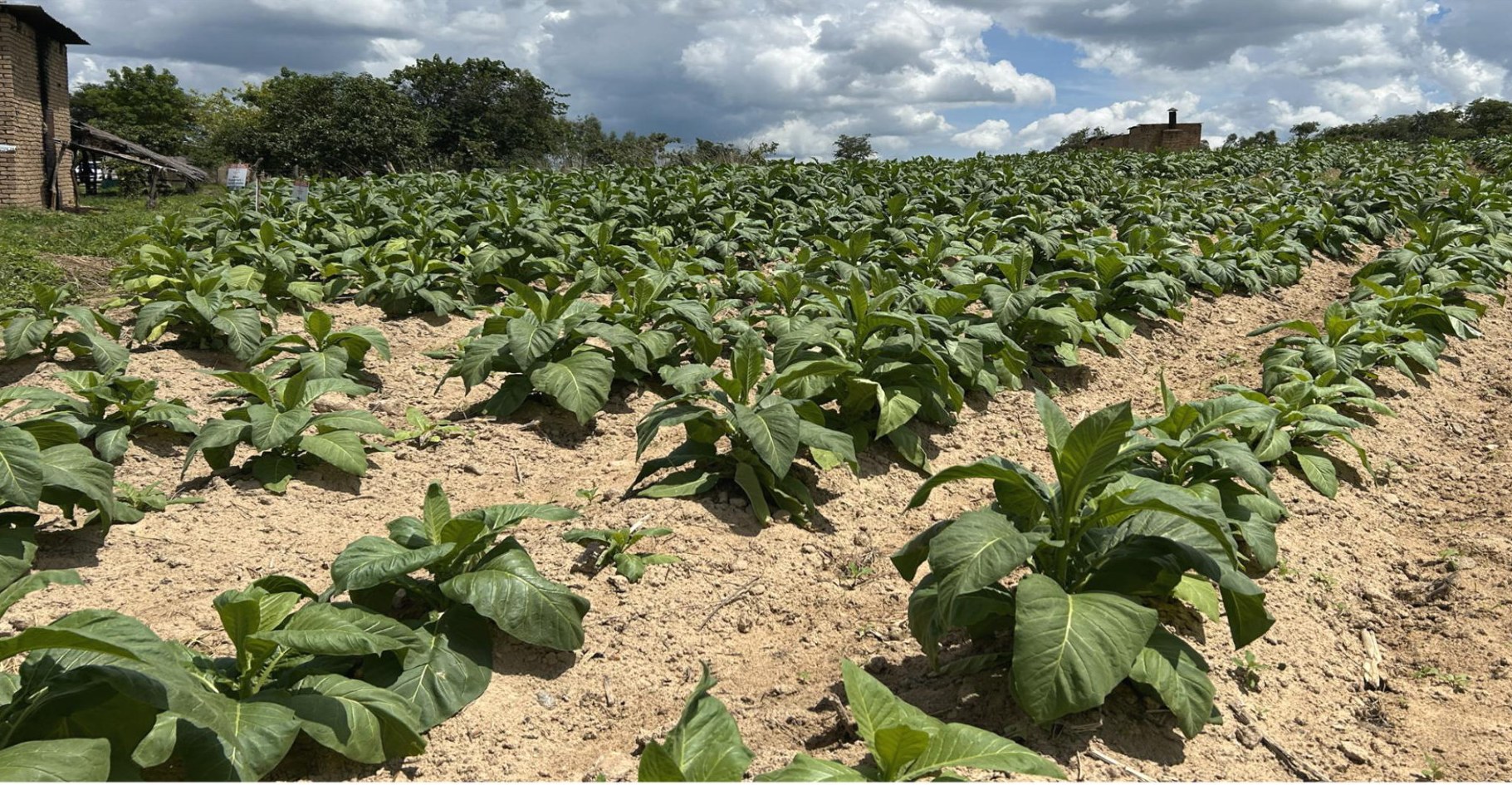
All plants in the trial area are looking healthy and well established, with no visible signs of weeds or insects. Plants averaged 16 leaves, with an average length of 80 cm. Plants in the control area have improved but are less established and uniform, with signs of sun scorching.
27 January 2026
Third visit
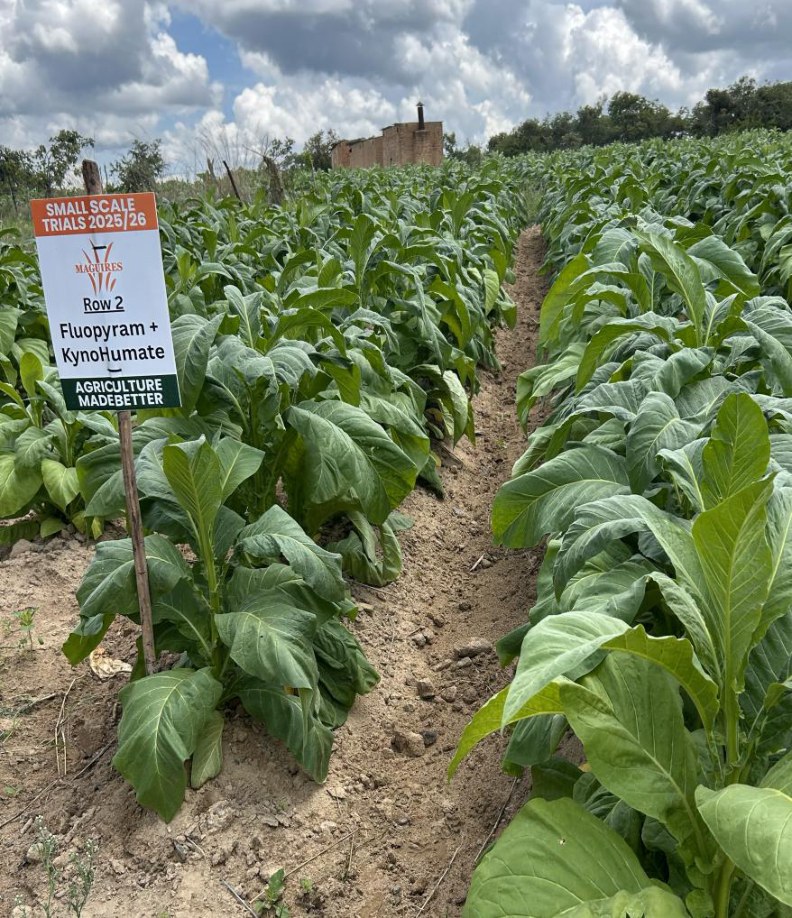
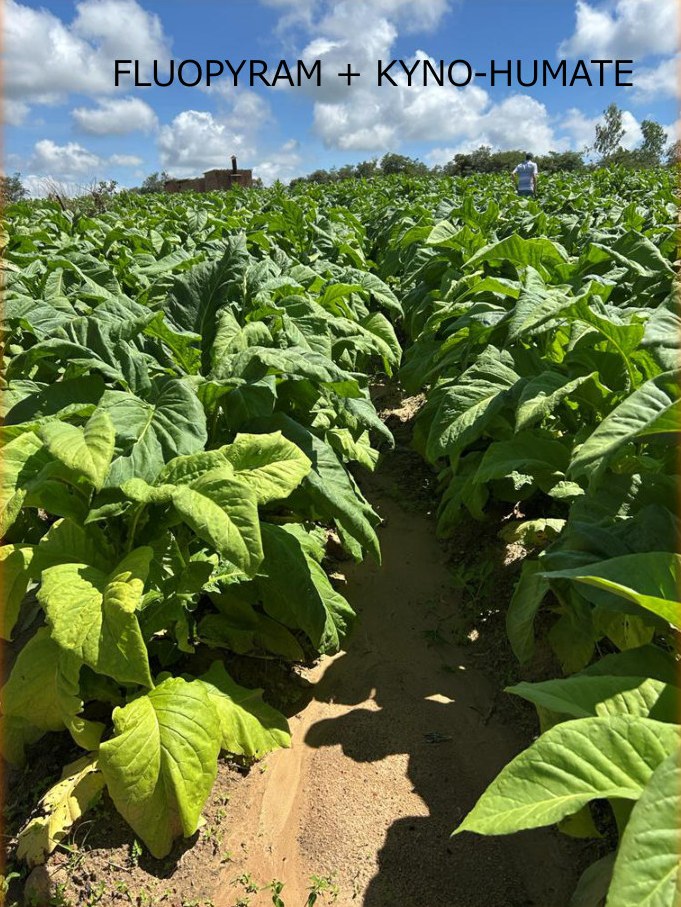
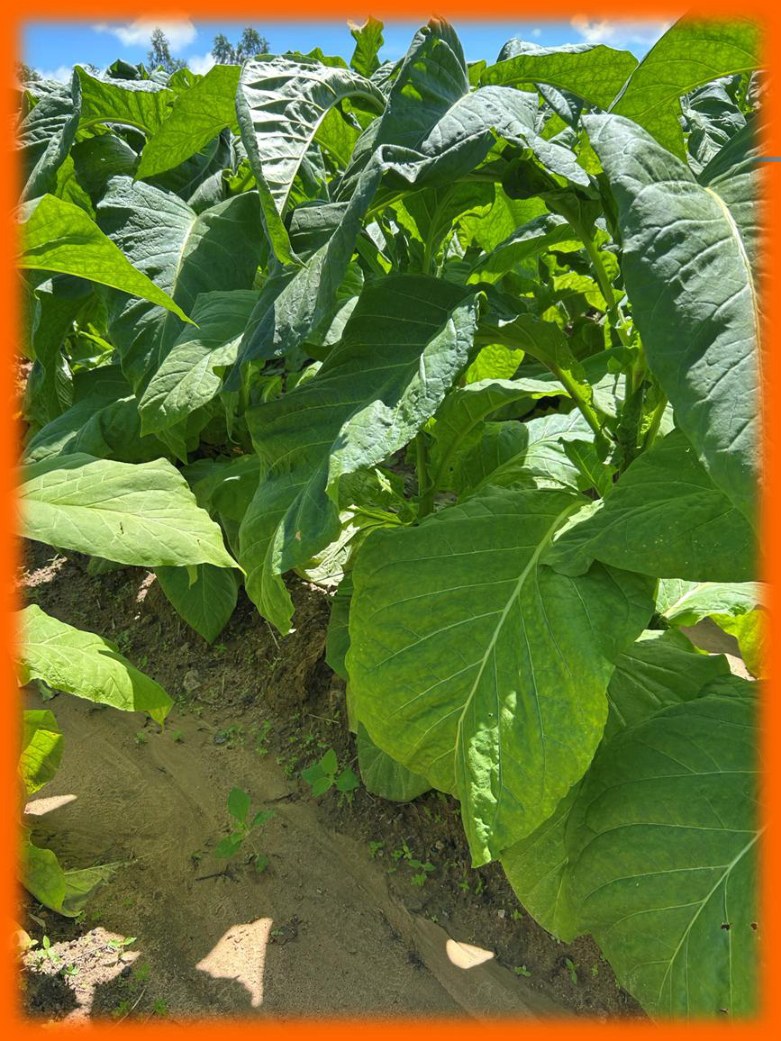
The three treatment rows — Fluopyram + Kyno-Humate, Fluopyram, and Plesiva Star — continuing to advance well.
January 2026
Hail & windstorm
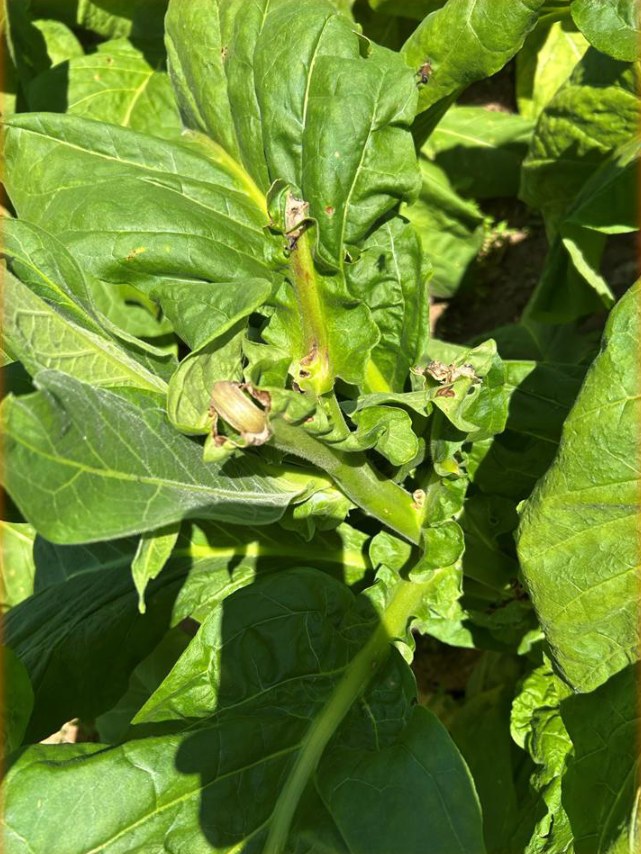
The whole trial, the control, and the rest of the area was hit by a minor hailstorm — but it was windy, which ripped and bent some of the crop. The damaged and loose crop from the storm was harvested and sent into the barns for drying and curing.
19 February 2026
Fourth visit
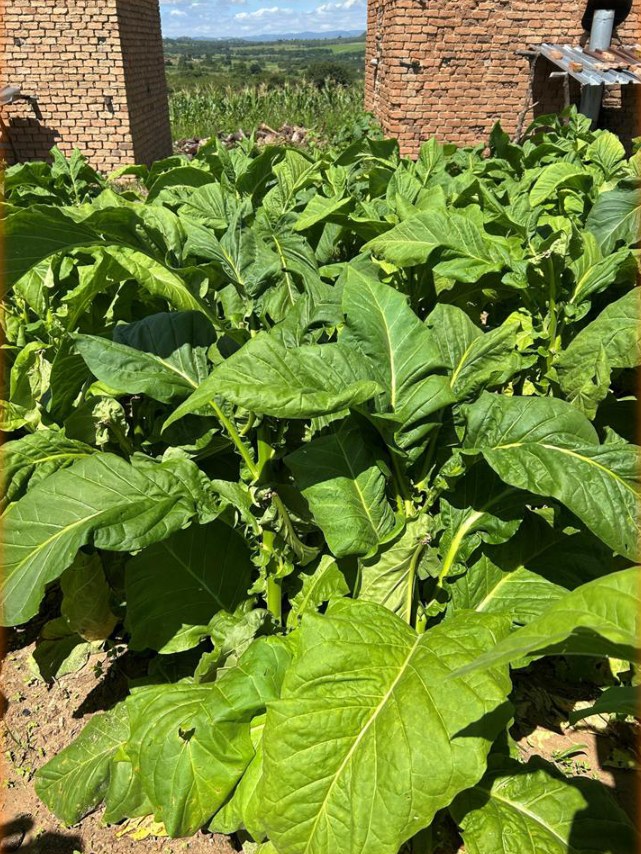
The three treatment rows approaching harvest — Fluopyram, Fluopyram + Kyno-Humate, and Plesiva Star.
19 February 2026
Leaf comparison — trial vs control
A single leaf from each treatment placed beside a control leaf. The trial-area leaves are on the left of each pair and the control leaves on the right.
February 2026
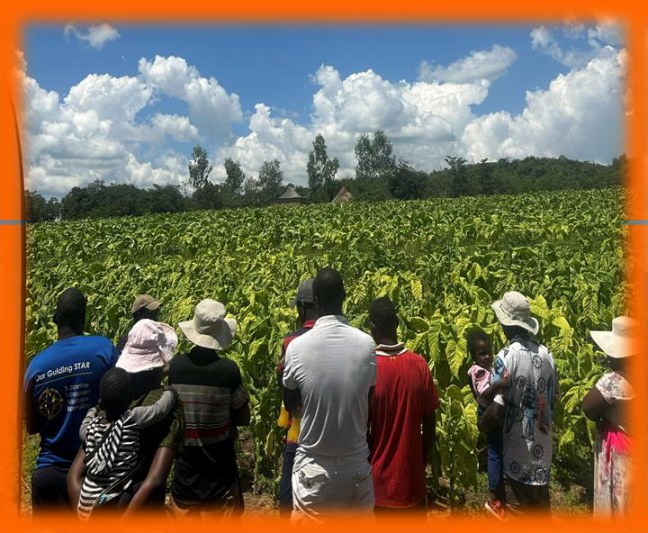
Harvest & field day
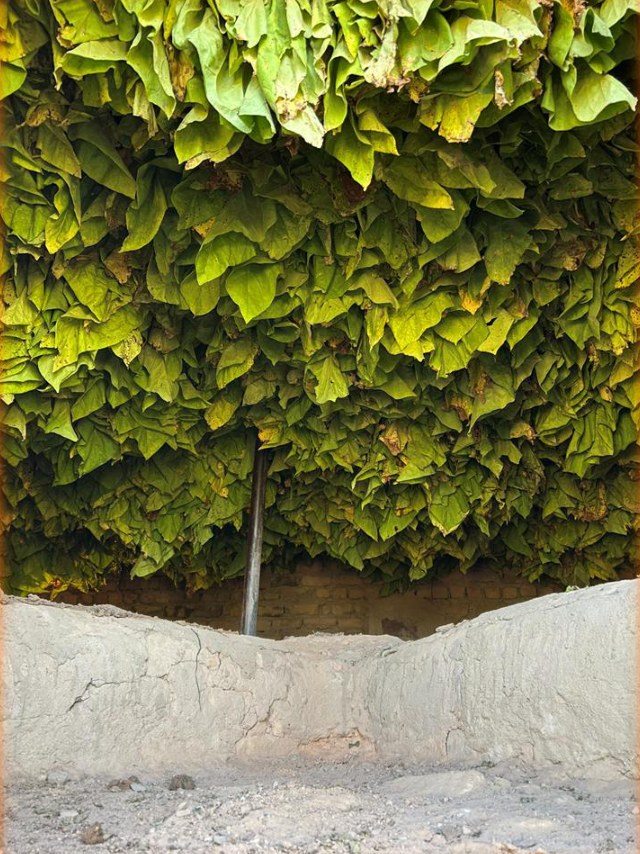
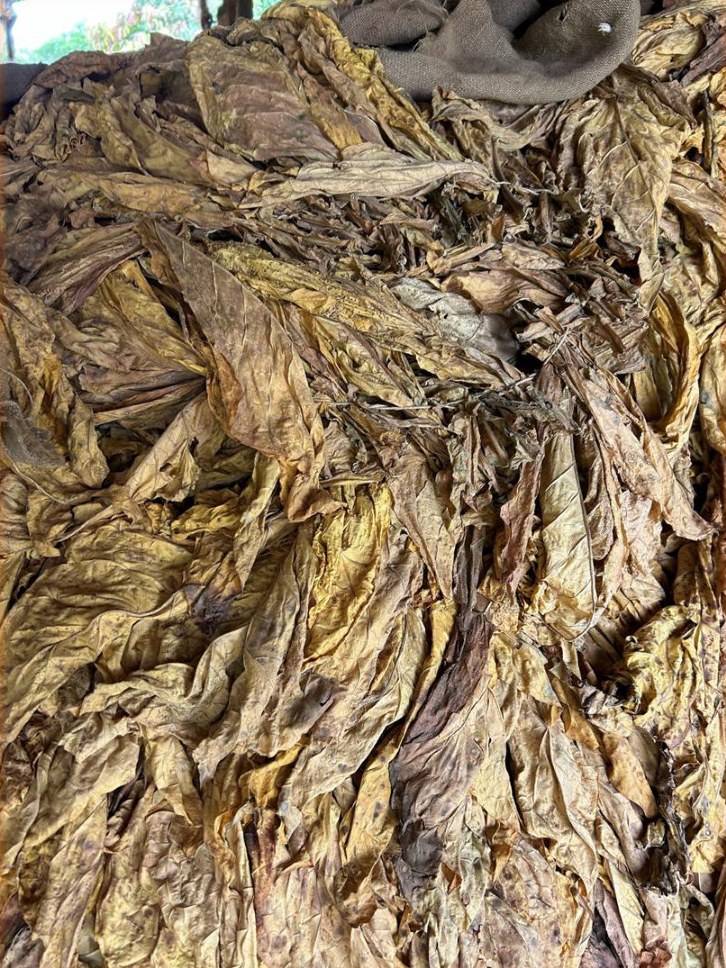
The harvested crop hanging in the barn, and the field day held on 28 February 2026.
Leaf Comparison
A leaf from each treatment was measured against the control for length, diameter and weight.
| Measurement | Control | Fluopyram | Fluopyram + Kyno-Humate | Plesiva Star |
|---|---|---|---|---|
| Average leaf length | 69.3 cm | 75.6 cm | 65.8 cm | 67.3 cm |
| Average leaf diameter | 28.3 cm | 41.2 cm | 38.0 cm | 47.0 cm |
| Average leaf weight | 108.6 g | 109.0 g | 87.6 g | 110.2 g |
Kutsaga Nematode Analysis
Soil and root samples were submitted to Kutsaga. The analysis revealed significant levels of root-knot nematodes (Meloidogyne spp) in the soils — counts exceeded the damage threshold of 8 per 200 g, indicating a high risk of damage to the future tobacco crop. On the roots, however, root-knot nematodes were noted in only one sample, and there was no galling on any of the root samples.
| Sample | Root-Knot (Meloidogyne spp) | Saprophytes (Free-living) | Lesion (Pratylenchus spp) | Spiral (Helicotylenchus spp) | Advise |
|---|---|---|---|---|---|
| Soil — Centenary (F) | 125 | 15 | 35 | 0 | Fumigate |
| Soil — Centenary (F+K) | 50 | 10 | 10 | 20 | Nematicide |
| Soil — Marondera (F) | 55 | 20 | 0 | 0 | Nematicide |
| Soil — Marondera (F+K) | 10 | 0 | 0 | 0 | Nematicide |
| Sample | Root-Knot (Meloidogyne spp) | Root-Gall Rating (0–8) |
|---|---|---|
| Root — Centenary (F) | 0 | 0 |
| Soil — Centenary (F+K) | 0 | 0 |
| Soil — Marondera (F) | 0 | 0 |
| Soil — Marondera (F+K) | 10 | 0 |
Conclusion
The chemical combinations — especially treatments involving Fluopyram and Kyno-Humate — showed:
- Improved early crop growth
- Stronger plant establishment
- Healthy foliage
- No pest presence detected
These results indicate positive early trial performance and justify continued monitoring. The whole trial, the control and the rest of the area was hit by a minor but windy hailstorm that ripped and bent some of the crop.
Key Finding
Every treatment produced a wider leaf than the control — the Plesiva Star leaves measured 47 cm across against the control’s 28.3 cm — and the trial rows established faster and more evenly than the control, which showed plant deaths and sun scorching.