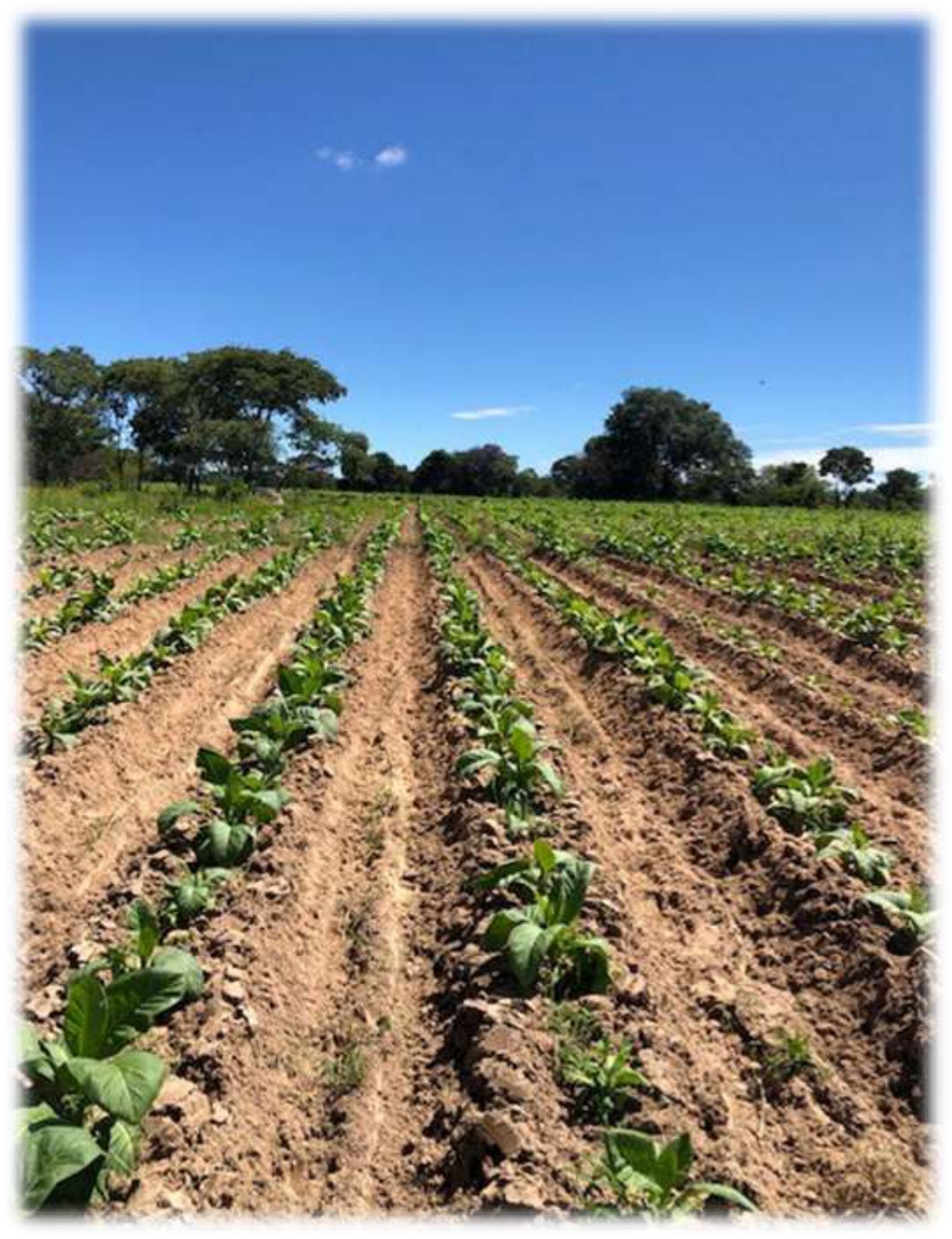
Trial at a Glance
- Farmer
- Isaac Nyakutepa
- Grower Number
- V185629
- Area
- Trelawney
- Planted
- 1 December 2020
Fertilizers & Chemicals on Trial
Ten trial rows, each with its own treatment programme applied at planting, at 6 and 7 weeks, at topping and at 9 weeks.
| Row | Fertilizer | At Planting | 6 Weeks | 7 Weeks | At Topping | 9 Weeks |
|---|---|---|---|---|---|---|
| 1 | Conventional High C 6.28.23 | Calsap · Orizon · Bullet | Orizon | — | N’Decanol | — |
| 2 | Conventional High C 6.28.23 | Calsap · Orizon · Bullet | Orizon | Bion | N’Decanol | — |
| 3 | Conventional High C 6.28.23 | Ezyflow Lime · Orizon · Bullet | Orizon | Bion | Flumetralin Duo | — |
| 4 | Conventional High C 6.28.23 | Ezyflow Lime · Orizon · Cyantraniliprole | Orizon | Bion | Flumetralin Duo | — |
| 5 | Conventional High C 6.28.23 | Orizon · Cyantraniliprole | Magmectin | — | Flumetralin Duo | — |
| 6 | Lime Blend 5.28.23 | Calsap · Cyantraniliprole | Magmectin | — | Flumetralin Duo | — |
| 7 | Lime Blend 5.28.23 | Calsap · Cyantraniliprole | Magmectin | — | Flumetralin Duo | — |
| 8 | Lime Blend 5.28.23 | Ezyflow Lime · Cyantraniliprole | Belt | Azoxy Duo | N’Decanol | Azoxy Duo |
| 9 | Lime Blend 5.28.23 | Ezyflow Lime · Bullet · Imidacloprid | Belt | Azoxy Duo | N’Decanol | Azoxy Duo |
| 10 | Lime Blend 5.28.23 | Bullet · Imidacloprid | Belt | Azoxy Duo | N’Decanol | — |
The Season, Step by Step
The trial was followed from planting in December, through a very wet January, to the reapings in late February and March.
1 December 2020
Planting
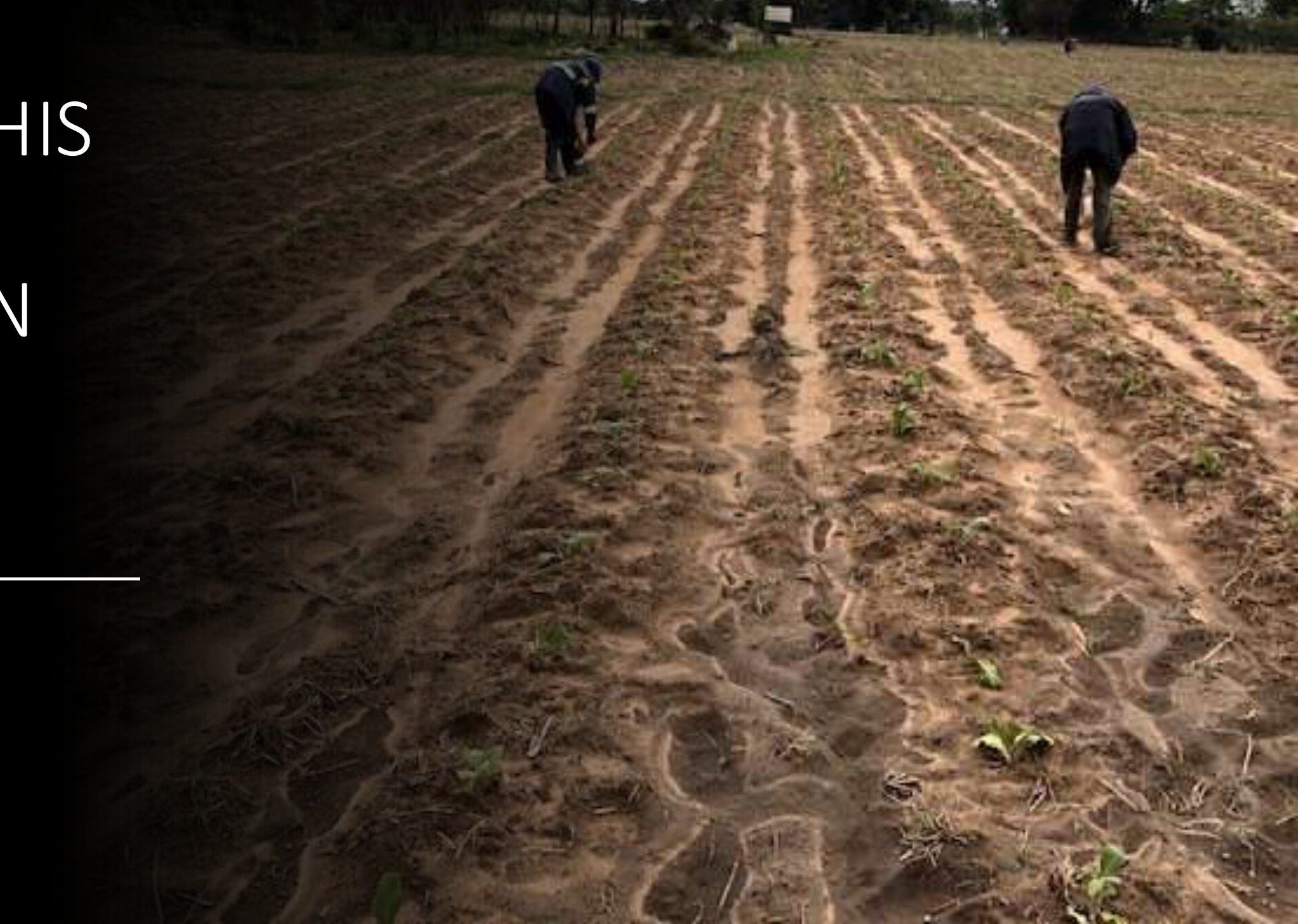
Before planting there were some nice rains on 27 November. Isaac and his father cupped on Bullet at 135 mL/ha. After planting, dusty surface beetle was found in some of the old maize stalks.
December 2020
Seedlings take
All seedlings had taken and no visible damage from dusty surface beetle or any insects was found.
4 January 2021
No aphids
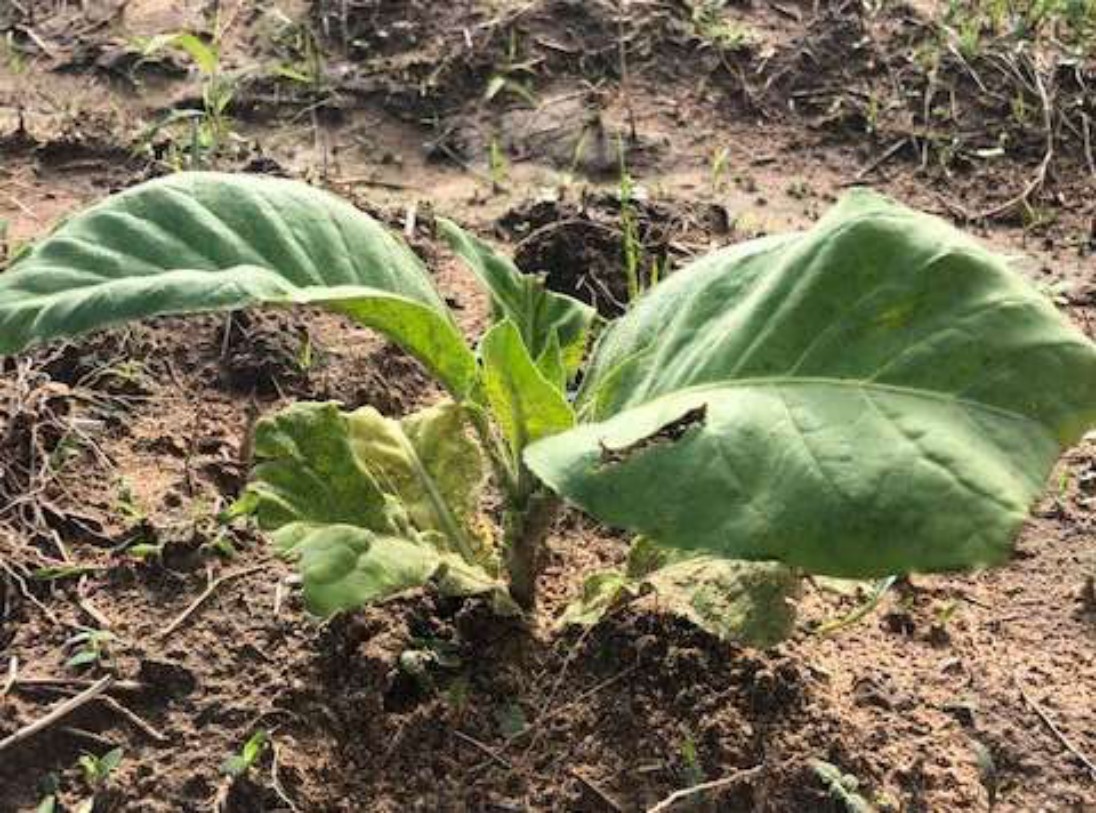
No aphids were found in any of the rows. Aphids are not visible on the tobacco — however on rows 8, 9 and 10 there appears to be some very minimal insect damage.
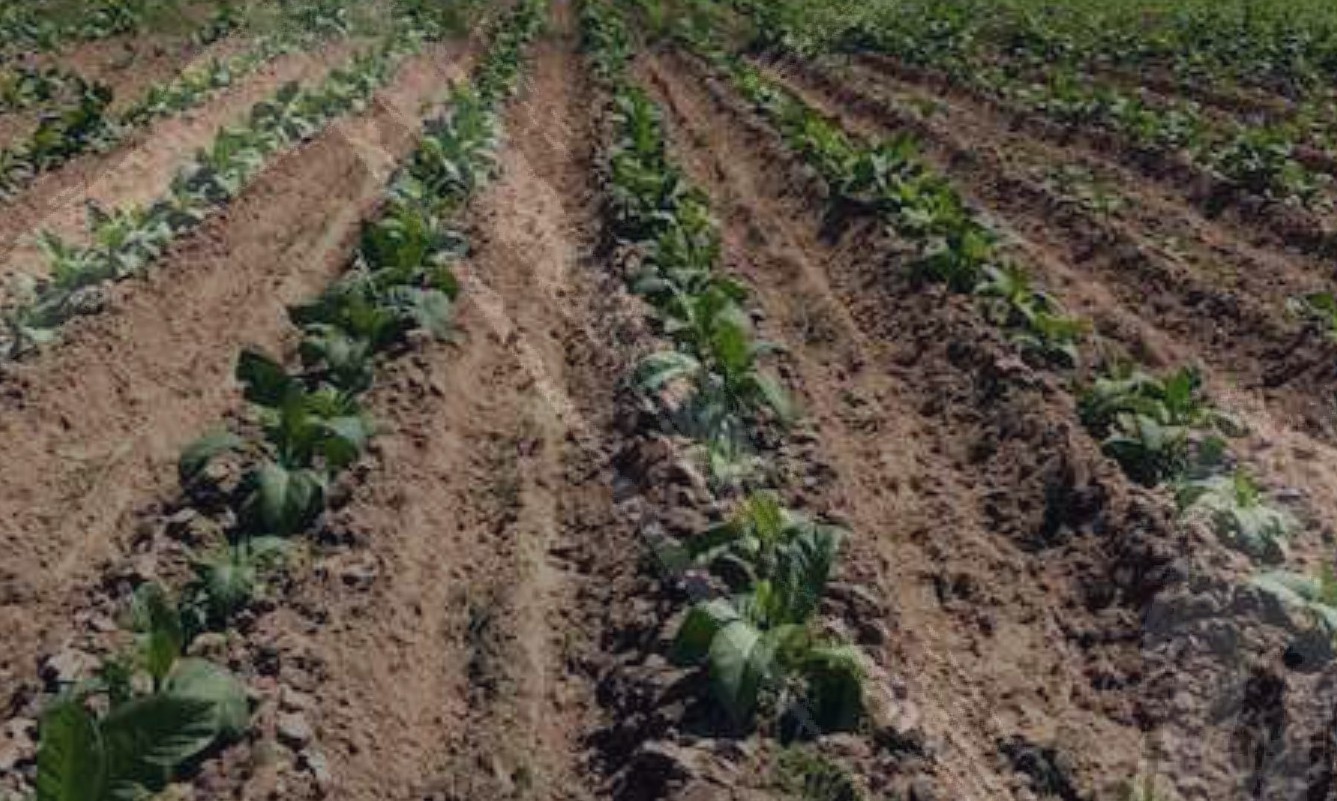
26 January 2021
Yellow after the rain
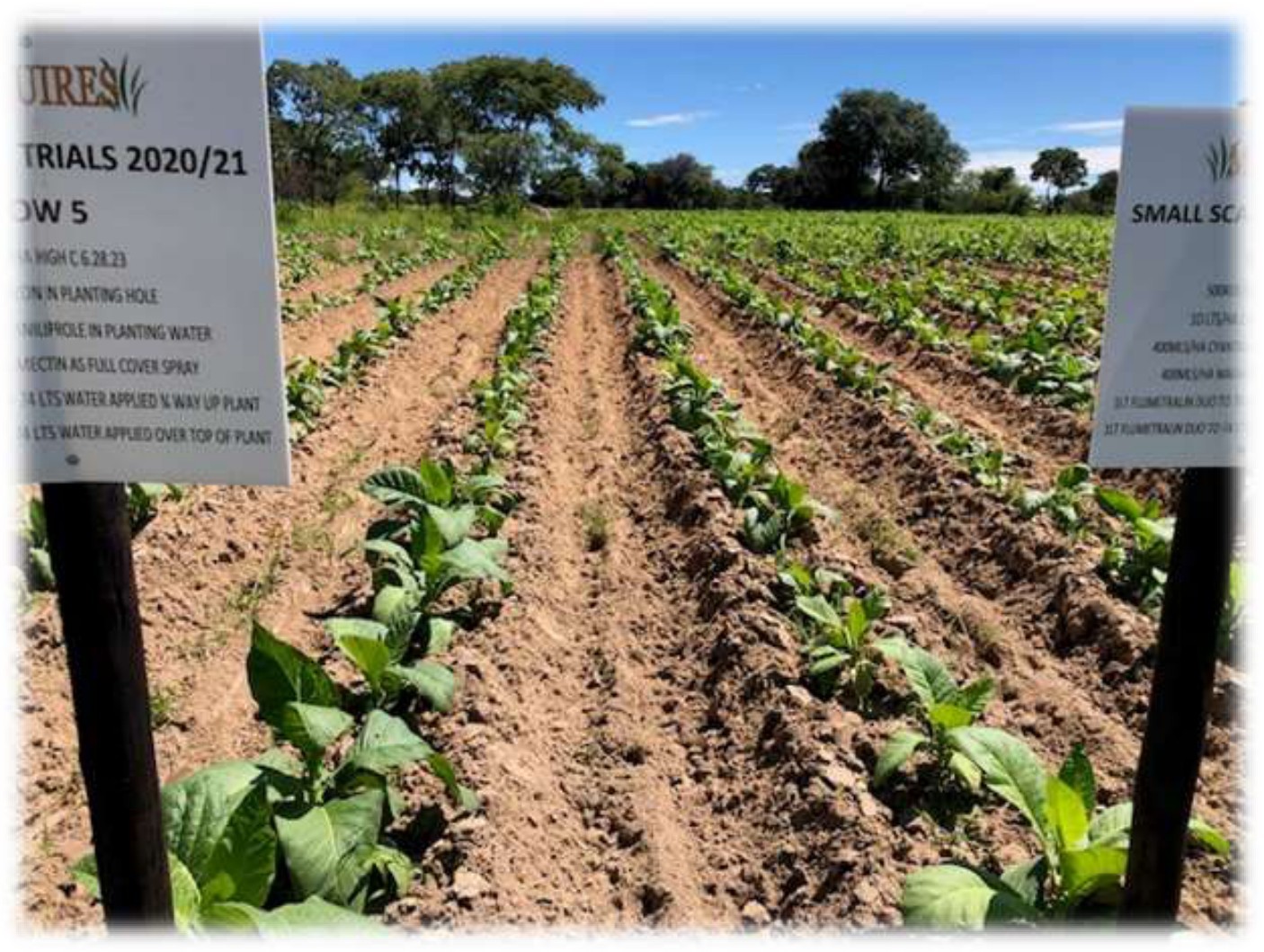
The tobacco is still looking yellow and washed out after all the rain — the farmer said this was the first afternoon they hadn’t had any rain.
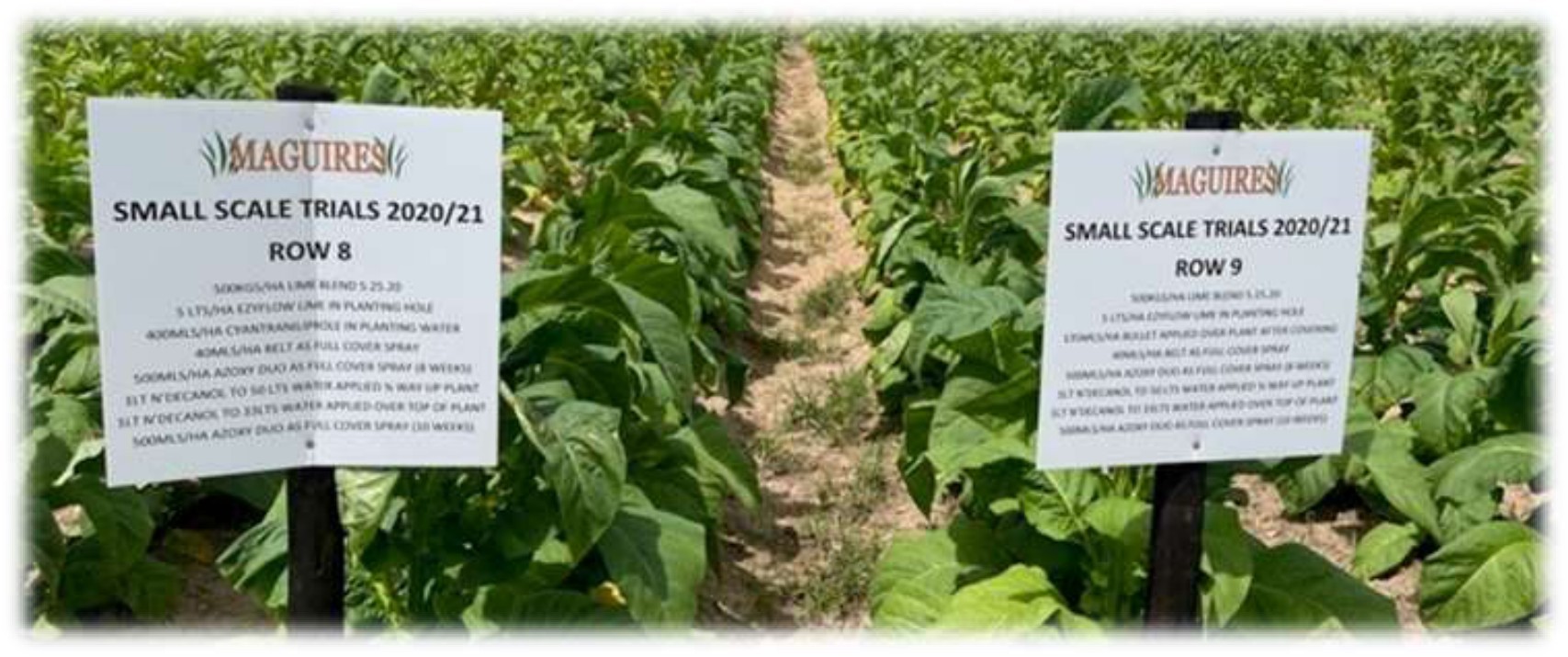
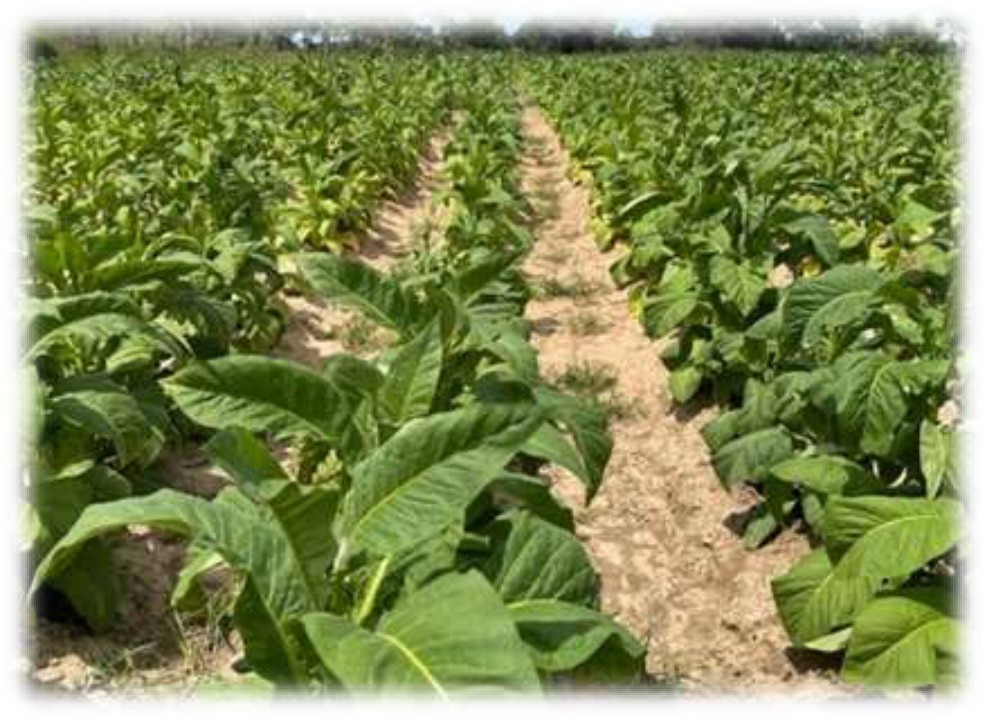
January 2021
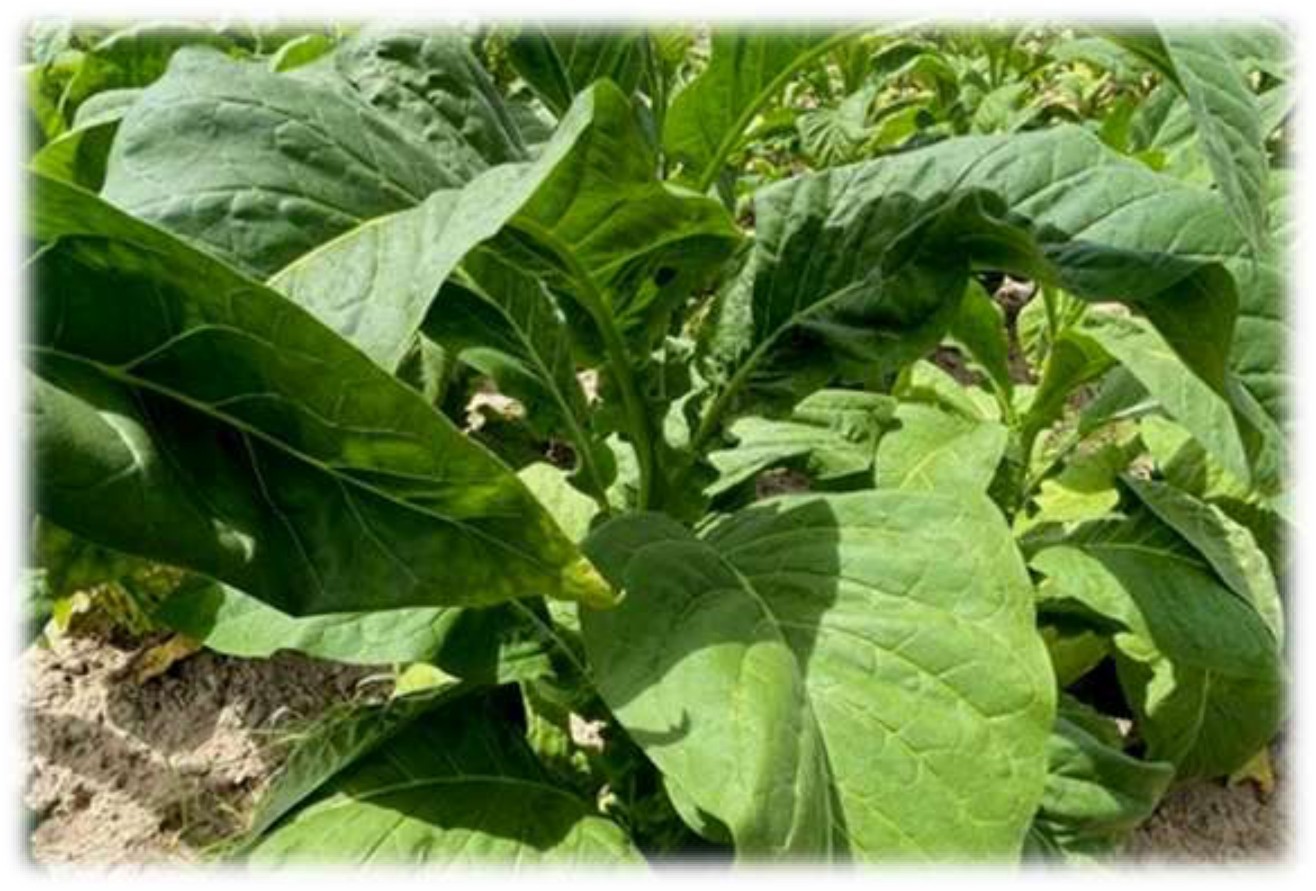
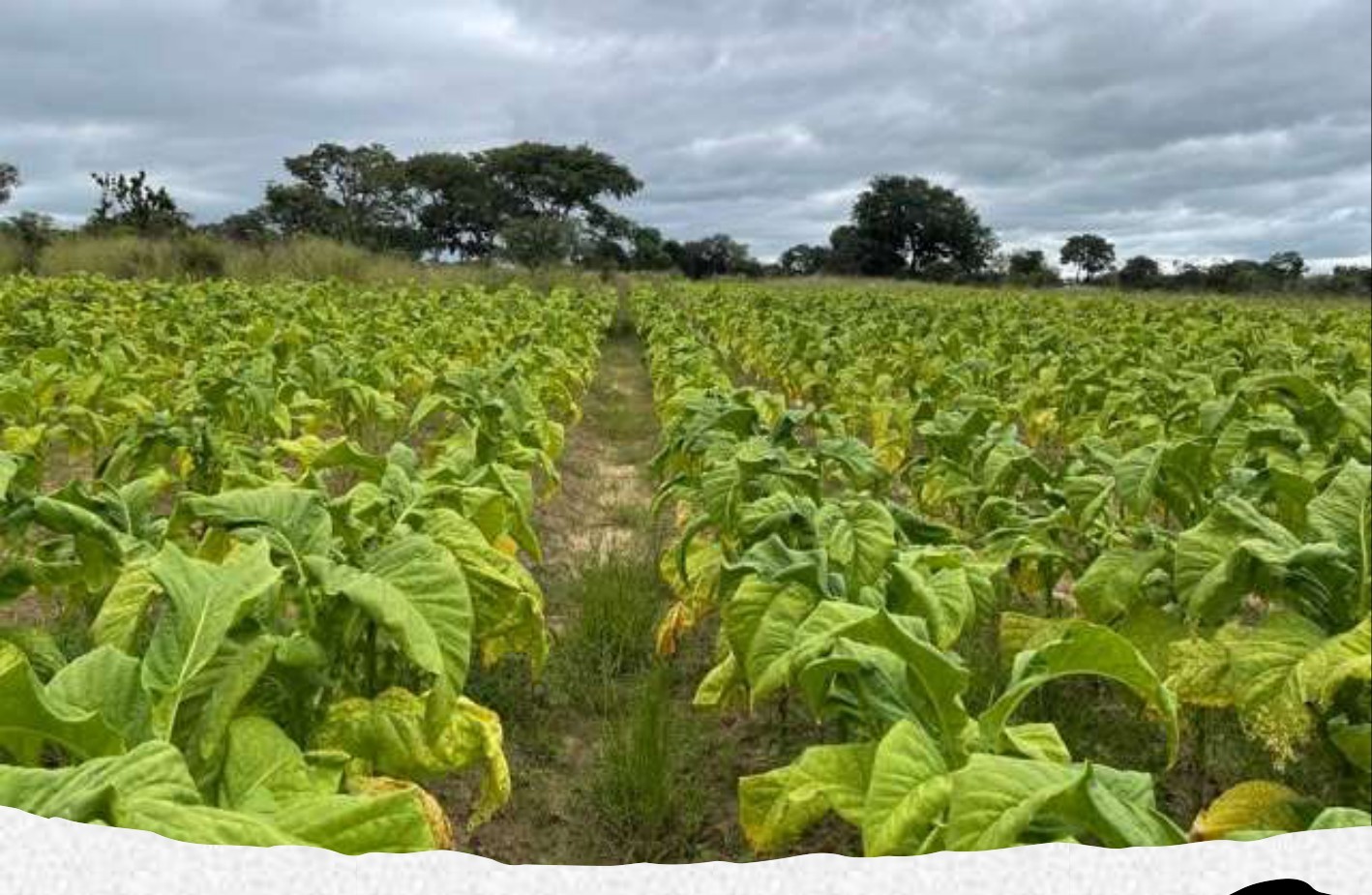
Trial vs the farmer’s crop
On the left is the farmer’s tobacco and on the right is the tobacco from the trial area. The trial area’s tobacco is not as yellow and has no insects, whereas the other tobacco has insect damage.
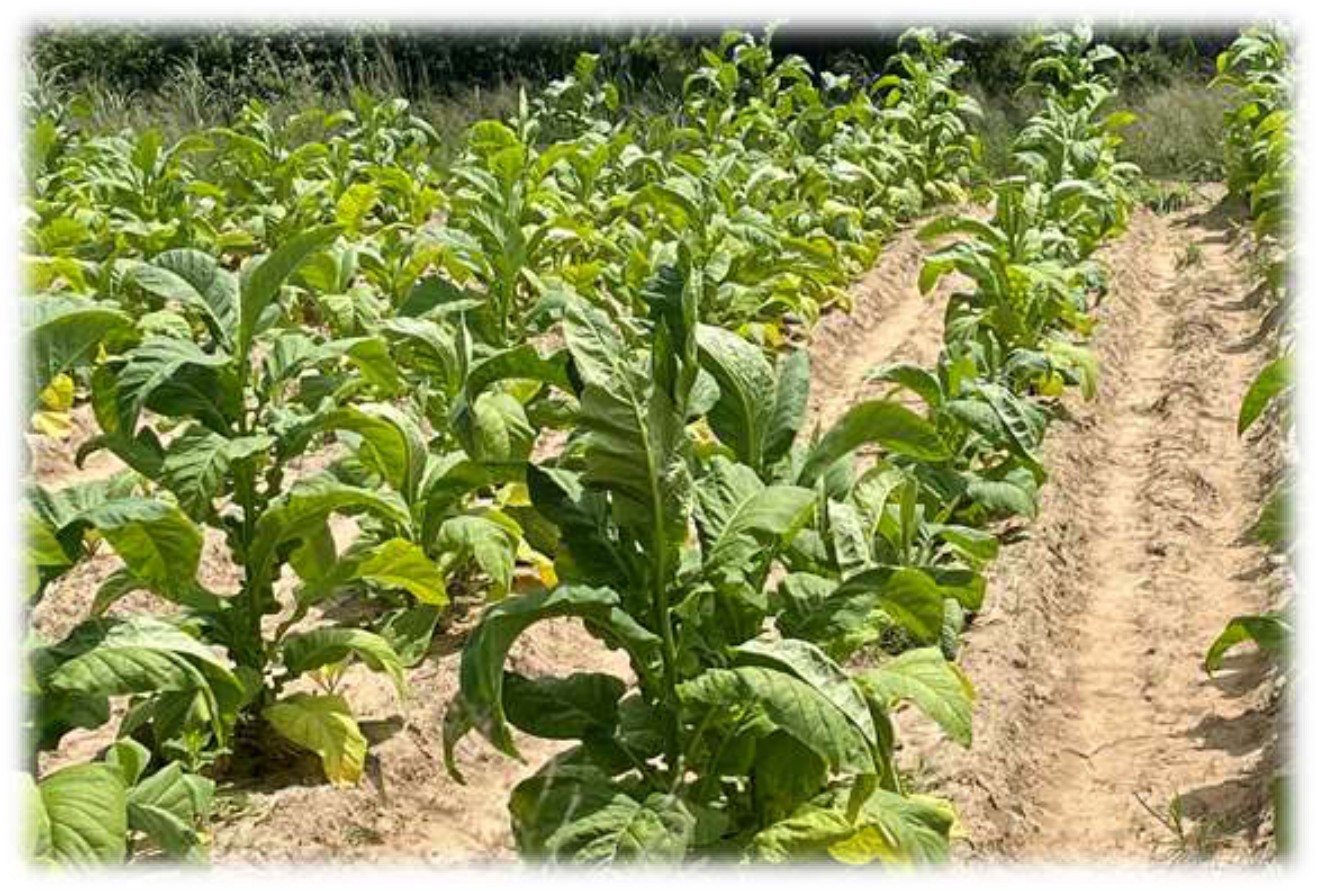
3 February 2021
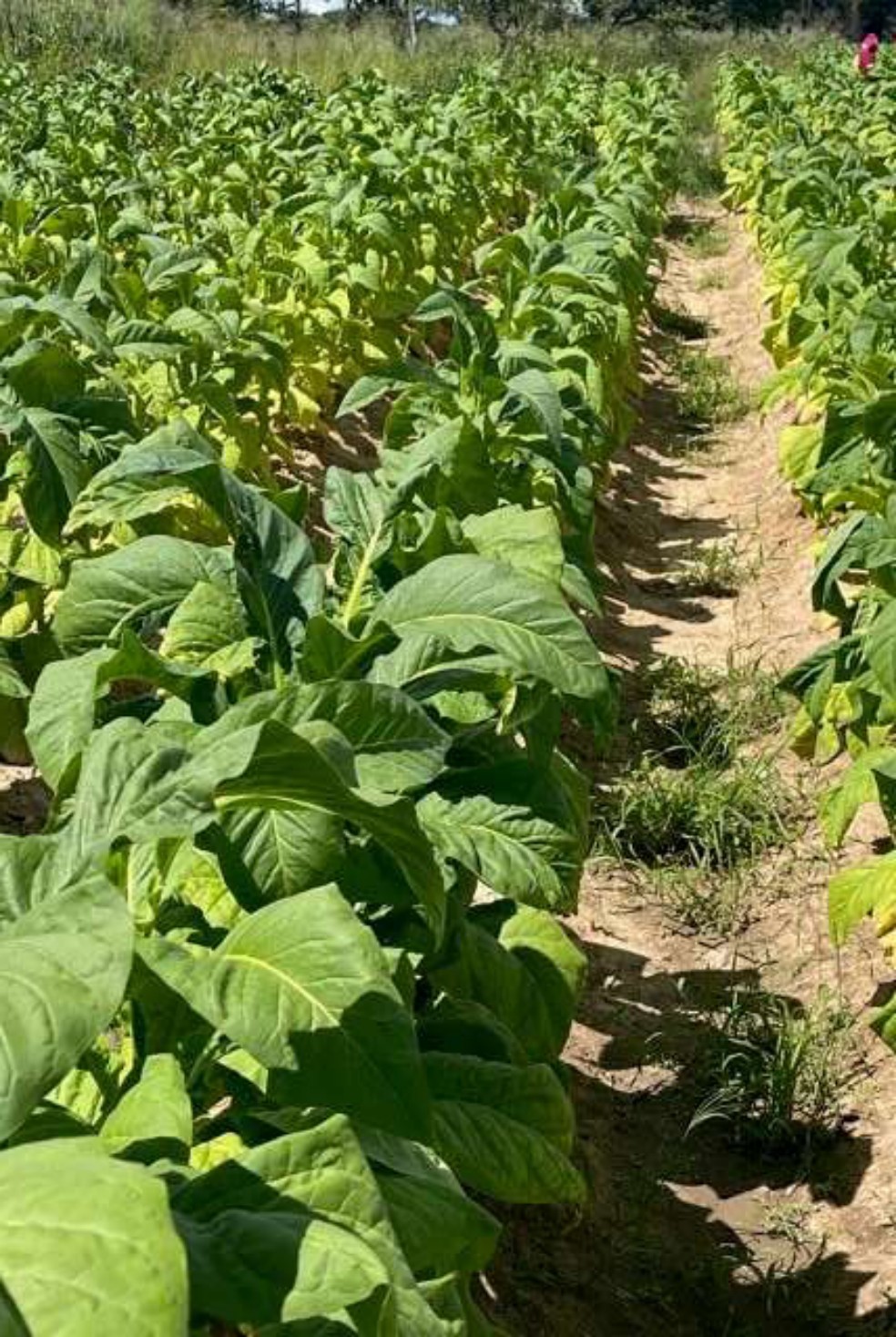
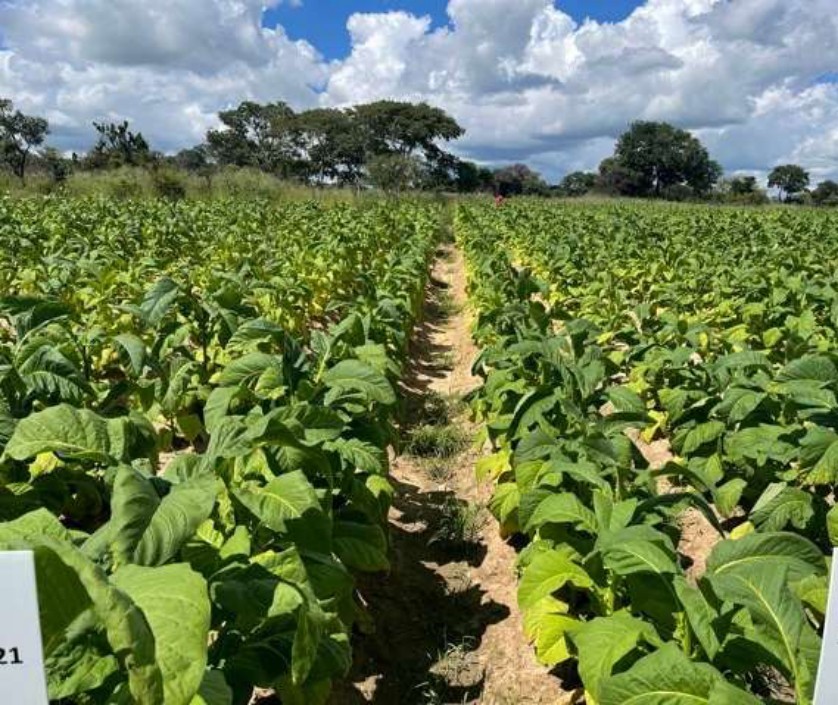
Filling out slowly
The tobacco has started to fill out slowly, however it is not uniform and is still very yellow. The tobacco towards the ends of the rows appears to be much bigger than the tobacco in the middle of the rows.
February 2021
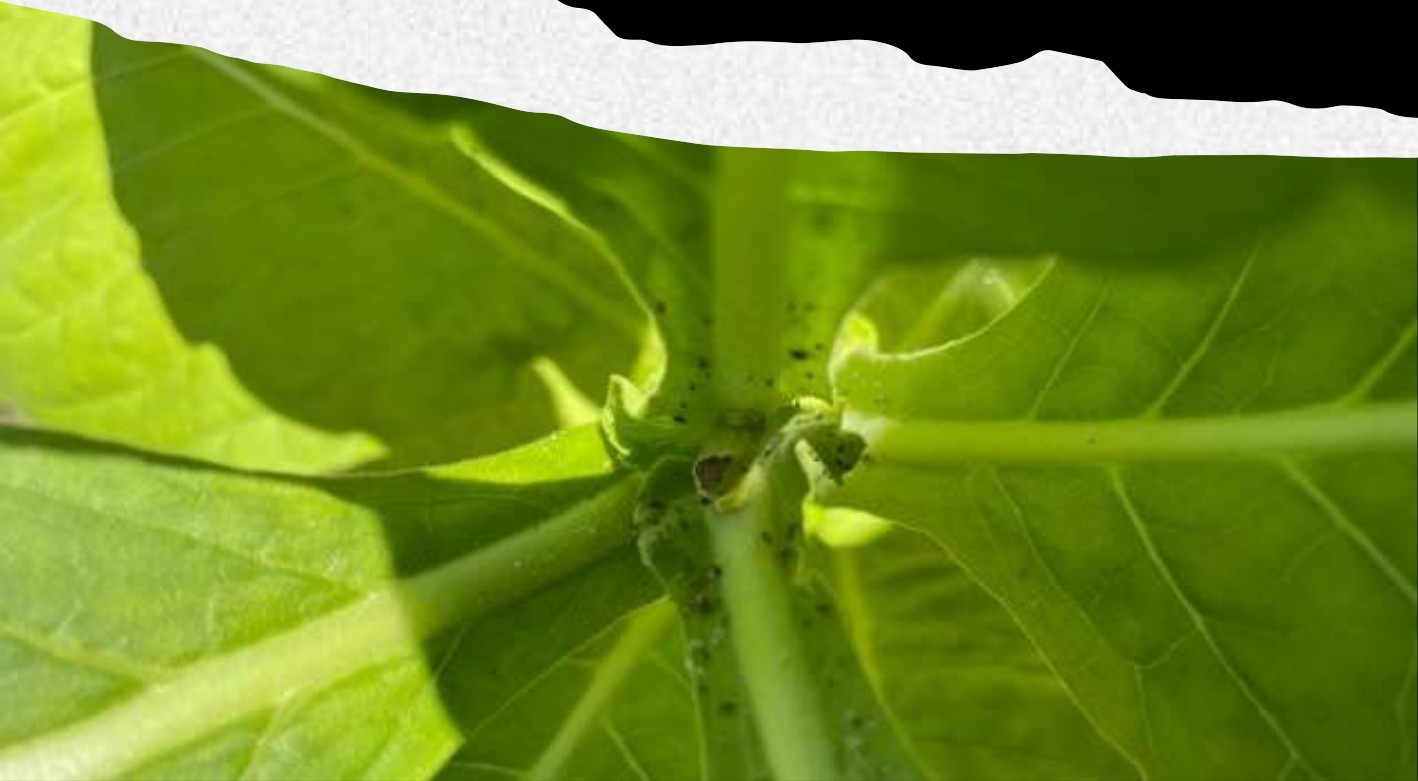
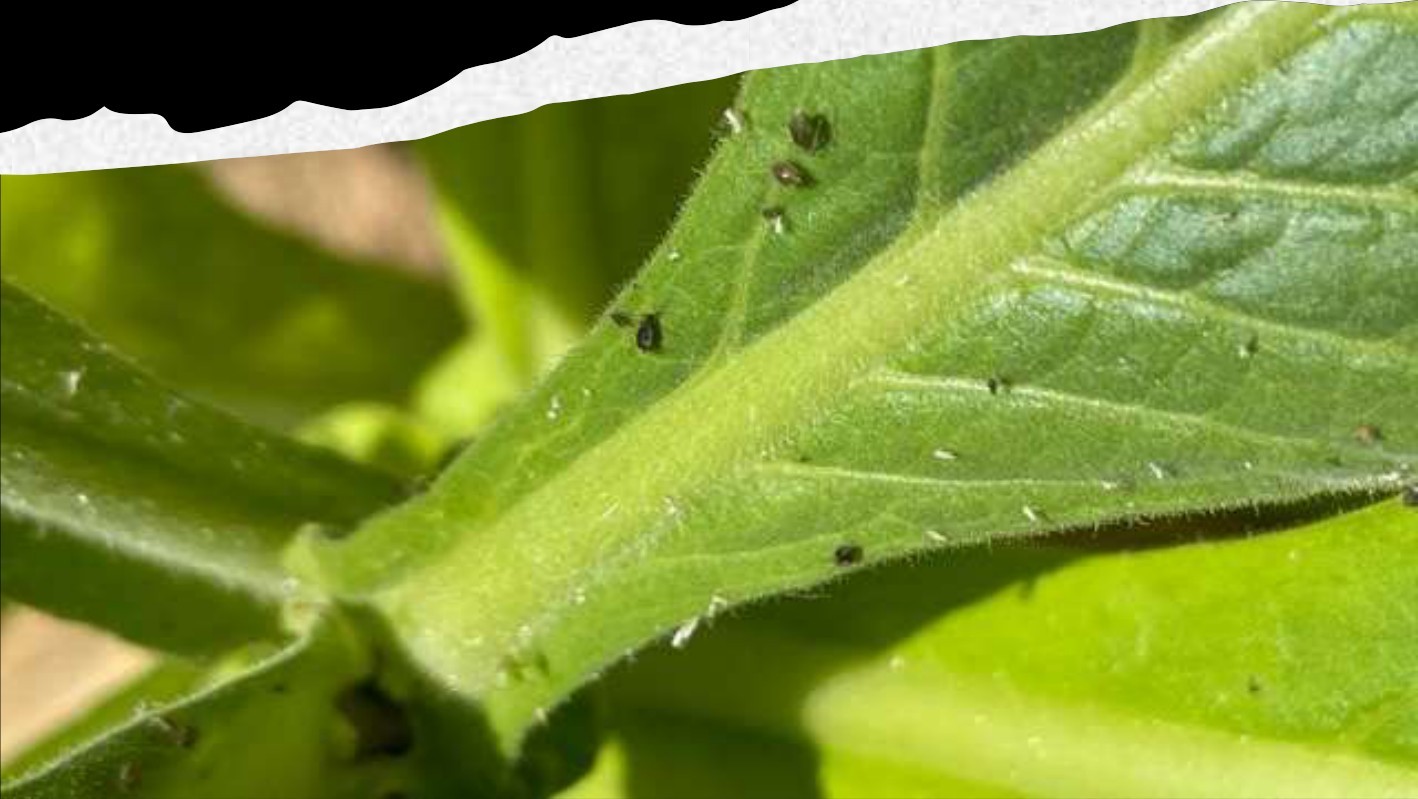
Aphids on the smaller plants
All the smaller tobacco throughout the trial area has aphids. The larger tobacco plants have no aphids.
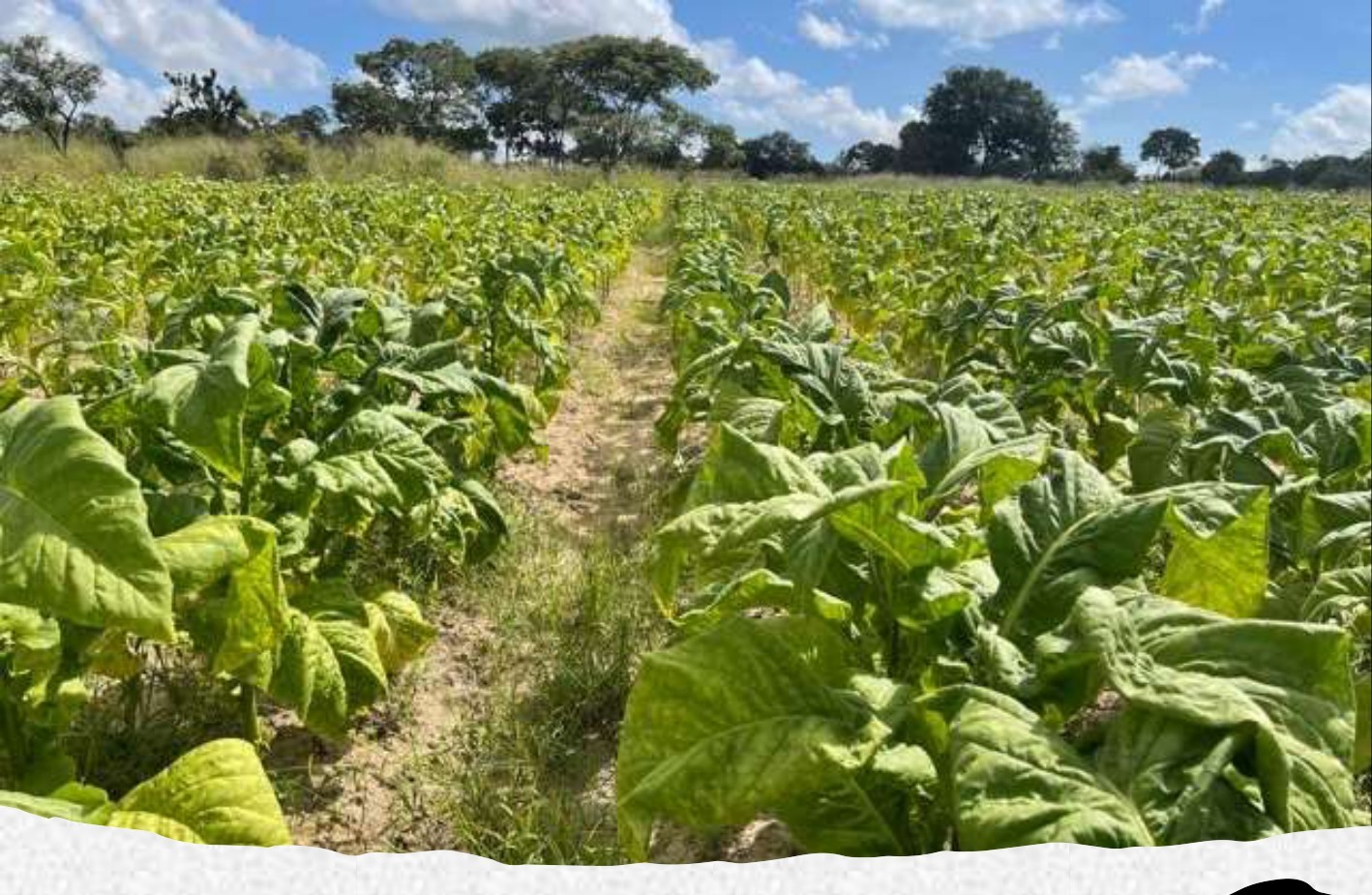
24 February 2021
Reaping begins
The start of reaping in the trial area. All the tobacco in this area is light in colour.
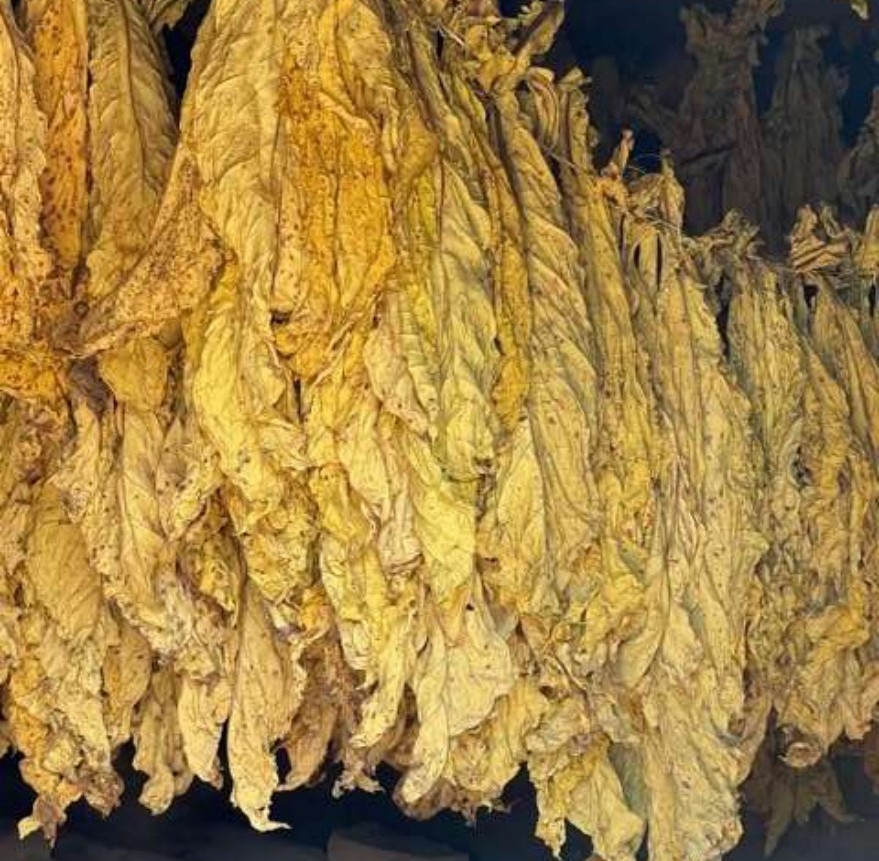
March 2021
In the barns
Some of the tobacco in the barns — there is no sign of angular in the trial area’s tobacco.
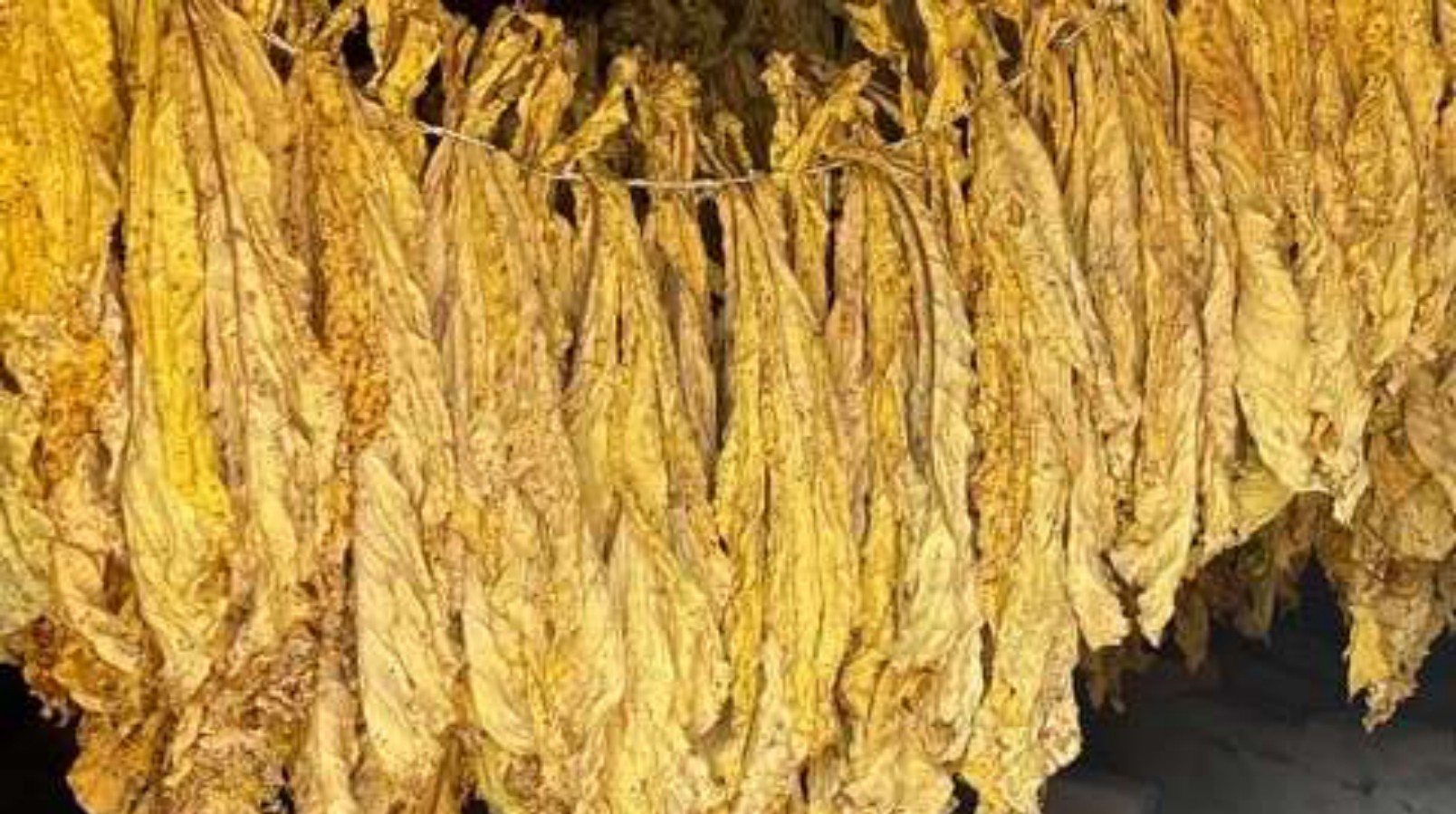
1 March 2021
Light in colour
All the tobacco is very light in colour — both the trial area and the farmer’s tobacco.
The Weights & Recordings of the Five Reapings
Every reaping was weighed and counted by row.
| Row | Weight (kg) | Avg Leaf Weight (kg) | Leaves |
|---|---|---|---|
| 1 | 0.15 | 0.0049 | 32 |
| 2 | 0.20 | 0.0065 | 31 |
| 3 | 0.20 | 0.0067 | 30 |
| 4 | 0.20 | 0.0057 | 35 |
| 5 | 0.15 | 0.0048 | 31 |
| 6 | 0.20 | 0.0067 | 30 |
| 7 | 0.15 | 0.0047 | 32 |
| 8 | 0.20 | 0.0057 | 35 |
| 9 | 0.15 | 0.0048 | 31 |
| 10 | 0.15 | 0.0039 | 38 |
| Row | Weight (kg) | Avg Leaf Weight (kg) | Leaves |
|---|---|---|---|
| 1 | 0.15 | 0.0060 | 25 |
| 2 | 0.20 | 0.0087 | 23 |
| 3 | 0.25 | 0.0096 | 26 |
| 4 | 0.25 | 0.0125 | 20 |
| 5 | 0.15 | 0.0071 | 21 |
| 6 | 0.20 | 0.0077 | 26 |
| 7 | 0.20 | 0.0071 | 28 |
| 8 | 0.20 | 0.0095 | 21 |
| 9 | 0.20 | 0.0080 | 25 |
| 10 | 0.15 | 0.0063 | 24 |
| Row | Weight (kg) | Avg Leaf Weight (kg) | Leaves |
|---|---|---|---|
| 1 | 0.70 | 0.010 | 70 |
| 2 | 0.80 | 0.013 | 62 |
| 3 | 0.85 | 0.013 | 66 |
| 4 | 0.90 | 0.015 | 61 |
| 5 | 0.60 | 0.009 | 69 |
| 6 | 0.65 | 0.011 | 57 |
| 7 | 0.70 | 0.010 | 67 |
| 8 | 0.75 | 0.011 | 68 |
| 9 | 0.65 | 0.009 | 71 |
| 10 | 0.55 | 0.008 | 73 |
| Row | Weight (kg) | Avg Leaf Weight (kg) | Leaves |
|---|---|---|---|
| 1 | 0.70 | 0.010 | 68 |
| 2 | 1.00 | 0.018 | 56 |
| 3 | 1.15 | 0.019 | 58 |
| 4 | 0.95 | 0.015 | 63 |
| 5 | 0.65 | 0.009 | 67 |
| 6 | 0.85 | 0.016 | 54 |
| 7 | 0.90 | 0.016 | 57 |
| 8 | 0.90 | 0.017 | 57 |
| 9 | 0.85 | 0.014 | 60 |
| 10 | 0.65 | 0.012 | 56 |
| Row | Weight (kg) | Avg Leaf Weight (kg) | Leaves |
|---|---|---|---|
| 1 | 0.70 | 0.009 | 76 |
| 2 | 0.85 | 0.011 | 75 |
| 3 | 0.90 | 0.011 | 84 |
| 4 | 0.75 | 0.009 | 82 |
| 5 | 0.60 | 0.008 | 76 |
| 6 | 0.75 | 0.010 | 75 |
| 7 | 0.70 | 0.008 | 85 |
| 8 | 0.75 | 0.010 | 78 |
| 9 | 0.70 | 0.009 | 74 |
| 10 | 0.60 | 0.008 | 78 |
Final Combined Results by Row
The combined total of each row and the average leaf weight, with the chemicals believed to have benefited each row.
| Row | Total Weight (kg) | Avg Leaf Weight (kg) | Leaves | Chemicals Believed to Have Benefited the Row |
|---|---|---|---|---|
| 1 | 2.40 | 0.009 | 271 | Calsap · N’Decanol |
| 2 | 3.05 | 0.012 | 247 | Calsap · Bion · N’Decanol |
| 3 | 3.35 | 0.013 | 264 | Ezyflow Lime · Bion · Flumetralin Duo |
| 4 | 3.05 | 0.012 | 261 | Ezyflow Lime · Cyantraniliprole · Bion · Flumetralin Duo |
| 5 | 2.15 | 0.008 | 264 | Cyantraniliprole · Flumetralin Duo |
| 6 | 2.65 | 0.011 | 242 | Calsap · Cyantraniliprole · Flumetralin Duo |
| 7 | 2.65 | 0.010 | 269 | Calsap · Cyantraniliprole · Flumetralin Duo |
| 8 | 2.80 | 0.011 | 259 | Ezyflow Lime · Cyantraniliprole · Belt · Azoxy Duo |
| 9 | 2.55 | 0.010 | 261 | Ezyflow Lime · Azoxy Duo · N’Decanol |
| 10 | 2.10 | 0.008 | 269 | Azoxy Duo · N’Decanol |
Summary
Bion
Rows where Bion was applied recorded better weights.
Calsap & Ezyflow Lime
Calsap and Ezyflow Lime had an effect on the weights — the results show weights were down where neither had been applied.
Flumetralin Duo
Rows where Flumetralin Duo had been applied gave better sucker control than rows with N’Decanol, which resulted in those rows recording better weights.
Key Finding
Row 3 — Ezyflow Lime with Bion and Flumetralin Duo — recorded the heaviest total of the trial at 3.35 kg, and rows carrying Bion, lime and Flumetralin Duo consistently outweighed those without.